


Prime Minister Benjamin Netanyahu said Sunday that Gaza’s reconstruction cannot begin unless Hamas is disarmed and the Strip is demilitarized, setting out Israel’s position as talks over the next stage of the U.S.-backed Gaza plan remain stalled.
Speaking at the weekly cabinet meeting in Jerusalem, Netanyahu responded to a ynet report that the U.S. administration had decided to drop Hamas’ disarmament as a formal precondition for Gaza’s reconstruction. Netanyahu did not deny the report, but said Israel would not accept reconstruction without demilitarization.
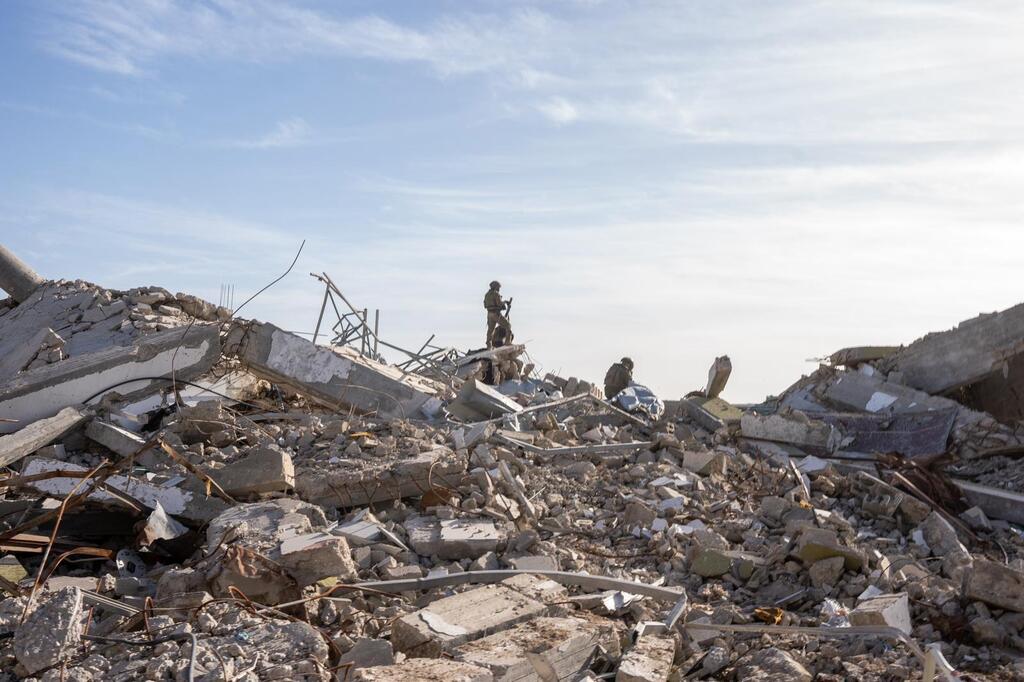
“There will be no reconstruction in Gaza without dismantling and demilitarizing the Strip,” Netanyahu said. “Gazans should have freedom of choice: Whoever wants to leave should be able to do so, and whoever stays cannot threaten us. There is a new Gaza envelope, inside Gaza.”
The Gaza envelope is the Israeli term for the communities along the border with Gaza. Netanyahu used the phrase to describe areas inside the Strip that Israel intends to keep under its control as buffer zones, saying they are meant to keep threats away from Israeli communities.
His comments come as the next phase of the American plan for Gaza remains unresolved. The plan, announced by the Trump administration earlier this year, includes the creation of a Palestinian technocratic governing mechanism for the Strip and an international framework to oversee reconstruction. A central dispute is whether Hamas must first be disarmed and stripped of its military infrastructure before rebuilding can begin.
Israel has expanded the areas it controls inside Gaza in recent months. According to an estimate published by Reuters in late May, Israel then effectively controlled about 64% of the Strip, compared with about 53% under the cease-fire arrangement. Netanyahu said around that time that Israel had moved from control of about 50% of Gaza to about 60%, and that he had instructed forces to move in the first stage toward control of 70%.
Netanyahu has described the areas Israel holds in Gaza, Lebanon and Syria as “security strips” designed to push threats away from Israel’s borders.
Residents of communities near Gaza rejected parts of Netanyahu’s framing and warned that reconstruction without dismantling Hamas would endanger them. The Israel Border Forum, which represents residents of communities along Israel’s frontier areas, said Gaza border residents returned home even though the war had not ended and Hamas had not been defeated.
“We, the residents of the border area, remind you that we returned home despite the fact that the war had not ended, Hamas had not been defeated and before the entry into Rafah, so security was not the reason for our return,” the forum said in response to Netanyahu.
The forum said the “yellow line” in Gaza is a temporary defensive line under Trump’s 20-point plan. According to the forum, the agreement calls for the IDF to withdraw to a perimeter line as international forces are deployed in its place.
“What is happening on the ground shows that the State of Israel is advancing to the next stage of the agreement: Gazans will enter the area the IDF has rehabilitated, and those who manage them will be foreign international forces and local policing forces, meaning the actual beginning of phase two,” the forum said.
The group said clause 17 of the agreement is dangerous for residents of the Gaza border area and urged the government to stop any step that does not begin with Hamas’ dismantling.
“As long as Hamas continues to rule and receive supplies that allow it to rebuild its strength, any step toward Gaza reconstruction is doomed to fail and will become terror reconstruction,” the forum said.
Netanyahu also denied reports that U.S. President Donald Trump had pressured Israel not to act against Hezbollah tunnels in Lebanon.
“I heard it said in the media that President Trump asked us not to act against terror tunnels in Lebanon. That is a fairy tale, fake news,” Netanyahu said. “He did not say anything to me on the matter, and I did not ask him. We act according to our own considerations.”
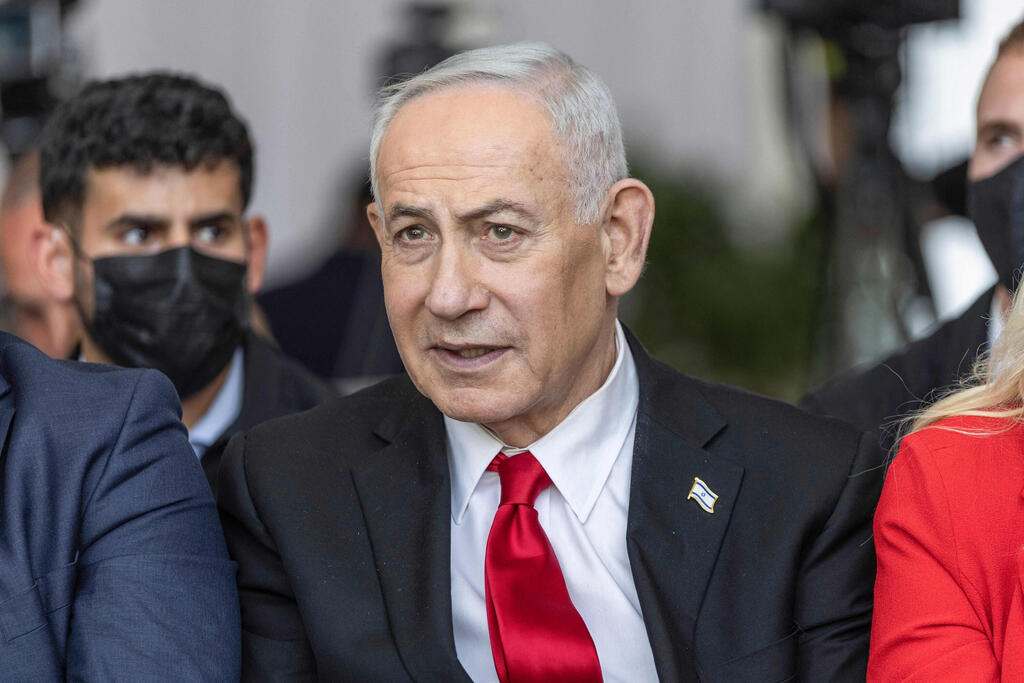
(Photo: ilia YEFIMOVICH / AFP)
Netanyahu made the remarks about a week after the IDF said it had destroyed Hezbollah underground infrastructure in southern Lebanon. According to the military, the tunnel was about 200 meters long and located in the Majdal Zoun area, which Israel described as a “drone fortress.” The IDF said hundreds of weapons and launchers were found there. The U.S. was notified of the operation in advance.
Under the framework agreement between Israel and Lebanon, an Israeli withdrawal from southern Lebanon is supposed to move forward alongside Hezbollah’s disarmament and the expanded deployment of the Lebanese army.
Netanyahu later turned to domestic politics, attacking his opponents and the Israeli media.
“When I talk to Americans about Israeli politics, I say there is no Left-Left. Everyone pretends to be right-wing, but in essence they are people of the left,” Netanyahu said.
He claimed that some participants in cabinet discussions had urged Israel to accept Hamas’ demands. “In the cabinet, they said, ‘We need to accept Hamas’ dictate, leave the Strip, get the hostages back and return to deal with Gaza after two or three years,’” Netanyahu said. “Those who say, ‘Why didn’t you achieve 100%?’ were prepared to accept zero.”
Netanyahu said that if he had accepted that approach, Iran and its allies would have remained at the height of their power.
“If I had listened to them and stopped the war, the Iranian axis would have remained at peak strength, together with Deif, Sinwar, Haniyeh, Nasrallah, Assad and Khamenei,” he said.
According to Netanyahu, he was told in closed conversations that ending the war could be presented as a media victory. “In intimate conversations they said, ‘We will frame it as a victory picture on the channels.’ I rejected that outright. I said that if there is victory, there will be a picture, not before.”
Netanyahu also compared his government’s policy in Lebanon to that of the previous government.
“They preach to us? They gave sovereign maritime territory to Lebanon. We enter the territory,” he said. “There is peace through our strength, and there is surrender through their weakness. Hezbollah blessed their agreement and curses ours. That is the difference.”
The prime minister also accused much of the Israeli media of acting politically. “Most of the media channels are a political party,” he said. “They receive the opposition’s messages and sometimes also produce them.”