

An Iranian water resources expert has accused Israel and the United States of orchestrating a decades-long effort to divert rainclouds away from Iran, allegedly contributing to the country’s deepening water crisis, the Middle East Media Research Institute (MEMRI) reported.
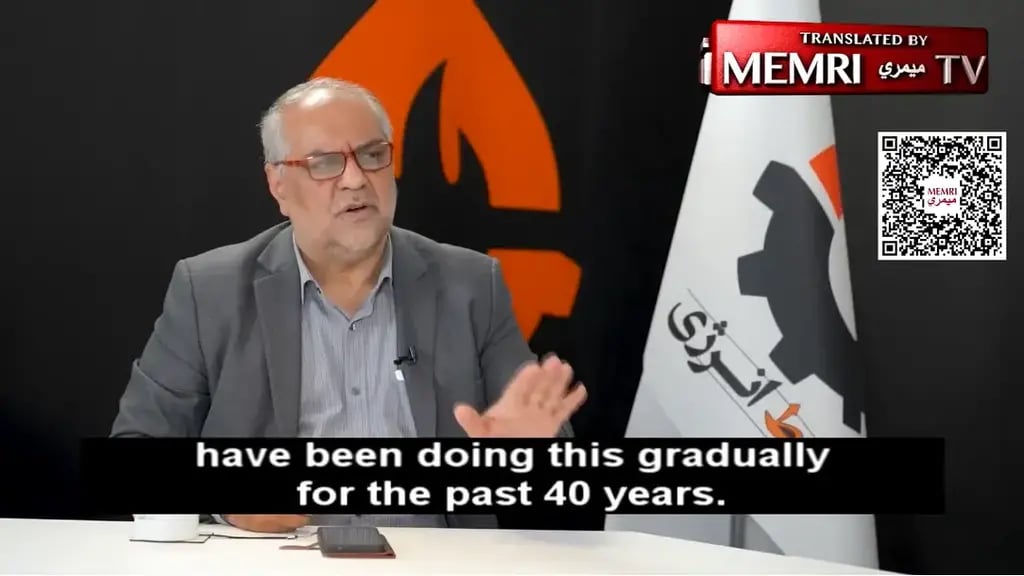
The claims were made by Mohsen Arbabian during a July 30 interview on the Iranian YouTube channel Khateh Energy. Arbabian alleged that Israel and the U.S., which he described as openly hostile to Iran, have been “gradually” working to manipulate regional weather patterns for over 40 years.
“I say this with confidence,” he declared. “You can see in satellite images how the clouds shift from their course. I don’t care how many people say that this is normal. I say it is not."
He specifically pointed to the differences in water levels between Lake Van in Turkey, which he claims is full, and Iran’s Lake Urmia, once the largest saltwater lake in the Middle East, which has nearly dried up.
Get the Ynetnews app on your smartphone: Google Play: https://bit.ly/4eJ37pE | Apple App Store: https://bit.ly/3ZL7iNv
According to Arbabian, clouds originating in the Mediterranean that would typically bring rainfall to Iran are instead being redirected toward neighboring countries such as Turkey, Azerbaijan and Armenia.
Iran has been in the grips of its worst drought in decades, struggling under five years of below-average rainfall—dropping by more than 40% in several regions—and rapidly depleting its reservoirs. President Masoud Pezeshkian has warned that Tehran's dams may run completely dry by September or October without severe water-use cuts.
Gallery

Iranian water resources expert Mohsen Arbabian alleges US, Israel engaging in cloud theft as nation grapples with worst water crisis in decades
(Photo: MEMRI)
(Photo: MEMRI)
Authorities recently declared a public holiday across Tehran and 10 provinces to conserve water and electricity amid extreme heatwaves exceeding 50 °C.
By early 2025, dam levels had dropped to record lows—Tehran’s main reservoir hovering around 1%, others ranging 30–60% capacity—and several provinces already facing drought conditions. This environmental crisis has led to widespread rationing, demonstrations in cities like Khomam and urgent calls for water-use reduction of at least 20 % from residents