

A Lebanese man released by Israel this week said he was not physically tortured during his detention but described prolonged isolation and intense psychological pressure during questioning, as Israel and Lebanon continued negotiations over detainees and regional tensions remained high.
Hussein Ayash, 33, told Reuters that IDF soldiers detained him about three months ago while he was driving in the southern Lebanese village of Tibnin. According to Ayash, soldiers approached his vehicle, ordered him out, blindfolded him and placed him in handcuffs. He said he then spent several days sleeping in different locations in southern Lebanon before being transferred to Israel.
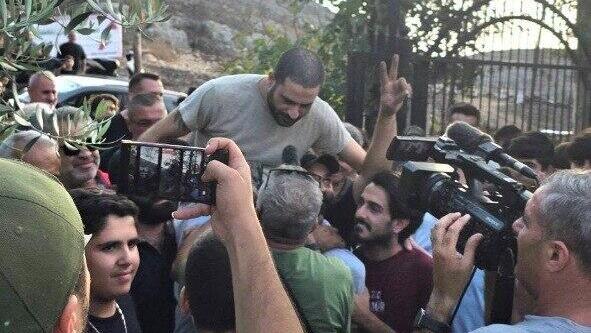
Ayash said he was initially held in isolation, sometimes for periods of up to 30 days. “Then they move you to prison, a normal room,” he said. “There are places called cages, and you sit there. There are people, Syrians, Lebanese, Palestinians, all the different nationalities that are in prison. You are moved from room to room every now and then, every 30 or 40 days.”
Ayash said interrogators asked whether he had ties to Hezbollah. He said he was not tortured, but described the psychological pressure as difficult. “You have to talk,” he said. “They have all the information. Psychological pressure is not easy. You are in a country that is not yours, with people you don’t know, and you don’t know when you will leave.”
Israel said none of the five Lebanese detainees released Thursday and Friday had been found to have ties to terrorist organizations.
Ayash’s brother claimed that about 100 Lebanese detainees remain held in Israel and should also be released. The issue is among the central points in ongoing negotiations between Israel and Lebanon, with Israel having already released Lebanese detainees as a gesture toward the government in Beirut.
Ayash’s mother said she hoped “all the prisoners will be returned to their mothers and families.”
The talks are also taking place as Lebanese authorities search for the remains of former leaders of the country’s Jewish community who were abducted and murdered by terrorist organizations in the 1980s.
Interceptions seen over the Sea of Galilee
(Video: Kfir Bazak)


At the same time, Israeli strikes in Lebanon continued Friday evening. Lebanese media reported that two people riding a motorcycle were killed in an Israeli strike in the village of Roumine in southern Lebanon. Other targets were reportedly struck in the Nabatieh area and Al-Fawqa. Shortly afterward, people near the Sea of Galilee filmed interceptions in the sky.
According to the IDF, the interceptions took place over Jordan but appeared from northern Israel to be above the region.
Iranian media reported a “powerful explosion in Jordan,” while Iran’s Fars News Agency and the Saudi outlet Al Hadath later claimed missiles had been fired toward a U.S. base in the kingdom. There was no immediate confirmation from Jordanian or U.S. authorities.
Iran, meanwhile, continued issuing threats as it carried out attacks around the Middle East in response to the U.S. blockade and periodic American strikes against it.
Iranian military spokesman Mohammad Akraminia said Friday that “the problems facing the U.S. military in the region stem from mistakes made by American officials when they attacked a sovereign country.”
“The proper course of action for the U.S. is to recognize the facts, bear the consequences and withdraw from the region,” he said. “That will make the region safer and bring the American people closer to prosperity.”
Akraminia also claimed that “Iranian sovereignty over the Strait of Hormuz is in its final stages of consolidation,” a claim rejected by the United States, which points to the millions of barrels of oil that continue to pass through the waterway each day. “We will not allow the Americans to seize the initiative,” he said.
He also threatened Israel: “We will carry out preventive operations wherever we identify a threat. If Israel assists or attacks, we will strike it easily, quickly and forcefully, more than before.”
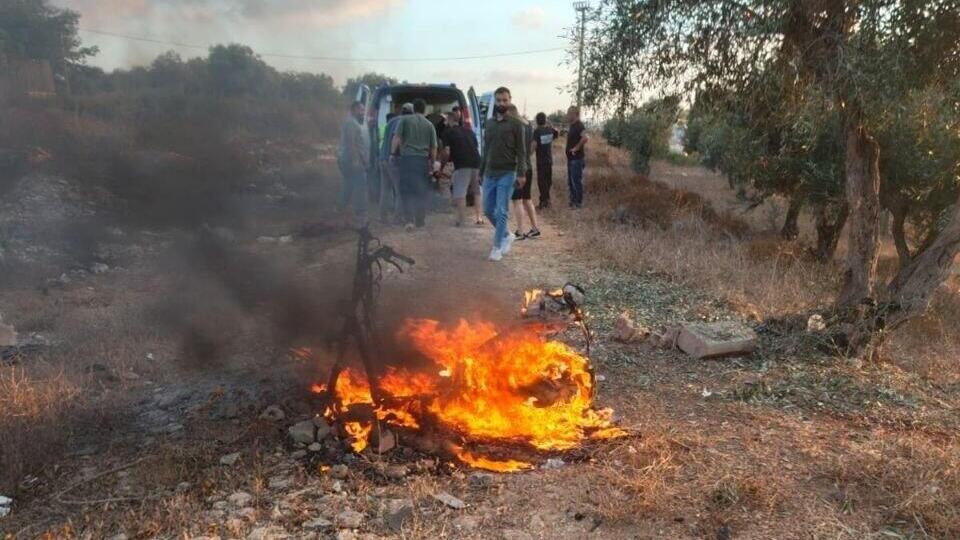
The strike in the village of Roumine
Operation on Ali Taher Ridge
The latest strikes in Lebanon also come against the backdrop of the IDF’s operation on the Ali Taher Ridge, a strategic Hezbollah stronghold in southern Lebanon.
On Thursday, after Reuters reported that Iran had threatened to “respond forcefully” to Israeli activity on the ridge, the IDF released details of the operation and its objectives. Israeli security officials said that although IDF troops had trapped dozens of Hezbollah terrorists inside the complex, there was no basis for Iran’s claim that members of the Islamic Revolutionary Guard Corps had also been caught there.
Israeli troops identified openings through which Hezbollah terrorists could escape from the underground complex, placed them under surveillance and prevented attempts by the organization to assist those trapped inside from the outside.
Hezbollah initially tried to transfer equipment to its men, but security officials said the difficulty increased as the operation continued, creating pressure inside the organization.
During the fighting, Israeli forces positioned around the exits exchanged fire with Hezbollah terrorists attempting to escape and killed dozens, according to the IDF. The military said troops established operational control through ambushes, fire on tunnel shafts, grenades, drones and other strikes.
Although Iranian officials have continued to claim that dozens of Iranians and Lebanese remain trapped there, the IDF said Thursday that the clearing of Hezbollah’s underground infrastructure on Ali Taher Ridge had been completed and that all terrorists inside had either been killed or escaped.
“The operation to neutralize the underground infrastructure that was cleared of terrorists is continuing, and once it is completed, the IDF will redeploy in a renewed defensive posture,” the military said.
According to the IDF, the underground complex contained command centers, weapons rooms, generator rooms, living quarters, showers and a kitchen, allowing Hezbollah forces to conduct combat operations and remain underground for extended periods.
The military described it as “strategic infrastructure built over two decades, financed and planned by the Iranian terror regime.”
First published: 20:06, 09.04.26