


Tony Blair, a senior member of U.S. President Donald Trump's Board of Peace, arrived in Israel for a series of meetings aimed at reviving stalled American-led efforts to reconstruct the Gaza Strip. President Isaac Herzog met Thursday with Blair between rounds of consultations with Israeli political parties.
Earlier this week, ynet reported that American pressure to advance implementation of Trump's plan to end the war has continued even after Israel's elections, despite the deadlock in negotiations with Hamas and ongoing IDF military operations in Gaza.
Gallery
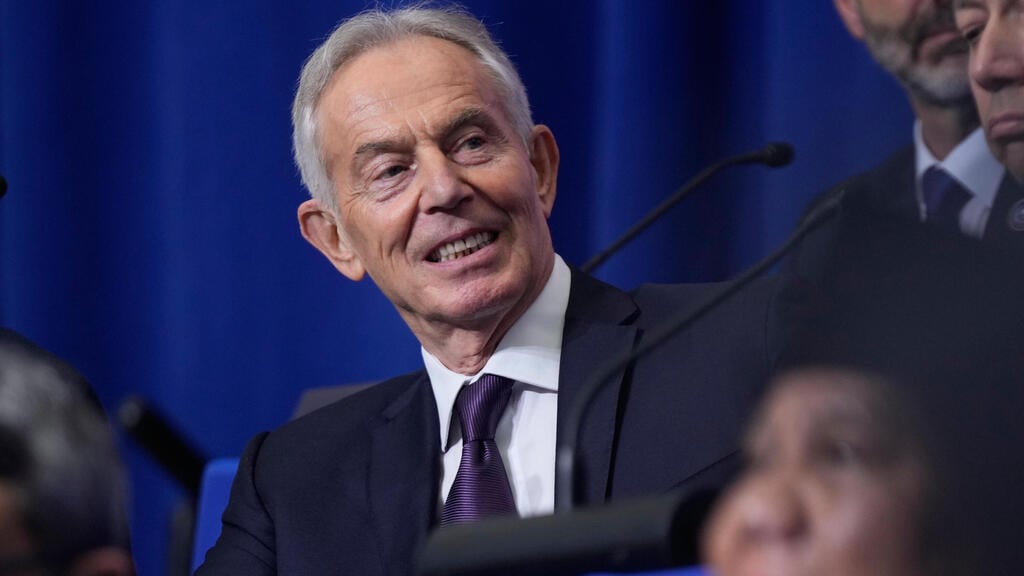
Tony Blair arrived in Israel for a series of meetings aimed at reviving stalled American-led efforts to reconstruct the Gaza Strip
(Photo: Mark Schiefelbein/AP)
During his visit, Blair is expected to discuss ways to advance the initial stages of the plan, including the entry of a technocratic committee into Gaza and the establishment of an international stabilization force. He is scheduled to meet with several Israeli officials.
On the ground, however, there are few signs of progress toward the next phase. Officials familiar with the negotiations describe a significant deadlock, with no meaningful movement in the American framework. Hamas remains armed and continues to rebuild its ranks, while the IDF continues operations targeting the terrorist organization's operatives, with military activity intensifying recently.
Complicating the security and diplomatic situation is the political uncertainty following Israel's 26th Knesset election. The political system remains in flux, with no clear parliamentary majority and no certainty that a stable government can be formed.
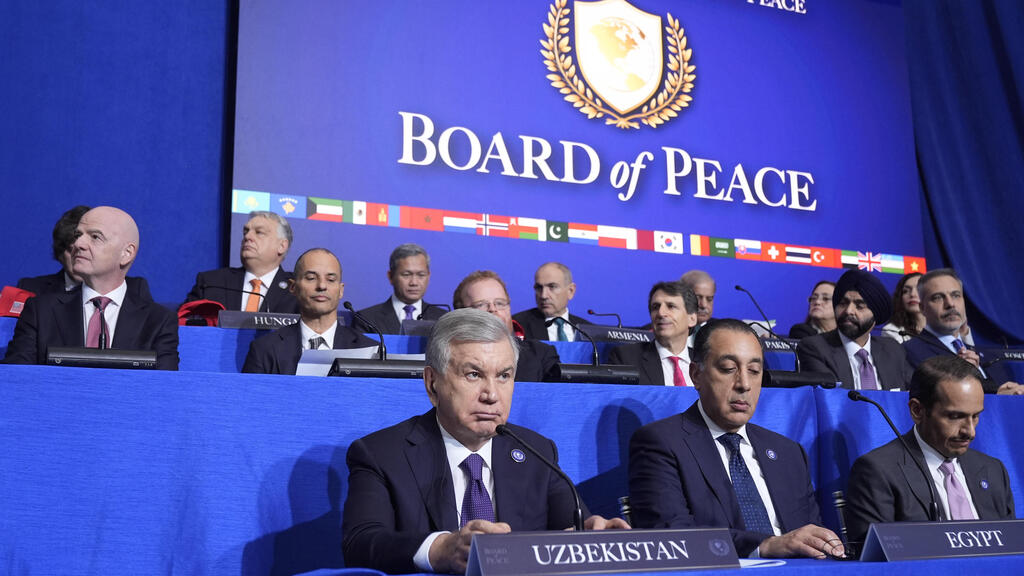
Gaza Board of Peace meeting
(Photo: Mark Schiefelbein/AP)
This uncertainty directly affects Israel's ability to formulate a long-term policy toward Gaza, particularly regarding how to proceed with the American plan. While Washington is pressing for progress on Trump's initiative, officials in Jerusalem still do not know what Israeli policy will look like in the coming months.
Meanwhile, Israeli security officials have identified preparations by Hamas for an international public relations campaign focused on the approaching winter and its consequences for Gaza's population. According to officials familiar with the matter, the terrorist organization is expected to highlight damage caused by severe weather, inadequate infrastructure and shortages of sufficient warm clothing and other essential supplies.
From Hamas' perspective, the goal is to increase international pressure on Israel by drawing attention to the humanitarian hardship in Gaza, in the hope that mounting criticism will force Israel to halt its operations targeting Hamas operatives and its airstrikes, or at least reduce their intensity.