

Air raid sirens sounded across central Israel minutes after an Iranian missile exploded in an open area. The incoming fire from Iran was limited, similar to previous barrages, and interceptors were launched at the missiles. Israeli authorities are assessing whether some of the missiles carried a dispersing warhead, also known as a cluster munition. No injuries were reported immediately.
Since the war began Saturday, Iran has launched about 200 missiles at Israel, far fewer than Israeli officials had expected, according to data compiled during the fighting.
Documentation from the latest barrage


Destruction of a ballistic missile and a ballistic missile stockpile in Iran
(Video: IDF)
Israeli intelligence assessments on the eve of the war estimated that the Islamic Republic would fire about 150 missiles a day, prompting Israel’s defense establishment to prepare accordingly, according to information obtained by Ynet. Instead, Iran has fired about 80% fewer missiles than projected, a gap Israel views as evidence of significant damage inflicted by the Israeli military and the U.S. military in a coordinated strike campaign against Iran’s ballistic missile program.
In addition to missiles fired at Israel, Iran has launched about 300 missiles at other targets across the Middle East, the data show. Israel and the United States have also dropped more than 8,500 munitions in Iran since the war began, including about 2,700 targets struck by the United States alone, according to the figures.
Israel’s chief of staff, Lt. Gen. Eyal Zamir, said Thursday that Israeli forces have been striking “the Iranian terror regime without pause” for six days. He said the operation in Iran was planned in secret by thousands of soldiers across the military and in close coordination with the United States, describing the pace of the operation as proceeding according to plan.
Footage: Eliminating Iranian regime soldiers
(Video: IDF)
The Israeli military released footage it said showed Iranian soldiers being eliminated as part of a broad wave of strikes on targets tied to Iran’s leadership in western and central Iran. The Air Force struck about 200 targets in those areas during the day, including dozens of ballistic missile launchers, the military said. An Israel Defense Forces spokesperson said hundreds of launch sites across Iran have been hit since the start of the operation, with an emphasis on western Iran, in an effort to reduce fire toward Israel.
Meanwhile, the leader of Yemen’s Houthi rebels, Abdul-Malik al-Houthi, said in an evening speech that his group could join the fighting. “Regarding escalation and military action, our hands are on the trigger at any moment that developments justify it,” he said. He urged supporters to join the Houthis’ weekly Friday demonstrations in Sanaa and other provinces to back Iran, and warned that, in his view, Israel could launch attacks in other countries.
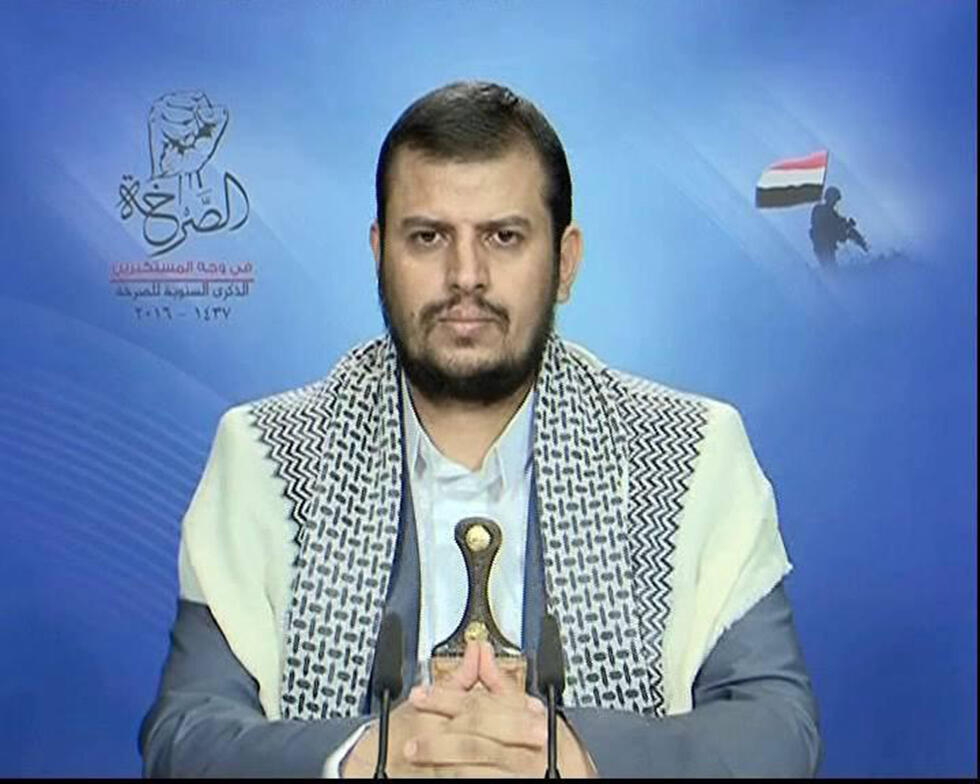
Abdul-Malik al-Houthi
Israeli military analyst Ron Ben-Yishai said assessments indicate the Houthis are coordinating with Iran and may be being held in reserve as a future option. He said Israel’s intelligence community is concerned the Houthis may be planning some kind of ground move, possibly alongside Shiite militias in Iraq, and may be trying to lull Israel by refraining from attacks for now. He said the concern has contributed to a significant mobilization of combat divisions to Israel’s borders, mainly in the north, and that Military Intelligence views warning of such developments as a central mission.
First published: 22:19, 03.05.26