

Security officials say that if the campaign against Iran ends soon, fighting against Hezbollah in northern Israel could continue afterward. According to those officials, the current fighting in the north is focused mainly on defense, as the military has decided to keep residents in their homes rather than evacuate them. At the same time, they argue that the situation presents a rare opportunity to create the conditions for disarming Hezbollah — a process that would require time and significantly greater firepower, which is currently directed toward the campaign against Iran.
Defense officials say that once the Israeli Air Force’s attention is fully redirected to the Northern Command and Hezbollah, the campaign will become more effective. They speak in terms of weeks regarding the war with Iran, and months regarding the confrontation with Hezbollah.
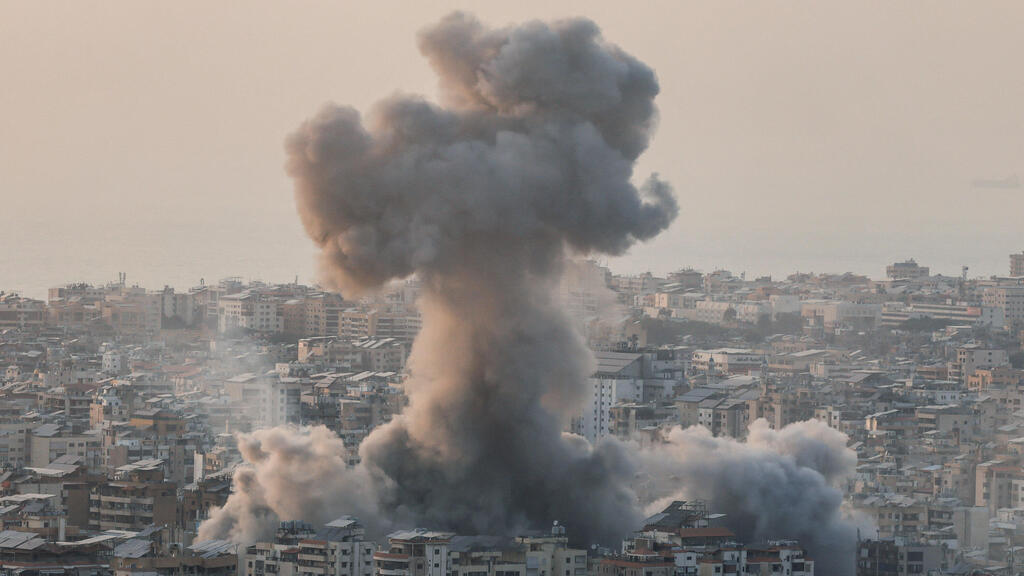
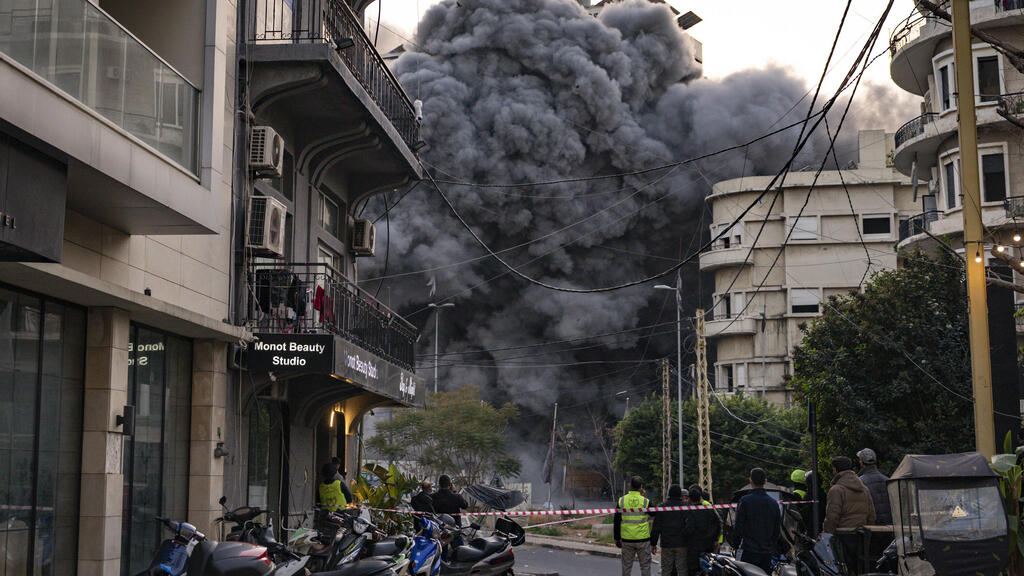
Attack in Beirut
(Photo: Adri Salido/Getty Images)
They note that developments largely depend on the United States and its decision on ending the campaign against Iran. If Hezbollah stops its attacks once the Iran campaign concludes, Israel will consider whether to continue fighting in the north or adjust its plans accordingly.
Military activity expected to expand — question is how far
Meanwhile, Israel’s security cabinet met Thursday evening to discuss expanding the campaign in Lebanon. No decision has yet been made about launching a major large-scale operation in the country, and there is certainly no decision to target infrastructure belonging to the Lebanese state.
Footage: IDF activity in southern Lebanon
(Video: IDF Spokesperson)


Several operational options are being carefully examined, ranging from a broad ground operation reaching the Litani River to more limited actions in southern Lebanon targeting houses known to store Hezbollah weapons. Officials believe the IDF’s activity will expand, but the key question is how far Israeli forces will go. Senior officials say a scenario in which troops advance all the way to the Litani is considered an extreme option, with planners currently leaning toward more moderate measures.
A 'window of opportunity' to dismantle Hezbollah
The Washington Post reported that Israel rejected a ceasefire proposal from the Lebanese government following Hezbollah’s entry into the war. According to the report, the proposal included support for efforts by the Lebanese army to confiscate Hezbollah’s weapons and expressed willingness for eventual direct negotiations with Israel under U.S. auspices.
An adviser to Lebanese President Joseph Aoun told the newspaper that the president is urgently seeking ways to halt the attacks and prevent further destruction in the country.
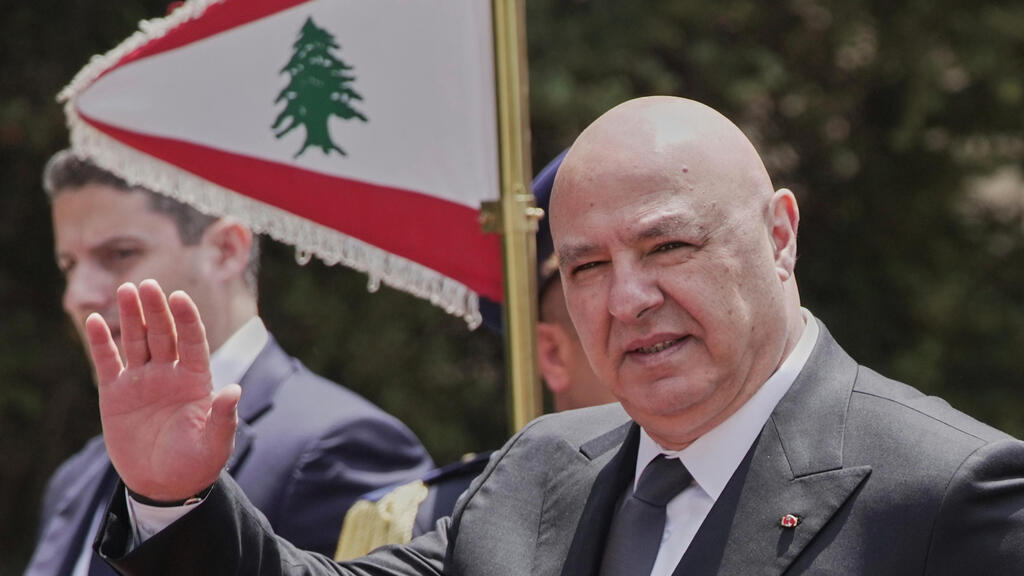
Lebanese President Joseph Aoun, archive
(Photo: AP Photo/Hassan Ammar)
Sources quoted in the report said Israeli leaders now view the situation — with the United States fighting alongside Israel against Iran — as an opportunity to fulfill a long-standing objective: eliminating Hezbollah and expanding Israel’s regional influence.
One official familiar with the matter said Cyprus had offered to host talks between Israel and Lebanon, but added that Israel is currently determined to dismantle Hezbollah. The official estimated, in line with assessments by Israeli defense officials, that the confrontation with Hezbollah could continue even after the war with Iran ends.
The Washington Post also noted French President Emmanuel Macron’s intervention. According to the report, Macron warned Prime Minister Benjamin Netanyahu against invading Lebanon and suggested that French troops could assist the Lebanese army in disarming Hezbollah.
However, diplomats quoted in the report said Israel appears determined to “finish what it started in September 2024,” when it launched a broad offensive against Hezbollah that began with the surprise pager attack and continued with the assassination of the group’s leader, Hassan Nasrallah.
One diplomat involved in mediation efforts said that while the United States is focused on Iran, Israeli leaders see a window of opportunity to “get rid of Hezbollah once and for all.”
'The campaign will not be short'
IDF Chief of Staff Lt. Gen. Eyal Zamir visited Northern Command on Thursday together with Northern Command chief Maj. Gen. Rafi Milo and other commanders. The military said Zamir instructed the reinforcement of forces in the northern sector.
“This campaign will not be short,” Zamir said during the visit. “We will bring additional forces and capabilities to the north. We will continue to operate with great intensity and keep moving forward.”
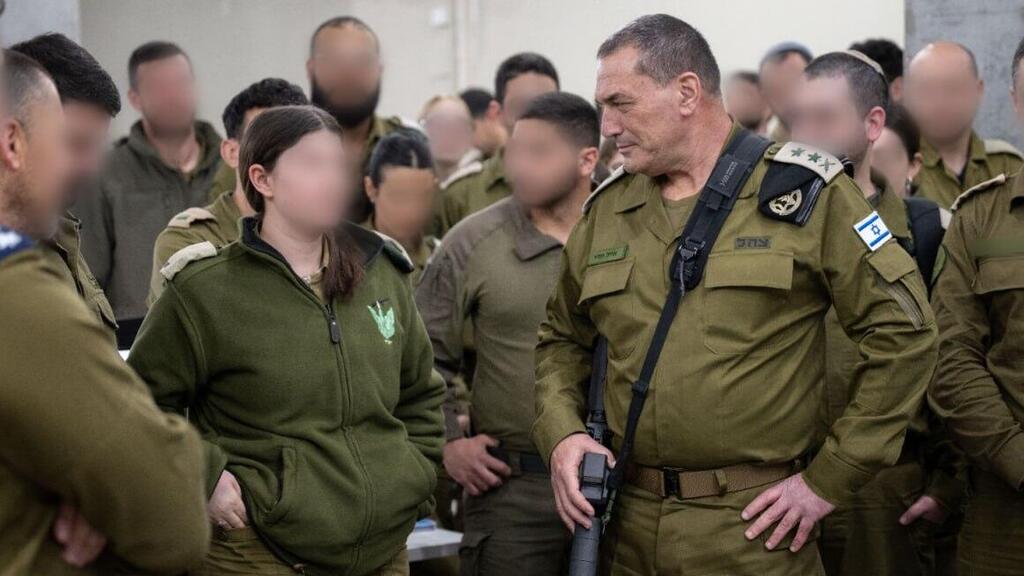
The IDF chief of staff at Northern Command
(Photo: IDF Spokesperson)
Zamir also addressed criticism over the decision not to update residents in northern Israel ahead of the massive Hezbollah barrage between Wednesday and Thursday night.
“We are in a multi-front war,” he said. “We are operating simultaneously against Iran and its proxies and acting forcefully against a regime of evil. Every strike in Iran weakens all of its proxies. The war against Hezbollah is another central front, not a secondary one.”
“We make decisions every day with the security of the state and its citizens as our main consideration. We are acting for the residents of the north and their safety. We will investigate last night’s decisions and learn from them. If there was a mistake, the responsibility is first and foremost mine.”
“We must not be confused — we are fighting absolute evil. Our enemies must not be allowed to demoralize us.”
He added that Israel will continue to intensify operations in the north and reinforce its forces.
“Hezbollah made a serious mistake and will continue to pay a heavy price. The Lebanese government is not enforcing its authority on its own territory — therefore we will do it. Of the hundreds of launches fired last night, only two landed in Israeli territory. That is a very significant achievement.”
Searching for launchers 'like a needle in a haystack'
A military official described the hours leading up to Hezbollah’s massive barrage Wednesday night. According to the official, once Hezbollah “pulled the trigger,” the Israeli Air Force began striking buildings in Beirut’s Dahieh district whose basements were being used as weapons depots.
The Air Force quickly realized the barrage could expand and deployed numerous aircraft to hunt for launchers and terrorists. According to information obtained by ynet and Yedioth Ahronoth, Hezbollah had planned to fire about 600 rockets of various types toward Israel.
In the end, about 200 were launched, largely because aircraft already in the air prevented dozens of launchers from being deployed.
“What happened that night will be talked about for a long time,” the official said. “Terror operatives were eliminated and dozens of buildings collapsed in Dahieh.”
Destruction of a Hezbollah launcher
(Video: IDF Spokesperson)
According to the IDF, Hezbollah is currently launching about 100 rockets per day. Two-thirds are fired at Israeli forces near the front lines and one-third toward civilian areas in Israel. In addition, about 100 drones have been launched so far, most of which were intercepted.
Even before the heavy barrage, Northern Command carried out operations aimed at disrupting Hezbollah’s launches. Despite those efforts, the military managed to strike only one launcher. A senior military official said locating launchers is extremely complex — “like searching for a needle in a haystack.”
Following the barrage, Northern Command launched a series of strikes in Lebanon, including the destruction of additional “terror buildings” in central Beirut, the elimination of Radwan Force operatives and deeper control in southern Lebanon.
So far, about 100 Radwan fighters — who moved south at the start of the campaign — have been killed, according to the IDF, and are now largely focused on defensive operations. One of the most significant threats identified by Northern Command is anti-tank missile fire. Since the start of the campaign there have been about 20 such incidents, all targeting Israeli forces operating inside southern Lebanon.
The IDF continues to stress that Hezbollah is an organization that must be disarmed, and officials in Northern Command believe that only the Israeli military has the ability to dismantle and significantly damage the group.
Despite some actions against Hezbollah, the Lebanese army has achieved only limited success. Israeli officials are considering how to increase pressure on Lebanon to confront Hezbollah. While significant steps have been taken since the start of the current campaign, officials say Lebanon is still far from having the real capability to address the issue.
For now, defense officials say, it is not the right time to strike Lebanese state infrastructure — though they note that such a move ultimately remains a matter of political decision.