

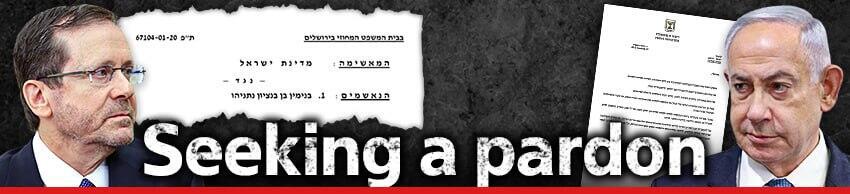
In a letter to President Isaac Herzog written by Prime Minister Benjamin Netanyahu last Thursday and submitted on Sunday, the word “pardon” does not appear explicitly. However, a full 14-page request for a pardon was included, detailing the reasons for the appeal and why he believes the president should grant it.
Netanyahu argued that “personal circumstances”—namely, the planned 2028 retirement of Judge Rivka Friedman-Feldman, who heads the panel overseeing his trial—have resulted in an “unprecedented pace” in the proceedings, with most weekdays now dedicated to court sessions. This, he said, “places an increasing burden on the prime minister’s shoulders.”
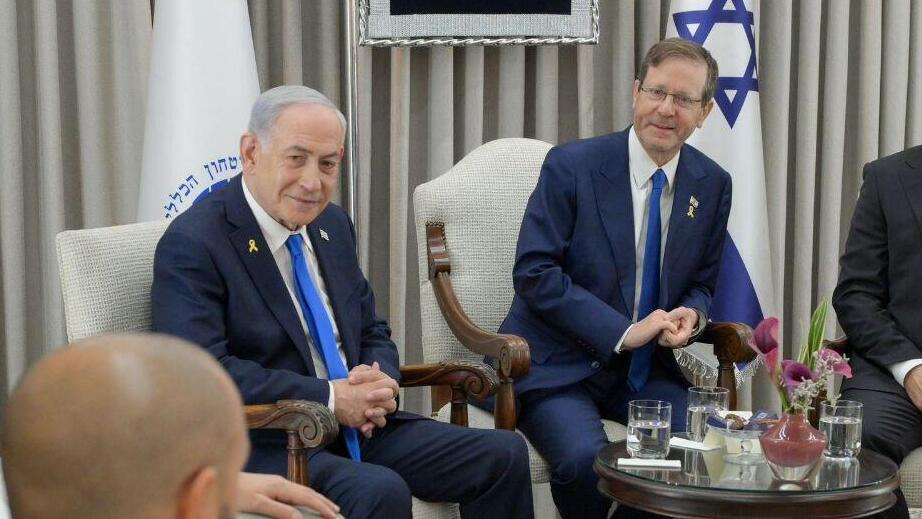
The request states that this strain comes “at a time when the prime minister is required to devote his full time and energy to historic developments unfolding in the Middle East and around the world.” It claims that “due to an external constraint, the expansion of trial days was unavoidable, and the criminal justice system offers no tools to alleviate this issue.”
Another argument put forward is Netanyahu’s lifelong public service. The request describes him as “a public servant who has dedicated his life to the State of Israel and its citizens,” adding that “his entire adult life has been spent in public service. This commitment is his life’s mission.”
It goes on to say that “Netanyahu’s contribution to the country and society is immense and should be beyond dispute,” citing his military service in the elite Sayeret Matkal unit and the death of his brother, Yoni Netanyahu, in the 1976 Entebbe rescue operation.
According to the request, Netanyahu “led a global campaign to prevent Iran from acquiring nuclear weapons.” It claims that during the 12-day war against Iran in June, he led Israel in a “historic war” against Iran’s nuclear and ballistic missile infrastructure. Under his leadership, it adds, “Israel struck a major blow against Hezbollah and saw the collapse of the Assad regime in Syria.”
Simultaneously, the prime minister is said to have “spearheaded the campaign to dismantle Hamas rule and to bring home Israeli hostages.” Over the past two years, the request states, the campaign in Gaza has led to the return of hundreds of captives, and Netanyahu “has acted, and continues to act, with the same determination to bring home the fallen hostages’ remains for proper burial.”
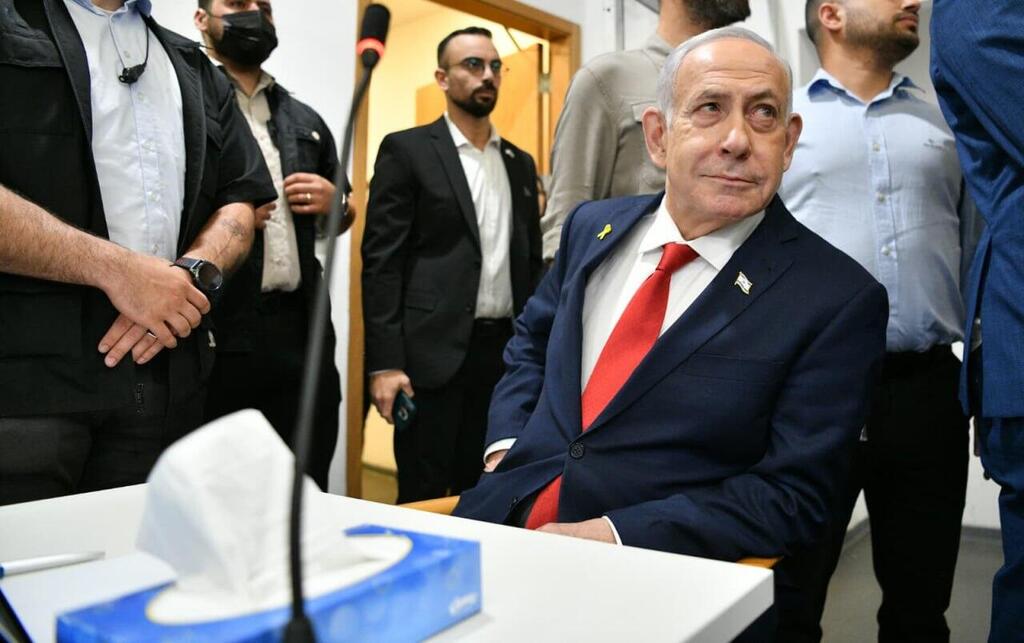
Prime Minister Benjamin Netanyahu in court
(Photo: Reuven Castro)
Netanyahu also wrote that “Israel is currently working alongside the United States to advance an international agreement aimed at ending the war in Gaza, dismantling Hamas’ military capabilities, and demilitarizing the Gaza Strip, which could ultimately expand regional peace agreements.”
He said the emerging understandings between the United States, Israel, Arab states and other countries “require significant preparation, intensive diplomatic and security efforts and constant attention.” In this context, he argued, “there is a compelling public interest in allowing the prime minister to dedicate his full time and energy to these weighty responsibilities.”
The request also implies that granting a pardon could lead Netanyahu to moderate his government's controversial judicial overhaul push and proposed reforms to Israeli media. “In addition, a pardon would allow the prime minister to act to heal the national divide, and to address other issues—such as the judiciary and the media—which he is currently prevented from engaging with due to his ongoing trial,” it said.
“Ending the trial would reduce the severe social and public damage, ease national polarization, promote sincere dialogue across sectors of society, and enable the prime minister himself to take steps toward reconciliation and healing. More broadly, it would foster the calm that the Israeli public so deeply longs for.”
In conclusion, the request states that “all of this has led the prime minister to conclude that the best interests of the State of Israel and its citizens require an end to the criminal proceedings against him.” It adds that while Netanyahu “believes and continues to believe that his personal interest lies in seeing the trial through to its end, confident it will result in full acquittal,” he is nevertheless “prepared—even in this case—to place the public interest ahead of his own.”
The request cites “once-in-a-generation opportunities now on the table” and the “urgent need for national unity and healing” as reasons why, in Netanyahu’s view, the public interest points in a different direction.