

The world’s media spent much of Tuesday afternoon extensively covering the ceasefire in the war between Israel and Iran, highlighting the intense pressure U.S. President Donald Trump applied to achieve it. The headlines were overwhelmingly unprecedented in their criticism of Israel, including public admonishments—often laced with profanity—directed at Prime Minister Benjamin Netanyahu for violating the agreement, and a public order from Trump to "Bring your pilots home, now!" to uphold the ceasefire.
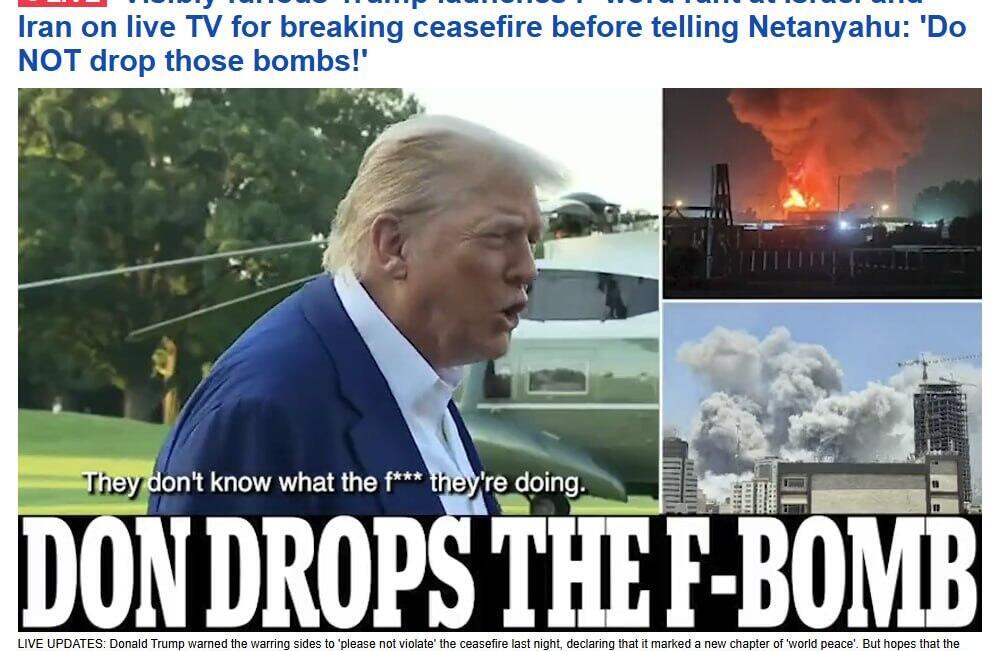
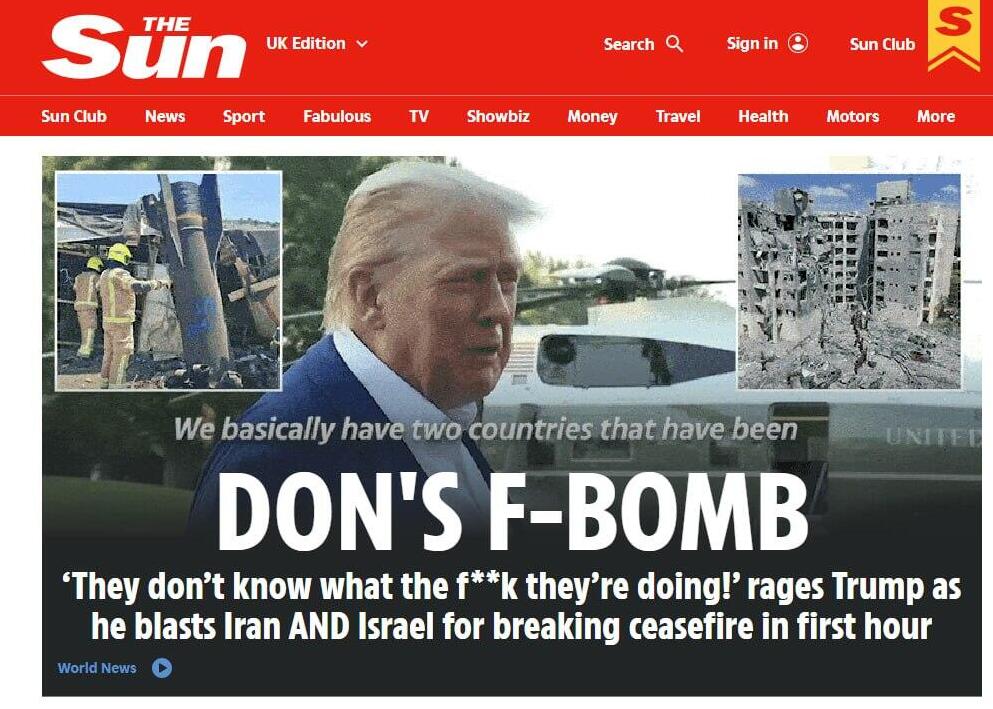
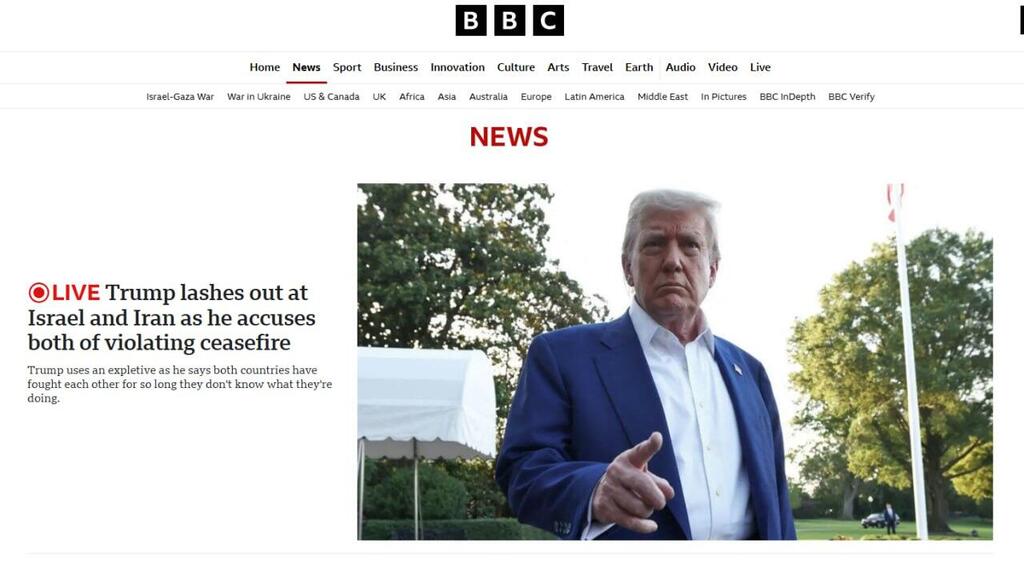
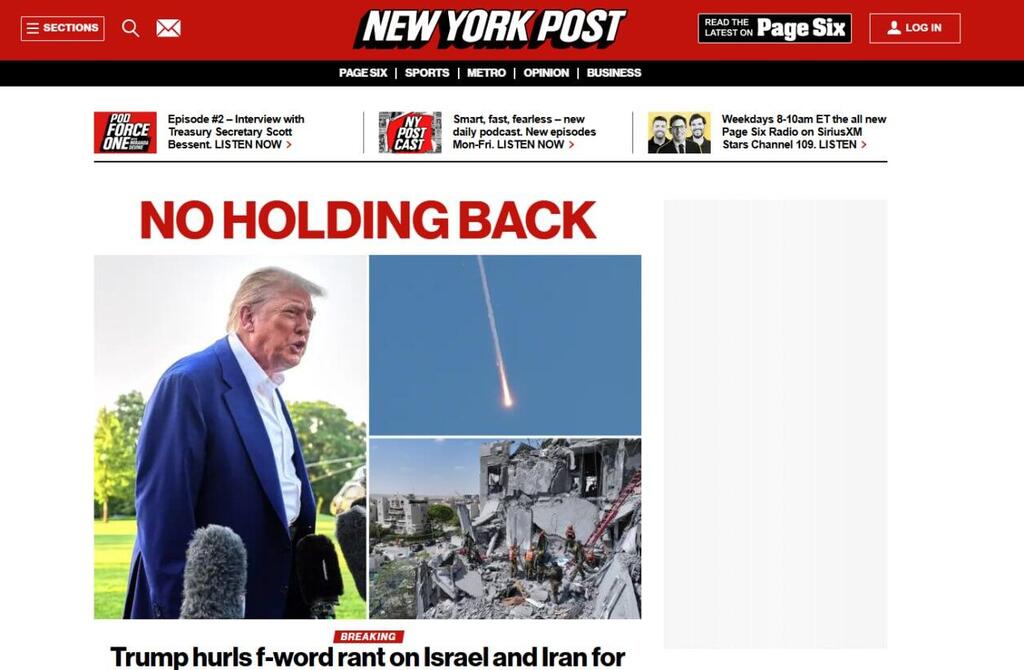
The British tabloid Daily Mail, typically pro-Israel, featured a front-page screaming: “Trump drops F-BOMB,” quoting Trump en route to Air Force One for the NATO summit in The Hague—where he used the epithet “F**k” to express fury, accusing Israel and Iran of “not knowing what they’re doing.” The paper reported a “furious conversation” between Trump and Netanyahu moments later on the White House lawn, noting Trump “appeared visibly angry.”
Trump drops the F-bomb while speaking to reporters en route to Air Force One


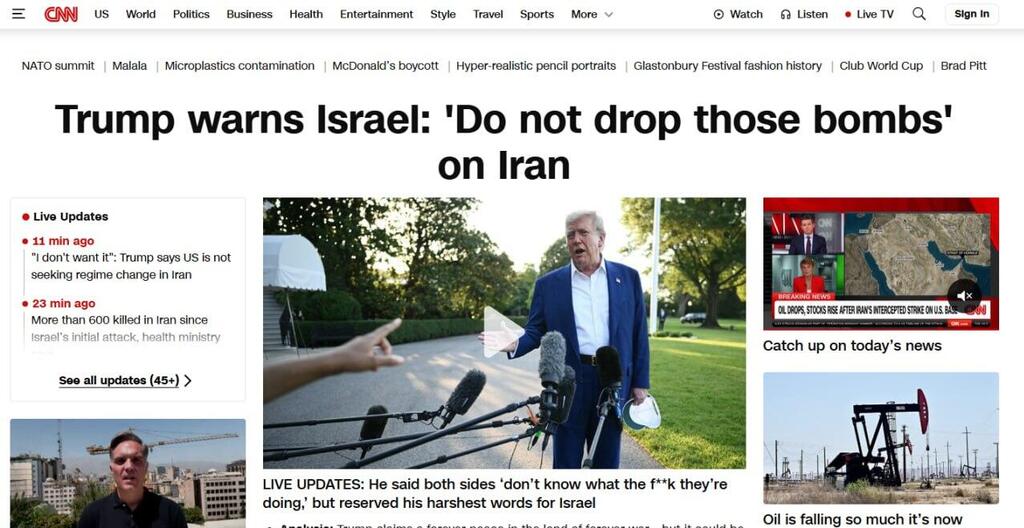
On CNN’s website, Trump’s TruthSocial post made the headline: “Trump warns Israel: Do not drop those bombs.” CNN noted he even questioned whether one of Iran’s missiles had been launched intentionally—or perhaps “by mistake.”
Trump’s bet pays off
CNN detailed how Trump’s mood shifted within hours: “Trump, elated last night at the announcement of the Israel‑Iran ceasefire, stayed up late watching coverage as it went into effect. But his anger grew as he realized both nations were violating the deal.” CNN cited a White House source describing Trump’s call to Netanyahu as “unusually firm and direct.”
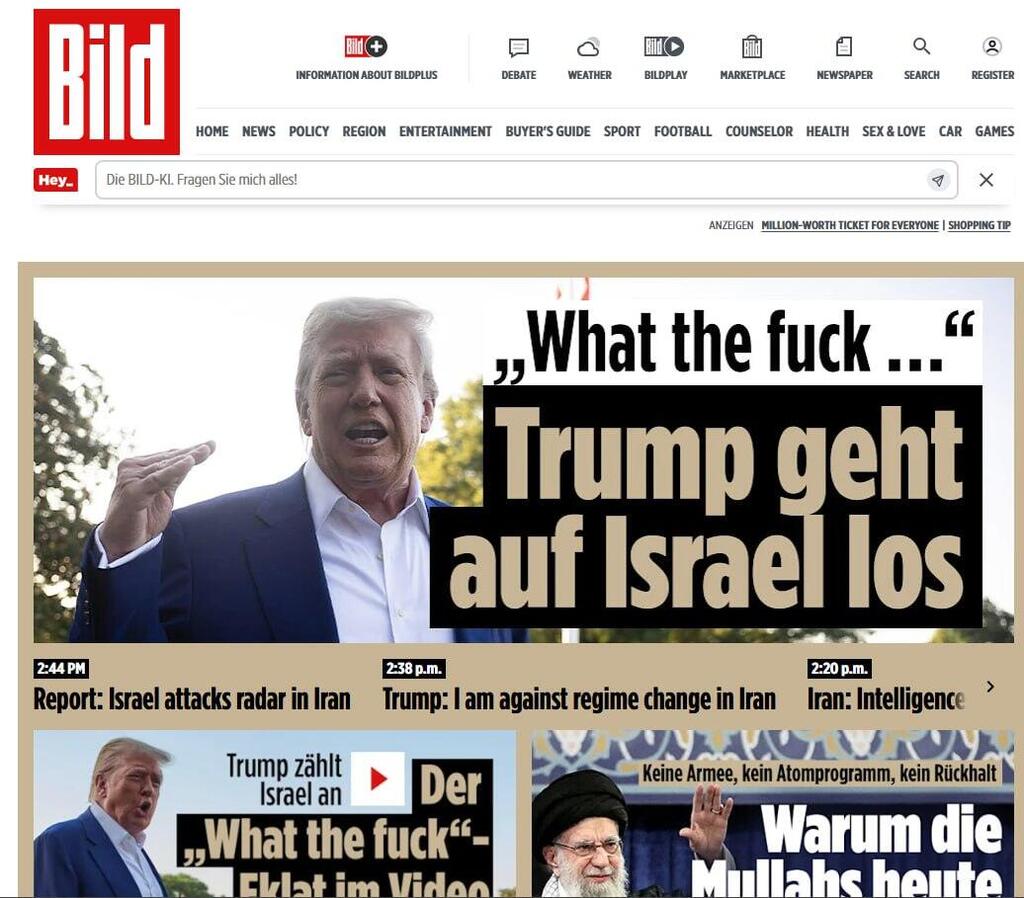
German pro‑Israel tabloid Bild similarly noted public shock: Headlined “’What the f**k’ – Trump suddenly attacks Israel,” the story emphasized that he blamed Israel—not Iran, who fired first after the ceasefire—demanding Israel end its retaliatory strikes.
Despite Trump’s anger, global outlets still ponder what this sudden ceasefire means. Editorial support came even from news outlets Trump often criticizes as “fake news.” In a CNN opinion piece, Stephen Collinson argued Trump’s gamble in ordering strikes on Iran’s nuclear sites paid off: “Trump made a bet that many skeptics saw as irresponsible — that he could hammer Iran’s nuclear plants without plunging the U.S. into a new Middle East quagmire to mirror Iraq. So far, he’s been proved right."
Collinson also wrote, under the heading "Trump's victory" that: “While Trump might have initially been uneasy about Israel’s assault on Iran, which seemed calculated to draw him in, he asserted control and exploited an opening to severely degrade Iran’s nuclear program with little cost to the US. ... For sure he got lucky. But he also demonstrated strategic acumen and decisiveness and will always bask in the daring mission by B-2 bombers carrying bunker-buster bombs on a marathon flight from Missouri.
BBC North America editor Gary O’Donoghue, in a commentary, emphasized uncertainty ahead. “Things change by the minute. Ceasefire is not peace, and it requires negotiation.” He also noted outstanding questions about how much nuclear capability Iran retains—particularly the ~400 kg uranium stockpile enriched to 60%—and added: “The U.S. and Israel will undoubtedly want on‑the‑ground inspectors to measure how many years they’ve pushed Iran’s nuclear timeline back. Every step risks unraveling.”
Victory narrative—and Gaza remains
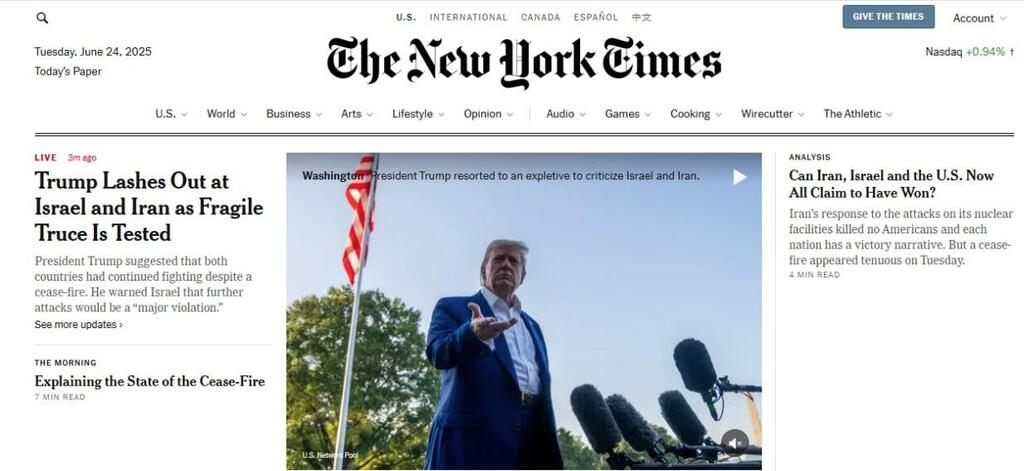
The New York Times also front‑paged “Shaky Ceasefire,” but Iran-focused correspondent Farnaz Fassihi reported Tehran feared a prolonged war and “sought an exit.” Based on conversations with four Iranian sources, she noted that, while Supreme Leader Khamenei ordered retaliation to save face, it was kept “limited”—and the strikes on al‑Udeid Air Base in Qatar were coordinated in advance.
Ali Vaez of the International Crisis Group told the Times: “Each side can now claim a victory narrative. The U.S. can say it rolled back Iran’s nuclear program. Israel can say it weakened its regional rival. And Iran can say it survived and stood up to far stronger military forces.”
Get the Ynetnews app on your smartphone: Google Play: https://bit.ly/4eJ37pE | Apple App Store: https://bit.ly/3ZL7iNv
Global media also scrutinize Netanyahu’s political future after what is seen as a significant 12‑day war. Reuters ran an analysis titled: “Netanyahu sees redemption in Iran war, but Gaza looms large" It noted that after months of political turmoil, war, and plunging popularity, the Israeli offensive against Iran could redefine Netanyahu’s legacy. Reuters quoted Netanyahu’s office describing Operation Rising Lion as achieving “massive historic gains” and placing Israel “on par with world powers.” The analysis notes a stark contrast between that triumphant tone and the October horrors that badly damaged his calculated national‑security image and caused his public support to collapse.
However, Reuters cautioned that the Gaza war continues—serving as “a constant reminder of his 2023 mistakes”—and said pressure will likely build on Netanyahu to negotiate a ceasefire and secure the release of remaining hostages.