

Two separate espionage cases came to light in Europe on Thursday against the backdrop of the ongoing war between Russia and Ukraine. In Germany, a Ukrainian national was arrested on suspicion of working for Russian intelligence and gathering sensitive information about Europe's defense industry and NATO military facilities. Meanwhile, a Reuters investigation revealed how Russia's Federal Security Service (FSB) allegedly staged the arrest of a young Romanian man convicted of spying for Ukraine, months after he had already been taken into custody.
German prosecutors said the Ukrainian suspect, identified as Vadim Y., was arrested in the eastern state of Brandenburg. According to prosecutors, he had been in contact with a Russian intelligence service through an intermediary since at least July 2025. His activities allegedly included gathering military intelligence on the production of armored vehicles, ammunition and explosives, as well as military personnel and facilities in areas intended to protect NATO's eastern flank.
Gallery
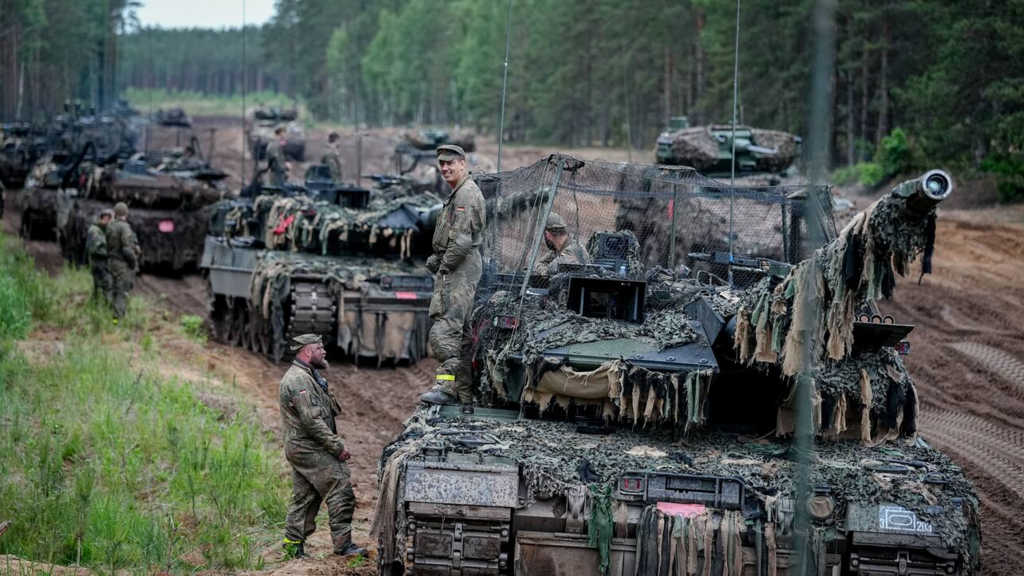
Tank from German armored brigade at NATO exercise in Lithuania. Alleged spy was interested in information about German forces in the country
(Photo: Kay Nietfeld / dpa)
German media reported that the suspect is 53 years old and lives in Eisenhüttenstadt, in eastern Germany. According to "Der Spiegel," one of his targets was a German armored brigade scheduled to be stationed in Lithuania as part of NATO's preparations against the Russian threat. The brigade is expected to become fully operational by the end of 2027, with approximately 4,800 soldiers and 200 civilian employees. Its deployment is one of Germany's flagship initiatives to strengthen the alliance's eastern flank.
Some of the information collected by the suspect was publicly available. However, German prosecutors said he also approached people working in Europe's defense industry in an effort to obtain additional details. According to the German newspaper "Bild," officers from the Federal Criminal Police Office arrested him following intelligence provided by Germany's domestic intelligence agency.
The suspect is expected to appear Friday before an investigating judge at the Federal Court of Justice, who will present the arrest warrant and determine whether he should remain in custody pending further proceedings. German authorities have not released additional details about his identity or the extent of the information he allegedly managed to pass to Russia.
'They took me out of prison and staged an arrest'
Alongside the arrest in Germany, a Reuters investigation published Thursday uncovered another case, this time involving Russia's accusations that a foreign national had been spying for Ukraine.
At the center of the investigation is David Adrian Kercso, a 23-year-old Romanian citizen who grew up in England and traveled to the Black Sea coast in 2024 to pursue a romantic relationship with a woman he had met online. His journey ended with his arrest, his transfer into the custody of Russia's FSB and a 15-year prison sentence for espionage.
The staged arrest of David Adrian Kercso in Russia


In a video released by the FSB, a young man wearing a blue wool hat and carrying an Adidas backpack is seen walking along a path in a park. Suddenly, two security officers emerge from a van, tackle him and pin him to the ground. A voice in the background asks him in English for his name, while a gloved hand turns his face toward the camera. The young man identifies himself as David Adrian Kercso and says he is from Romania.
But a Reuters investigation found that the footage, presented by Russian state media as the moment of the suspect's arrest, was not filmed during his actual detention. An analysis of the video, compared with Russian court records, showed that Kercso had already been in custody for months when it was filmed.
His story began in late 2023, when he was living in Reading, west of London, and working for an electronics recycling company. Around that time, he met a woman named Valeria online. She lived in Abkhazia, a breakaway region of Georgia controlled by pro-Russian separatists since the early 1990s.
The two began a long-distance relationship, and in August 2024, Kercso traveled through Turkey to meet her. Family members said they met in the Russian city of Sochi before crossing into Abkhazia a few days later. He remained in the region for several months, but their relationship deteriorated, partly because he was running out of money, and he eventually decided to return home.
His mother, Julia Kercso, told Reuters that she had tried to prevent her son from making the dangerous trip. "I told him to not go there because it's very dangerous, because it's a war," " she said. "And he never listened to me yet."
Kercso was supposed to return to England on November 28, 2024, but he disappeared that day. He stopped answering calls and messages, leaving his family with no information about his whereabouts. In letters he later sent from prison, he claimed that he had been arrested in Abkhazia that same day.
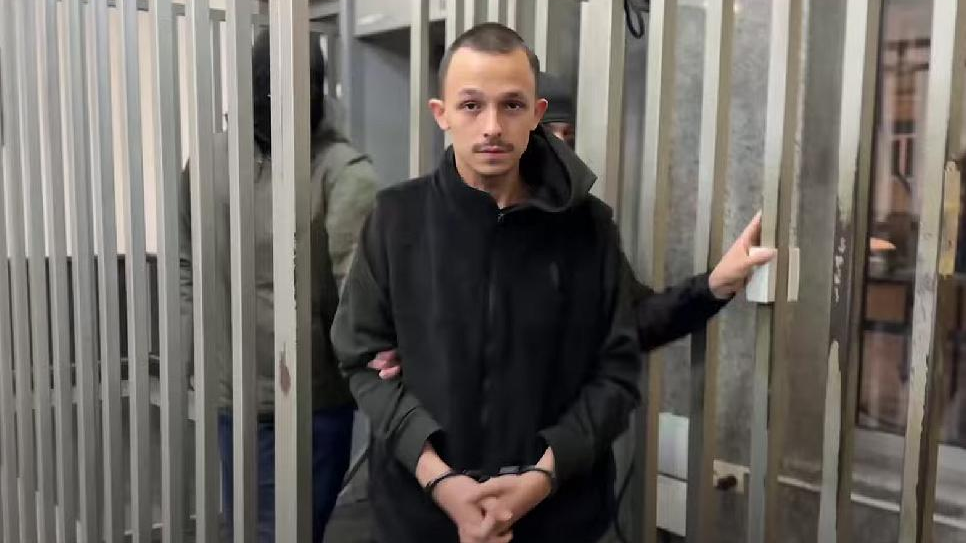
David Kercso in prison. 'Coming here was a huge mistake'
(Photo: Security Service of Abkhazia (SGB))
About two weeks after his disappearance, on December 13, 2024, the separatist authorities in Abkhazia announced his arrest and released a video showing him being escorted by local security officers. In another recording, he appeared to confess to having contact with Ukrainian intelligence and receiving instructions to photograph military facilities in Abkhazia using a drone.
However, in letters sent to his family from prison, Kercso claimed the confession was false. He said his captors forced him to memorize a script they had dictated and promised that if he repeated it on camera he would be released and allowed to return home. Instead, after the recording, he was taken to the border and handed over to Russian FSB officers.
The day after the Abkhazian video was published, on December 14, Kercso appeared before a judge at a court in Sochi. Court documents examined by Reuters show that over the following four months, he made 10 court appearances, during which his detention was repeatedly extended.
Despite that documented custody, Russian authorities later released another video purportedly showing the moment of his arrest. In his letters, Kercso claimed that in mid-April 2025 FSB officers woke him shortly before dawn, removed him from prison and drove him to a nearby location in Sochi to film the staged arrest.
Reuters investigators identified the filming location in a park along the Matsesta River in Sochi by comparing details visible in the video, including streetlights, trees, a bridge and a wall, with satellite imagery and archival photographs. The green vegetation visible at the location indicated that the footage was filmed after the beginning of spring, rather than before his documented arrest in December.
Russian lawyer Yevgeny Smirnov, who is familiar with the case, told Reuters that staged arrest videos are not unusual in the activities of Russia's security services. He said that in dozens of previous cases, detainees who had already been held for months were taken to streets, forests and train stations to film dramatic footage supposedly showing their arrests.
'I was blinded by love and didn't see the warning signs'
Kercso claims that during his detention in Russia he was beaten, held in solitary confinement and tortured. Reuters stressed that it could not independently verify those allegations. The news agency was also unable to examine and verify the full body of evidence presented in the espionage case.
When Kercso was sentenced, the FSB announced that he had provided a Ukrainian intelligence agency with information about the locations of Russian air defense systems in Sochi during the summer of 2024. The Russian security service also released a video in which he appeared to confess to the charges, but Kercso maintains that this confession, too, was coerced.
"None of that happened, they stole my life for no reason and fabricated everything," he wrote in a letter from prison.
Since his arrest, Kercso has learned to speak Russian. He says he misses his family deeply and dreams of returning home. He now hopes to appeal his conviction.
"Now I know that coming here was a huge mistake," he said. "I was blinded by love and didn't see the warning signs."
The FSB did not respond to Reuters' questions, including why it had published footage purporting to show the arrest of a man who had already been in its custody for months.
The security service of the separatist authorities in Abkhazia, the Russian Embassy in London and the foreign ministries of Romania and Ukraine also did not respond. Reuters also attempted to contact Valeria, the woman with whom Kercso had been romantically involved, but received no reply.