

Just three days ahead of a high-stakes White House meeting with Saudi Crown Prince Mohammed bin Salman, U.S. President Donald Trump signaled late Friday that he is considering the sale of F-35 fighter jets to Saudi Arabia—despite concerns within the Pentagon over such a deal.
“They wanna buy a lot of jets, I'm looking at that. They've asked me to look at it. They want to buy a lot of '35' - but they want to buy actually more than that, fighter jets,” Trump told reporters aboard Air Force One. “We make the best jets, we make the best missiles—you saw that when we took out the nuclear capability of Iran,” he added, referring to the U.S. strikes on Iran's nuclear facilities in June, just days before bin Salman’s anticipated visit to Washington.
US President Donald Trump mulls sale of F-35 fighter jets to Saudi Arabia
(Video: from X)


The crown prince is expected to sign economic and defense agreements during his visit. “It’s more than a meeting. We're honoring Saudi Arabia,” Trump said. He also confirmed that normalization with Israel will be discussed, and again voiced hope that Riyadh will join the Abraham Accords, the U.S.-brokered agreements that normalized ties between Israel and several Arab states.
Trump’s remarks come a day after the New York Times reported growing unease in Washington over a potential F-35 sale to the kingdom, with U.S. officials privately predicting the president will move forward with the deal.
A recent Pentagon intelligence report warned that such a sale could risk exposing advanced U.S. technology to China. Officials expressed concern that Saudi Arabia’s defense ties with Beijing—or potential Chinese espionage—could compromise sensitive F-35 systems.
Gallery
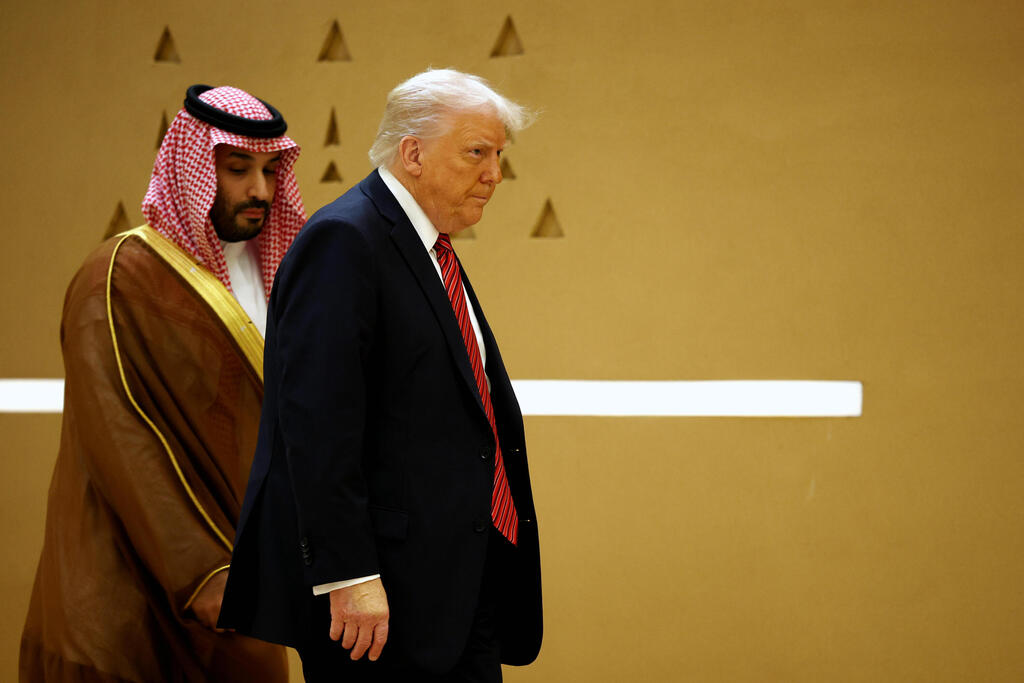
US President Donald Trump and Saudi Crown Prince Mohammed bin Salman
(Photo: Win McNamee/Getty Images)
Last week, Reuters reported that Saudi Arabia’s request for the stealth aircraft had cleared a key stage at the Pentagon. Riyadh is seeking to purchase 48 F-35s in a deal worth tens of billions of dollars—one that could shift the balance of power in the Middle East.
If finalized, the deal would mark a significant concession to Saudi Arabia, as Washington seeks to deepen ties and persuade the kingdom to normalize relations with Israel. The request was submitted directly to Trump earlier this year and has since reached the top levels at the Department of War.
To proceed, the sale would still require approval from the Cabinet, Trump’s formal signature and notification to Congress. While no final decision has been made, officials say the progress signals a U.S. willingness to allow Riyadh access to Lockheed Martin’s most advanced fighter jet for the first time in years.
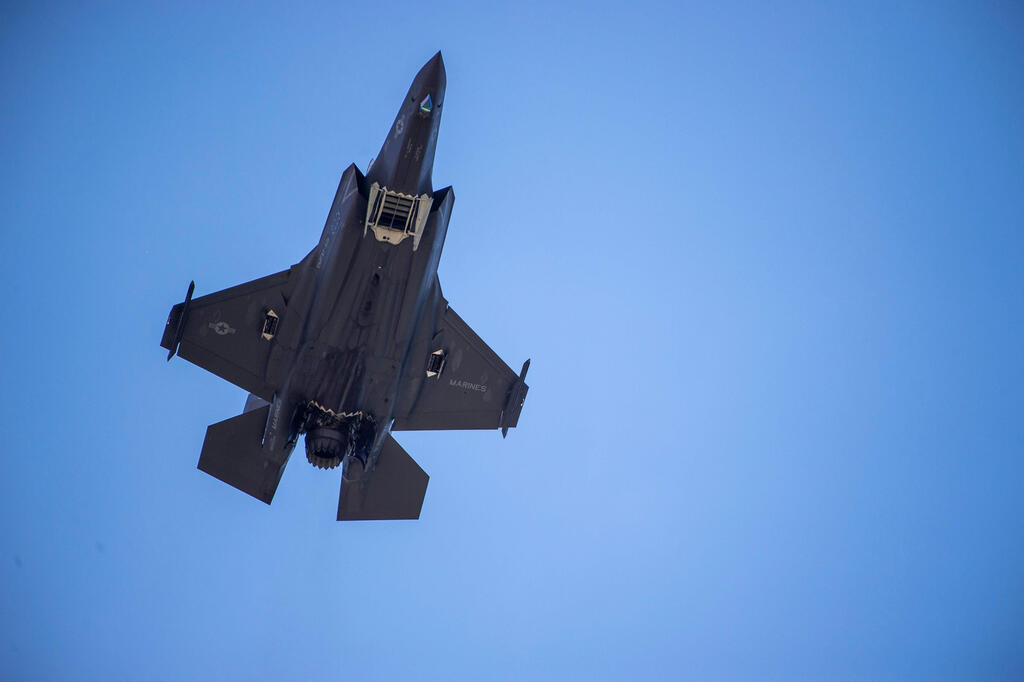
F-35 fighter jet
(Photo: AFP)
The proposed sale is part of broader negotiations in which Saudi Arabia is also seeking a formal defense pact with the U.S. and access to American nuclear technology for a civilian energy program. According to U.S. officials involved in planning bin Salman’s visit, Riyadh is pushing to advance both tracks—defense and nuclear—under a comprehensive agreement with Washington.
If signed, F-35 deal would test Israel’s qualitative edge
Should the F-35 sale move forward, it would represent a significant shift in longstanding U.S. policy, which has until now refrained from selling the advanced fighter jets to Arab states not engaged in normalization with Israel. Such a deal could test the limits of Israel’s “qualitative military edge” and alter the regional balance of power.
Still, officials within the Trump administration reportedly expect Riyadh to take steps toward normalizing ties with Israel—particularly in the wake of the war in Gaza.
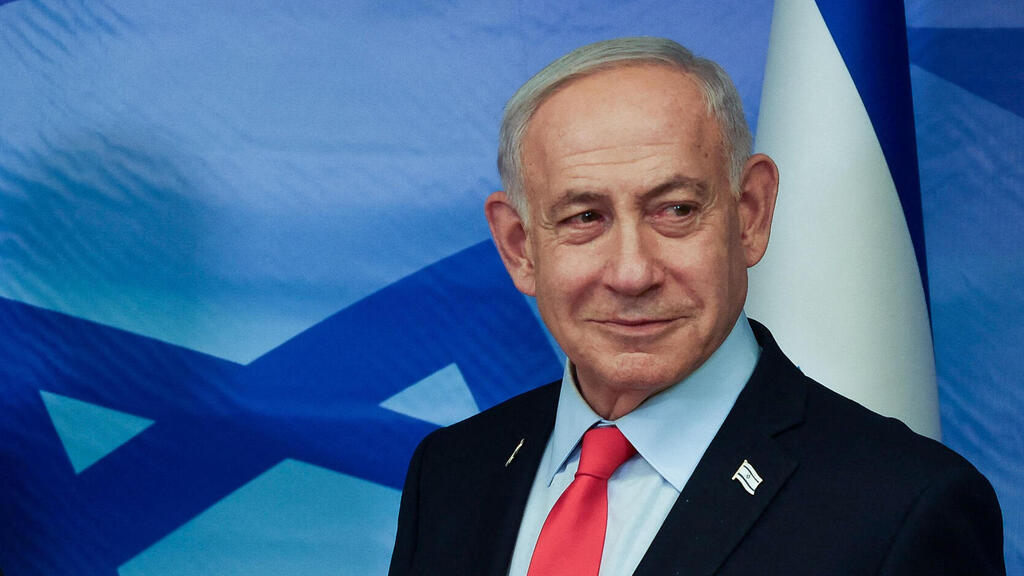
Prime Minister Benjamin Netanyahu
(Photo: Ronen Zvulun / POOL / AFP)
Against that backdrop, the United States is pushing for a new United Nations Security Council resolution to establish an international stabilization force in the Gaza Strip. But in the draft text, Washington also underscores the prospect of a roadmap to Palestinian statehood—a move widely seen as a nod to Saudi Arabia, which has made normalization contingent on progress toward Palestinian statehood.
The draft resolution builds on Trump’s 20-point framework and his Declaration for Lasting Peace and Prosperity, signed at the Sharm el-Sheikh summit with regional leaders. It states that “the United States will initiate dialogue between Israel and the Palestinians to agree on a political horizon for thriving coexistence.”
According to the draft, a “Board of Peace” would serve as the transitional governing body in Gaza until the Palestinian Authority completes its reform plan and is able to assume control “safely and effectively.” Once the reforms are fully implemented and Gaza’s development progresses, “conditions may finally be in place for a credible path to self-determination and a Palestinian state.”
Despite President Trump’s stated ambition to advance the Gaza plan, his administration has faced diplomatic hurdles in securing Security Council support. On Friday, however, the United States and eight Muslim and Arab nations released a joint statement expressing full backing for the American draft.
Initiated by the U.S. delegation to the UN, the statement aims to accelerate the resolution’s approval and highlight the region’s commitment to a comprehensive plan to resolve the Gaza conflict—at a time when Russia is seeking to complicate the process.
“We are issuing this statement as the Member States that gathered during High-Level Week to begin this process, which offers a pathway to Palestinian self-determination and statehood,” the declaration reads. Signed by Saudi Arabia among others, it stresses that this is a genuine effort and that the plan “provides a viable path towards peace and stability, not only between the Israelis and the Palestinians, but for the entire region.” The nations called for the “resolution’s swift adoption.”