

The government is continuing to advance legislation that would freeze the arrest of Haredi draft evaders without moving forward with their enlistment, even as the IDF faces a shortage of combat soldiers. Ynet has learned that, for now, men’s mandatory service will remain at 32 months, despite an earlier plan to shorten it to 30 months.
The decision was made amid anger over a previous proposal to extend men’s mandatory service to 36 months while advancing legislation that is part of a deal, first revealed by ynet, between Haredi parties and Prime Minister Benjamin Netanyahu. The earlier version, under which men’s service would have been extended to 36 months, has now been canceled.
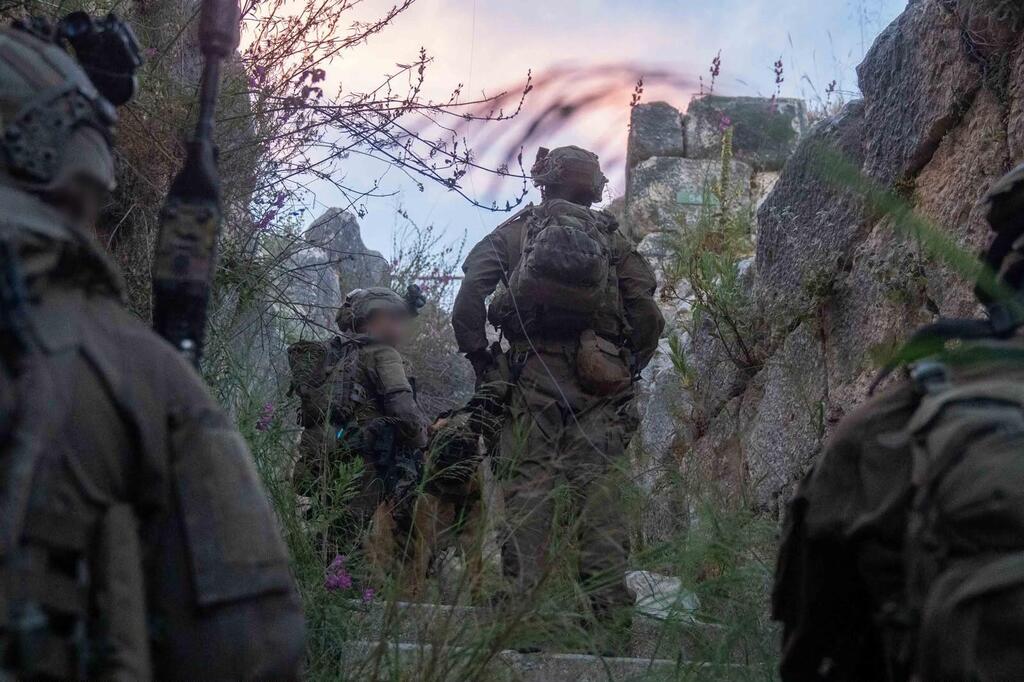
In a message sent Monday evening to Knesset members and obtained by ynet, officials wrote: “In coordination with the Defense Ministry, the government and the IDF, it has been decided to advance in the Foreign Affairs and Defense Committee a temporary order that will, at this stage, set the duration of mandatory regular service at 32 months, as a response to the urgent operational need and in order to prevent mandatory service from being shortened to 30 months. The discussion will take place this coming Thursday.”
In July 2020, men’s service was shortened from 32 months to 30 months. In July 2021, it was decided to restore service to 32 months and postpone the reduction until 2024. Soldiers who enlisted in the IDF from July 2024 are serving only 30 months and are due to be discharged in January 2027. Without a legal amendment extending the service period, the IDF’s manpower crisis is expected to worsen.
The update came a week after the draft bill freezing arrests of Haredi draft evaders was first published. A revised version of the proposal was released Monday with significant changes. Discussions on objections are expected to begin Tuesday, and if the process moves forward smoothly, the bill could also be brought to a vote for its second and third readings.
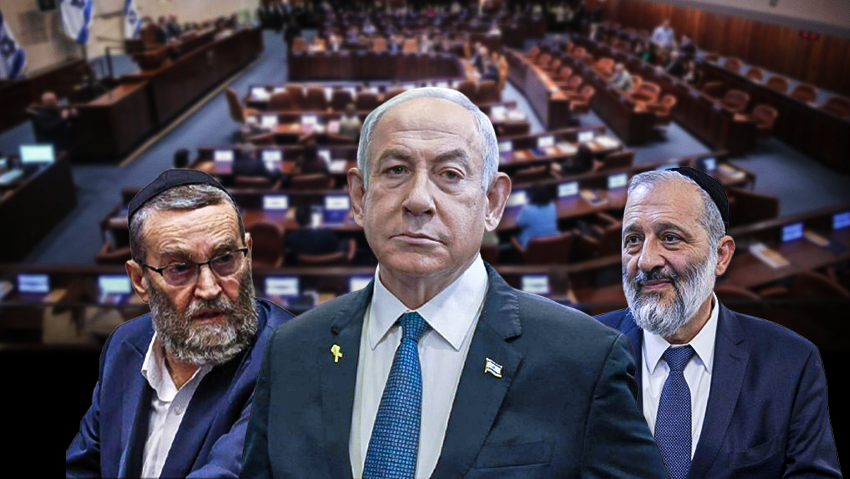
(Photo: Reuven Castro, Amit Shaabi, Knesset Spokesperson’s Office)
Among the main changes, the updated draft removes the time limit on the freeze of arrests. The original version stated that the freeze would apply for only 90 days, but under the new version, the law would remain in effect for five months, until November 30.
Although the bill was originally drafted as a 90-day temporary order, the arrest-freeze law would effectively remain in force for about half a year, rather than only three months during an election period. The reason is Section 38 of Basic Law: The Knesset, which provides that any law set to expire within four months of the Knesset’s dissolution is automatically extended until the end of the first three months of the next Knesset.
In practice, the bill published last week by Foreign Affairs and Defense Committee chairman Boaz Bismuth includes not only a halt to criminal proceedings against Torah students, which in any case are not currently being carried out, but also precedents for a future draft exemption law.