

Iran is pushing a fast-track agreement that it says could end the war, halt fighting in Lebanon and reopen the Strait of Hormuz within seven days, before immediately launching negotiations over its nuclear program.
But U.S. President Donald Trump, who has said an agreement will come “eventually,” either before or after the November midterm elections, appears in no hurry to surrender the naval blockade that has become one of Washington’s most powerful sources of leverage over Tehran. Iran, meanwhile, is maintaining its own hard line.
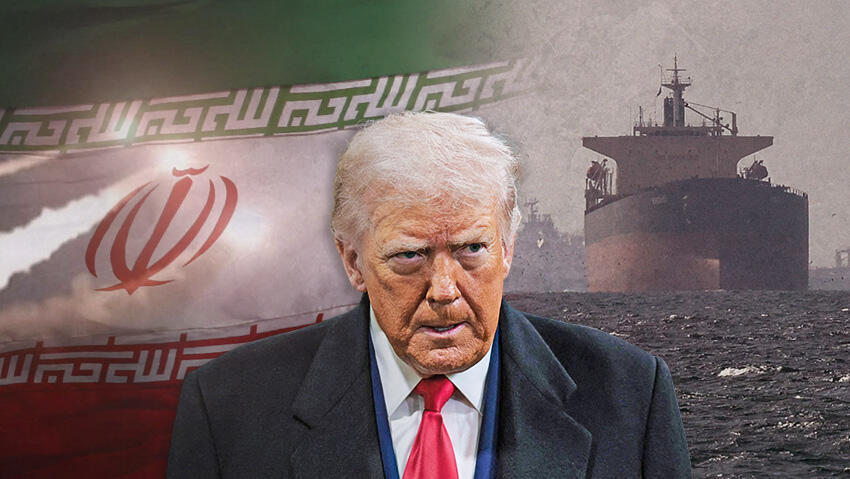
Iran offers accelerated peace deal, with Hormuz reopening on ‘the seventh day’
(Photo: Anna Moneymaker/AFP, shutterstock, REUTERS/Stringer)
A senior Iranian official told Reuters on Friday that Tehran would show no flexibility over its nuclear program and would reopen the Strait of Hormuz only after “all of its conditions are met.”
The official did not spell out those conditions, but Iranian officials have previously demanded an end to the U.S. naval blockade, the lifting of sanctions on Iranian oil sales, the release of at least $12 billion in frozen Iranian assets and an end to the war “on all fronts,” including Lebanon.
The comments came as Iranian Foreign Minister Abbas Araghchi remained in New York, where his spokesman said indirect contacts with Trump representatives Jared Kushner and Steve Witkoff could continue.
Araghchi held three hours of talks with Witkoff and Kushner on Tuesday, mediated by Qatar on the sidelines of the UN General Assembly. The New York Times reported that he was expected to remain in the city through Monday.
At a briefing for international reporters on Thursday, Araghchi outlined Iran’s latest proposal. According to reports, it is essentially an accelerated version of the memorandum of understanding reached in June, an agreement widely seen as giving Tehran significant gains, including a role in managing traffic through the strategically vital Strait of Hormuz.
Iranian officials told the Times that Tehran now wants to implement the agreement’s complicated series of steps far more quickly than the original 60-day timetable.
Araghchi said the entire process could be completed within a week, after which negotiations over Iran’s nuclear program would begin immediately.
Trump's speech during the UN General Assembly
(Photo: UN web tv)


But Tehran is demanding significant concessions first: an end to hostilities on all fronts, including Lebanon; the release of frozen Iranian funds; the lifting of the blockade on Iranian ports; and sanctions relief allowing Iran to resume oil sales.
If those conditions are met, Araghchi said, the Strait of Hormuz would reopen “by the end of the seventh day.”
He added that it would be “better” to reach an agreement before the U.S. midterm elections on Nov. 3.
Trump has an incentive, but also leverage
On paper, Trump has a powerful political incentive to secure a deal before the elections.
Even the announcement of an agreement could drive down oil and gasoline prices, which have surged since the war began and amid Iranian attacks on tankers using the Strait of Hormuz. Polls have shown deep frustration among U.S. voters over rising prices, an issue Republicans fear could hurt them in the battle for control of Congress.
Yet Trump has repeatedly said he is in no rush to strike a deal.
The Wall Street Journal reported Friday that Washington had informed Tehran, through Qatar, that Trump did not intend to lift the naval blockade, as he did following the June agreement before reinstating it in July.
A White House official told the Journal that the blockade, combined with tougher sanctions that this week severely disrupted Iran’s aviation sector, had put Washington in a “strong position” against Tehran.
“President Trump is open to talks with Iran under the right circumstances, but he has no need to negotiate with the Iranians,” the official said.
Trump also remains deeply suspicious after several previous understandings with Tehran unraveled soon after they were reached, whether because of disputes over implementation or divisions inside Iran’s ruling establishment.
Hard-line elements in the Islamic Revolutionary Guard Corps have been accused of carrying out attacks on ships after previous understandings were reached.
That has also raised questions over how much authority Araghchi, regarded as a more moderate figure within the Iranian establishment, actually has to conclude an agreement. Hard-liners inside Iran have already criticized the renewed contacts with Washington.
Iranian official: Chances of diplomacy are ‘extremely low’
Ali Vaez, director of the Iran program at the International Crisis Group, told the New York Times that Tehran’s proposal was a “smart move.”
“They know this is very tempting for President Trump, because it ends an unpopular war and lowers energy prices ahead of the midterms,” he said.
At the same time, Vaez noted, the proposal would revive an agreement that was largely favorable to Iran, while the compressed timetable for reaching nuclear negotiations could appeal to a president eager for rapid results.
Iran has its own reasons to want an agreement before the U.S. elections.
Beyond Tehran’s urgent desire to lift the blockade and sanctions as its domestic economic crisis worsens, many analysts believe Trump could face fewer political constraints after the midterms and could become more willing to resume an intensive military campaign against Iran.
Trump himself threatened during his address to the UN General Assembly this week to “destroy” Iran if it failed to reach an agreement with him.
Reuters described both sides as confronting essentially the same dilemma: Washington and Tehran each want an agreement, but neither wants to surrender its main source of leverage without receiving something tangible in return.
For Trump, that leverage is the blockade. For Iran, it is the severe disruption of traffic through Hormuz. The United States maintains that the strait is not technically closed, although shipping remains drastically reduced.
If Washington and Tehran cannot turn that leverage into an agreement before the elections, the diplomatic window could narrow as the risk of escalation rises.
A senior Iranian official quoted in the same report warned that Tehran would respond forcefully to any American escalation.
“Our finger is on the trigger,” he said. “The Americans know what they need to do, but because of their excessive demands, the chances of diplomacy resolving this crisis are extremely low.”
According to regional sources who spoke to Reuters, Tehran is prepared to drop its demand that ships pay transit fees to pass through Hormuz from the main agreement.
Iran, however, still wants the demand included in a separate annex. The sources said Tehran would regard any arrangement as temporary and would not formally abandon its claim to authority over the strait, which is an international waterway and was open to unrestricted commercial traffic before the war.
This time, Saudi Arabia is pushing against concessions
Another obstacle has emerged from the Gulf.
Saudi Arabia and other Gulf states are now opposing an agreement with Iran, at least one resembling the June memorandum of understanding, according to reports by the Associated Press and Wall Street Journal.
Saudi Arabia had supported renewed diplomatic efforts during the summer and opposed a return to war. Its position has now shifted.
People familiar with the discussions told the Journal that both Saudi Arabia and the United Arab Emirates were urging Washington not to make concessions to Tehran, including lifting the blockade on Iranian ports or easing economic pressure.
Another official told AP that the change was driven by the escalating confrontation with the Houthis, Iran’s allies in Yemen.
The Houthis have attacked Saudi oil facilities and, during their latest territorial advances in Yemen, seized areas commanding the Bab al-Mandab Strait, the strategic passage linking Europe and Asia through the Red Sea and Suez Canal. Its importance has grown further as traffic through Hormuz has been severely disrupted.
The official said Saudi Arabia had previously been able to “live with” an agreement that granted Iran some degree of control over Hormuz.
That calculation changed, he said, after the Houthi advances and an attack by militias in Iraq on Saudi Arabia’s strategic East-West Pipeline, which allows the kingdom to export oil through the Red Sea while bypassing Hormuz.
The Wall Street Journal reported that a similar shift had taken place in the UAE, which previously supported diplomatic efforts to end the conflict.
Emirati officials are now playing down expectations for talks with Tehran following recent confrontations with Iran and continued attacks on vessels in Hormuz.
Gulf states, the Emirati officials were quoted as saying, should not accept a settlement that gives Iran permanent control over the strait.
Meanwhile, sources described as knowledgeable told Iran’s Fars news agency on Friday that reports of a new round of negotiations and the dispatch of Iranian experts to New York were false.
“The reports about new talks are intended to influence the market and oil prices,” they said.