


Prime Minister Benjamin Netanyahu used a Likud campaign event Thursday to return to one of his most dramatic claims about the wars with Iran: that Israel had faced imminent destruction from Iranian atomic bombs and that his decisions prevented it.
“Iran was about to make atomic bombs to destroy us,” Netanyahu said. “If we had not acted in time, we would not be meeting here tonight, and there might not be a State of Israel.”
Gallery
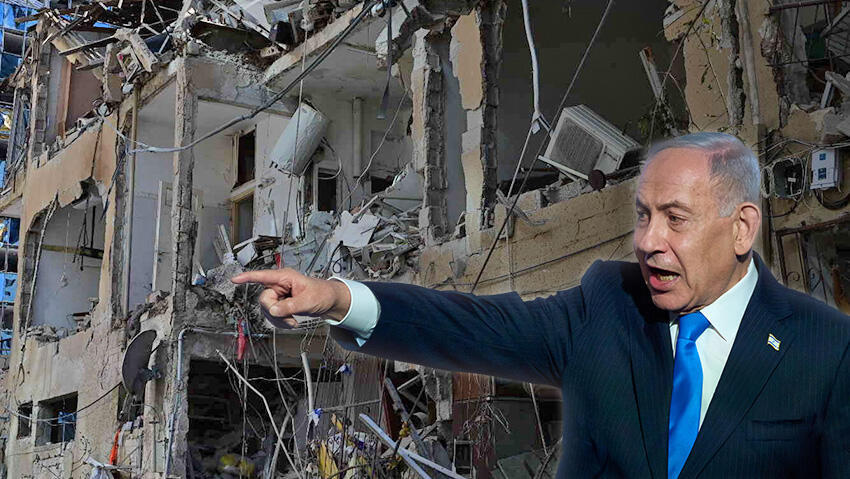
Netanyahu says he saved Israel from annihilation. What did intelligence say about Iran?
(Photo: AP/ Ariel Schalit, יובל חן)
The claim was central to a speech in which Netanyahu portrayed his government’s military record as having transformed Israel’s strategic position. He told supporters that Israel had “saved the State of Israel from annihilation” and argued that the campaign against Iran had achieved what previous governments would not dare attempt. Contemporary reports of the speech confirm that Netanyahu framed the Iran campaign in those terms and said Israel still had to “complete the mission.”
But the assertion that Iran was on the verge of producing actual atomic bombs goes further than the public intelligence picture that preceded the wars.
There was no dispute that Iran had amassed a deeply concerning stockpile of highly enriched uranium. The International Atomic Energy Agency estimated that, as of June 13, 2025, Iran held 440.9 kilograms of uranium enriched to 60%, a level far beyond normal civilian requirements and technically much closer to weapons-grade material. The agency called Iran’s stockpile a matter of serious concern.
That is not, however, the same as possessing a functioning nuclear weapon.
Enriched uranium is not an assembled bomb
Producing a nuclear weapon requires more than accumulating highly enriched uranium. Fissile material must be enriched to weapons grade and then incorporated into a functioning explosive device, requiring specialized engineering, components and testing. A usable missile warhead adds another layer of weaponization and integration.
Public U.S. intelligence assessments before the 2026 war did not conclude that Tehran was building a nuclear weapon. The U.S. intelligence community said in its 2025 threat assessment that Iran was “not building a nuclear weapon” and that then-supreme leader Ali Khamenei had not authorized the weapons program he suspended in 2003, while warning that Iran’s enriched uranium stockpile had reached unprecedented levels for a state without nuclear weapons.
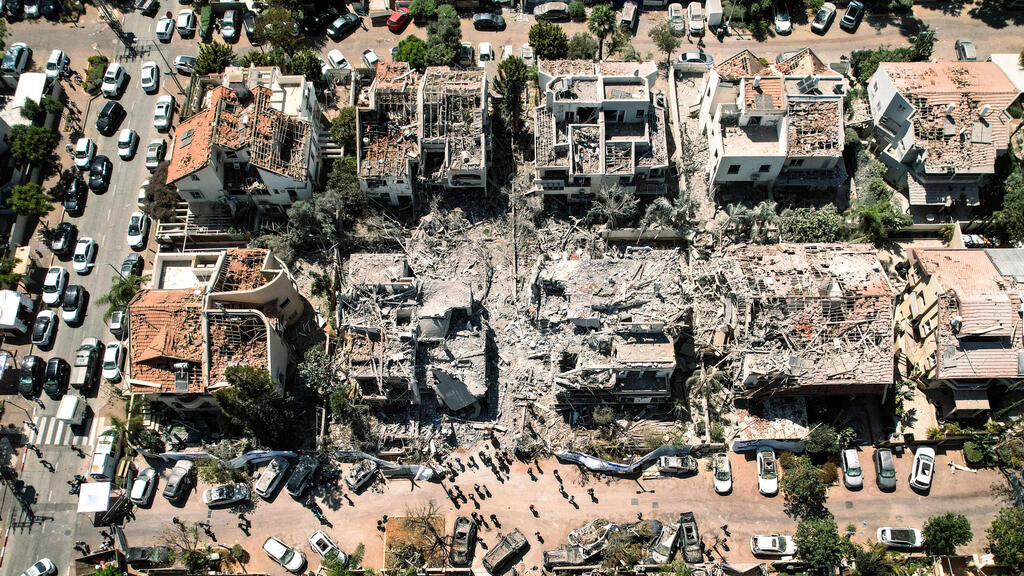
Damage from a direct Iranian missile strike in Rishon Lezion. Netanyahu ignored the war’s toll
(Photo: REUTERS/Ammar Awad)
After the U.S. and Israeli attacks, the 2026 U.S. intelligence assessment said Iran’s enrichment capability had been devastated and that Washington was watching for signs that Iran’s leadership might authorize a nuclear weapons program. That language again distinguished the capability to pursue a bomb from an already completed weapon.
An Associated Press review in July similarly found that Netanyahu’s earlier assertion that Iran had already obtained atomic bombs was unsupported by publicly available evidence, citing both the IAEA and U.S. intelligence assessments.
Netanyahu has repeatedly escalated his language on the issue. In June, he said that without Operation Rising Lion and Operation Roaring Lion, Iran “would already have atomic bombs.” In a July interview, he went further, saying he had acted to save Israel from atomic bombs that Iran “already had obtained,” prompting public rebuttals from former IDF chief Gadi Eisenkot and former prime minister Naftali Bennett.
Eisenkot said Iran “had no nuclear bombs whatsoever” and accused Netanyahu of trying to frighten the public. Bennett likewise rejected the assertion that Iran already possessed nuclear weapons.
A senior Israeli official with access to the intelligence on Iran also challenged Netanyahu’s account in comments to Ynet.
“This is hysterical nonsense,” the official said. “Iran increased its uranium enrichment, but the weaponization group was very far from developing a nuclear weapon, and they also had no authorization from the elder Khamenei to break out. The strike on Iran was not, and no one claimed it was, the result of extraordinary intelligence about progress on the nuclear program.
“The strike was a decision by President Donald Trump following the failure of the talks in Oman, and President Trump said he decided to launch a preemptive attack following intelligence indicating that Iran was planning a surprise attack.”
The official’s account cannot be independently verified, but it tracks the distinction made in public intelligence assessments between Iran’s advanced enrichment capability and evidence that its leadership had authorized and completed a nuclear weapon.
The costs absent from the campaign pitch
Netanyahu’s election speech focused heavily on Israel’s military achievements. In the portion devoted to his security record, he did not address the Oct. 7 massacre or the intelligence and command failures that preceded it, nor did he dwell on the human and economic costs of nearly three years of war.
Those costs have been substantial.
During Operation Roaring Lion, 22 people were killed in direct missile and rocket strikes on Israel, according to a ynet tally after the 40-day campaign. Seven others died in accidents while seeking shelter, traffic incidents or medical emergencies associated with the fighting. The wider campaign also saw 12 soldiers and one civilian killed in fighting against Hezbollah.

Netanyahu listed the achievements but ‘forgot’ Oct. 7. The breached Gaza border fence
One of the deadliest attacks came in Beit Shemesh, where an Iranian missile struck a residential area and shelter on March 1, killing nine people and wounding 51.
The property damage was also extensive. By March 10, only days into the fighting, the Israel Tax Authority had already received 9,115 compensation claims, including 6,586 for damage to buildings, 1,044 for contents and equipment and 1,485 for vehicles.
The economic impact showed up in national data as well. Israel’s economy contracted sharply in the first quarter of 2026 as the Iran war disrupted businesses, schools, consumption and trade. An initial estimate placed the annualized contraction at 3.3%; later official data revised it to 3.8%.
None of that negates the documented military damage inflicted on Iran’s nuclear, missile and military infrastructure. What remains disputed is the much narrower and politically potent question Netanyahu placed at the heart of his campaign message: how close Iran actually was to possessing usable atomic bombs, and whether Israel was therefore facing the immediate nuclear annihilation he described.
The public record supports the assessment that Iran represented a serious and rapidly developing nuclear proliferation threat. It had amassed large quantities of highly enriched uranium, operated advanced centrifuges and had sharply reduced international visibility into parts of its program. The IAEA itself warned that its ability to account for Iranian nuclear material deteriorated after inspections were interrupted.
What the public record does not establish is that Tehran already possessed an assembled nuclear bomb or that one was ready for imminent use against Israel.
Netanyahu nevertheless made that existential framing central to his election pitch Thursday, while also making clear that he does not regard Israel’s broader campaign as finished.
“We have to complete the mission to the end,” he said. “We have to bring down the Iranian regime. That is my directive and our supreme mission. And also eliminate Hezbollah and Hamas.”
The statement underscored the tension running through his campaign message: Netanyahu is presenting the wars to date as having saved Israel from existential danger while simultaneously telling voters that several of the government’s central military objectives still remain ahead.