

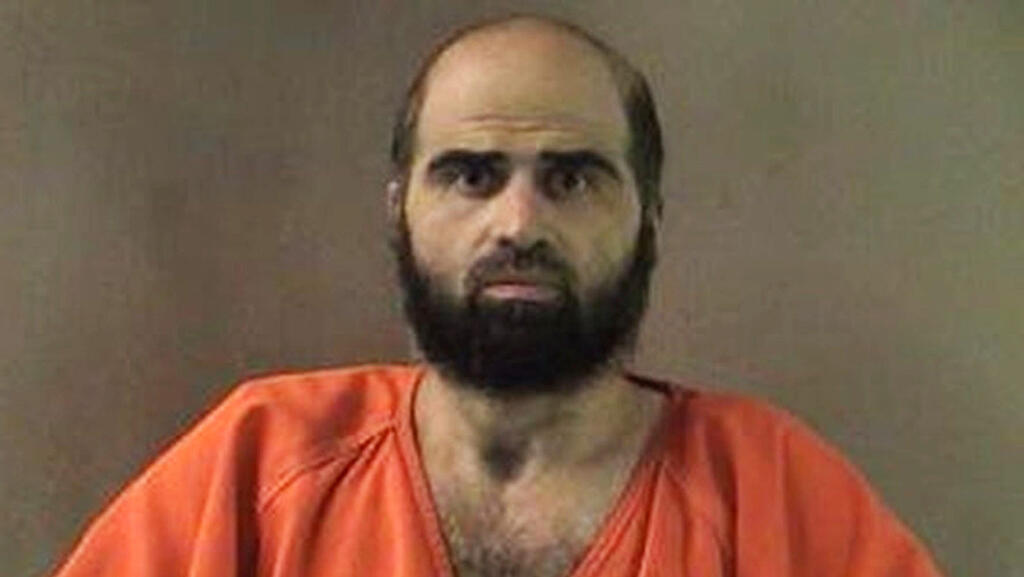
The Pentagon announced Thursday that the execution of Nidal Malik Hasan, the former U.S. Army psychiatrist who murdered 13 people in a 2009 shooting rampage at Fort Hood, Texas, will be livestreamed, an unprecedented decision that would allow the public to watch a military firing squad carry out a death sentence.
The announcement followed remarks by Defense Secretary Pete Hegseth, who has pushed for Hasan's execution and said Americans should be able to witness the punishment. The execution is scheduled for December 3 at 1 p.m. local time at Fort Hood, the same military installation where Hasan carried out the massacre nearly 17 years ago.
"We'll make sure that people are able to watch it, that it's public," Hegseth said, arguing that Americans should understand the severe consequences of such crimes.
The Pentagon subsequently confirmed that the execution would be broadcast live, although officials have not yet explained how the public will be able to access the broadcast.
If carried out as planned, it will be the first execution conducted by the U.S. military since 1961 and the first military execution by firing squad since World War II.
Trump approves firing squad, Hegseth pushes for public execution
Hegseth announced Thursday that Hasan would face a firing squad composed of American soldiers, describing the method as appropriate for the crimes he committed.
The defense secretary said the execution would take place at the same base, on the same day of the week and at approximately the same time as the 2009 attack.
When asked whether Hasan had made any final requests, Hegseth responded dismissively: "Don't care."
Hegseth also defended the use of a firing squad by invoking the American military's approach during World War II, expressing admiration for what he described as the determination to defeat an enemy rather than accommodate it.
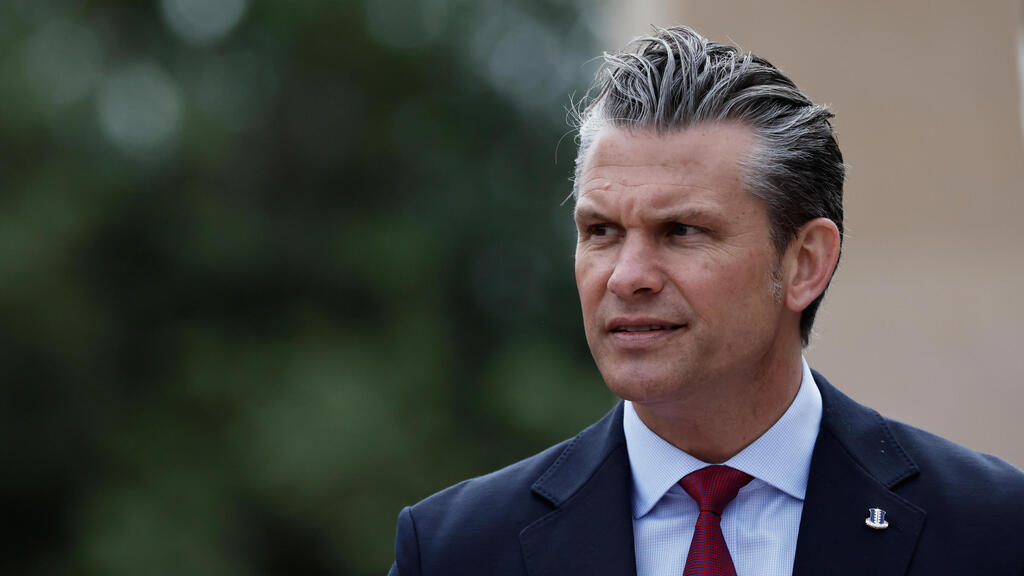
Defense Secretary Pete Hegseth
(Photo: AP Photo/Jeremias Gonzalez)
Under U.S. military law, a death sentence requires presidential approval before an execution can proceed. President Donald Trump authorized Hasan's execution following a recommendation from Hegseth, the Pentagon announced earlier this week.
The White House has declined to say whether Trump also supports the decision to broadcast the execution live, referring questions to the Pentagon.
The decision to make the execution publicly accessible represents an extraordinary departure from modern American practice. Executions are generally witnessed by a limited number of authorized individuals rather than broadcast to the wider public.
The last execution carried out by the U.S. military took place in April 1961, when Army Pvt. John Bennett was hanged. Military executions by firing squad have not taken place since 1945.
The Fort Hood massacre that killed 13
Hasan, now 56, was born in the United States to Palestinian parents who emigrated from the West Bank. Before the attack, he served as a psychiatrist in the U.S. Army and held the rank of major.
On November 5, 2009, Hasan entered a medical facility at Fort Hood, a major Army installation in Texas that served as a deployment center for American soldiers heading to Iraq and Afghanistan.
Inside the building, soldiers were waiting for medical examinations and vaccinations before being sent overseas.
Hasan arrived armed with handguns and ammunition he had prepared in advance. He opened fire on the soldiers while shouting "Allahu Akbar," Arabic for "God is great."
The attack killed 13 people, including 12 soldiers, and wounded another 32, most of them military personnel.
It was the deadliest mass shooting at a U.S. military installation.
The rampage ended when a civilian police officer responding to the shooting shot Hasan, leaving him paralyzed from the waist down. He has used a wheelchair ever since.
Investigators later established that Hasan had been influenced by extremist Islamist ideology and had maintained contact with Anwar al-Awlaki, a radical American-born cleric associated with al-Qaeda.
Al-Awlaki, who had become a prominent ideological figure among Islamist terrorists, was subsequently killed in a U.S. drone strike in Yemen.
During the investigation and subsequent court-martial, Hasan claimed he had changed sides in what he characterized as America's war against Islam.
He said his actions were motivated by opposition to American military operations in Iraq and Afghanistan and a desire to prevent U.S. soldiers from being deployed to kill fellow Muslims, including members of the Taliban.
Hasan's family originated in the West Bank, including the town of al-Bireh near Ramallah, where his mother was born. He had visited the territory before the attack and maintained contact with relatives there.
A death sentence after a trial in which he represented himself
Hasan was sentenced to death in August 2013 following a court-martial that found him guilty of the killings and attempted murders committed during the Fort Hood attack.
He chose to represent himself at trial and did not call witnesses to testify in his defense.
He also declined to deny responsibility for the shooting.
His court-appointed standby defense attorneys expressed concern during the proceedings that Hasan was deliberately pursuing a death sentence rather than attempting to avoid execution.
The lengthy appeals process continued for more than a decade before reaching its final stages. In March 2025, the U.S. Supreme Court declined to review his conviction.
Trump subsequently approved the death sentence, clearing the way for the Army to schedule the execution.
Hasan is among a small number of prisoners sentenced to death under the American military justice system. Three other prisoners remain on military death row.
The planned execution comes amid renewed attention to the use of firing squads in the United States, where the method is rarely employed and capital punishment is generally administered through other procedures.
In Hasan's case, however, Hegseth has openly advocated the military method and framed it as a demonstration of accountability for the 2009 massacre.
The proposed livestream has added another unusual dimension to the case, raising questions about the unprecedented public presentation of a military execution.
With the date set for December 3, the Army is preparing to carry out its first execution in more than six decades, at the very installation where Hasan murdered 13 people and left dozens more wounded.