


Steve Witkoff, the US envoy of President Donald Trump, met Tuesday evening for about three and a half hours with Prime Minister Benjamin Netanyahu and Israel’s top security officials, ahead of talks scheduled to open Friday in Istanbul between Washington and Tehran, and amid the possibility that Trump could ultimately decide to strike the Islamic Republic.
Israel’s security chiefs presented Witkoff with the latest intelligence picture on Iran’s nuclear program and its ballistic missile project, as well as information on the massacre of Iranian civilians. Witkoff addressed the obstacles Iran has been raising and made clear that the United States is not naïve and will stand by its conditions.
Gallery
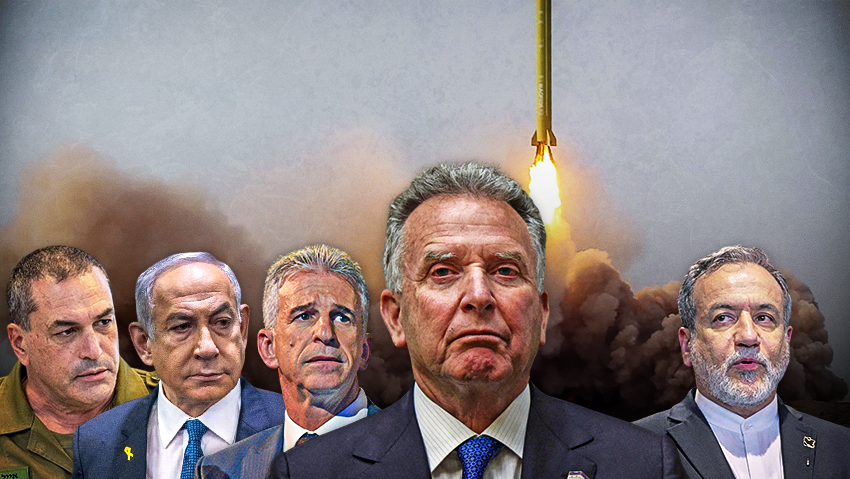
(Photo: Yoav Dudkovitch, IDF, Evelyn Hockstein/ Reuters, Hassan Ammar/AP, Chaim Goldberg/ Flash 90)
Netanyahu presented Israel’s red lines for any acceptable agreement with Iran: zero uranium enrichment, the removal from Iranian territory of Iran’s stockpile of enriched uranium, estimated at about 450 kilograms, a halt to the ballistic missile program, and an end to Iranian support for its regional proxies. Those attending the meeting included Defense Minister Israel Katz, IDF Chief of Staff Lt. Gen. Eyal Zamir, Mossad Director David Barnea, Military Intelligence chief Maj. Gen. Shlomi Binder, Air Force Commander Maj. Gen. Tomer Bar, Operations Directorate chief Maj. Gen. Itzik Cohen, and Planning Directorate chief Maj. Gen. Hedi Zilberman.
Meanwhile, US-Iran talks have plunged into a severe crisis even before they begin. On the military front, two dramatic incidents were reported Tuesday in the Persian Gulf: an attempt to hijack an American tanker in the Strait of Hormuz and the downing of an Iranian drone that approached the aircraft carrier Abraham Lincoln in the Arabian Sea. On the diplomatic front, Iran has raised new obstacles, unexpectedly demanding that the talks be moved from Istanbul to Muscat, the capital of Oman, and that invitations to Arab and Muslim states be canceled.
Officials familiar with the details say that behind the scenes, Iran has also sent messages to mediators conditioning any round of talks on discussions being limited exclusively to the nuclear issue. This casts doubt on whether the talks will take place at all, or whether Iran is betting that Trump will ultimately back down.
Trump: 'Bad things will happen'


In any case, the Americans were reportedly stunned by Iran’s demands and are weighing their next steps. An Israeli official said Tuesday evening that the likelihood of an American strike on Iran has increased. According to the official, Tehran has concluded that the American noose is tightening and believes that the die has been cast. As a result, Iran is not deterred from provocations, such as those carried out Tuesday in the Strait of Hormuz and the Arabian Sea, to score points domestically. Still, nothing is decided, and it remains possible that Iran will ultimately agree to come to Turkey under American terms.
Netanyahu’s office said after the meeting with Witkoff that “ahead of Envoy Witkoff’s trip to meet with the Iranian representative, the prime minister made clear his position that Iran has proven time and again that its promises cannot be trusted.” The meeting with Witkoff also addressed the situation in the Gaza Strip. Netanyahu’s office said the prime minister reiterated Israel’s uncompromising demand for Hamas to be disarmed, for Gaza to be demilitarized, and for Israel’s war objectives to be completed before any reconstruction of the enclave. He also made clear that the Palestinian Authority will not play any role in governing Gaza and briefed US Ambassador Mike Huckabee on serious violations uncovered in Gaza involving the use of UNRWA aid bags to conceal weapons.
The first meeting is critical; Israel pleased Kushner will join
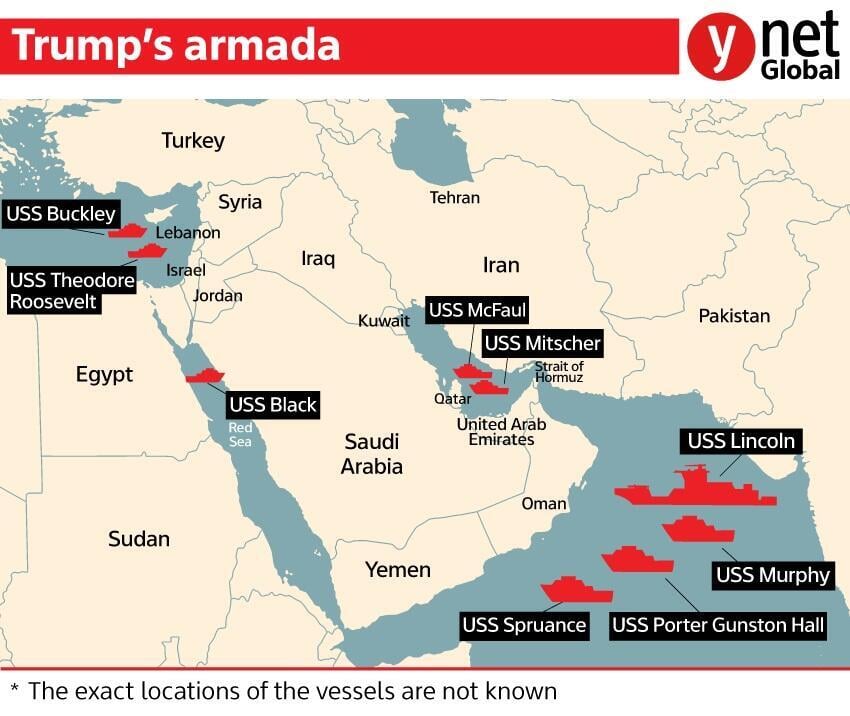
If US-Iran talks do take place and do not collapse in the opening session, further negotiation rounds are expected to continue for weeks, if not months. The clear implication is that Trump would not order a strike in the coming weeks, raising questions about what the US will do with the massive armada it has deployed to the Middle East at a cost of tens of billions of dollars. One option would be for Trump to seek de-escalation, potentially ordering the Abraham Lincoln to withdraw or change course.
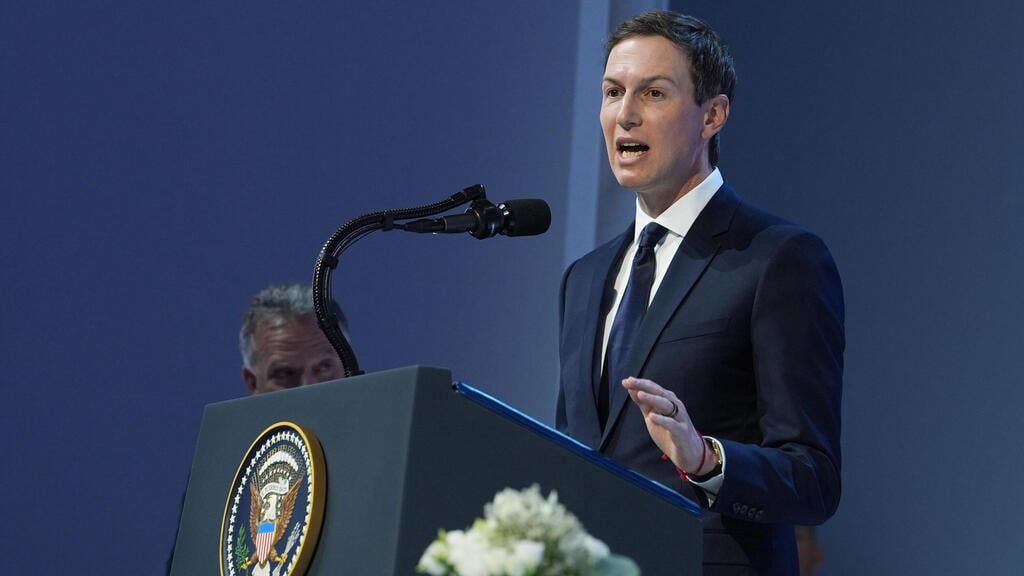
Jared Kushner
(Photo: Evan Vucci/AP )
The first meeting between Trump’s envoys, Steve Witkoff and his son-in-law Jared Kushner, and Iranian Foreign Minister Abbas Araghchi on Friday will shape the path ahead. The meeting is slated for Istanbul, though Iranian officials briefed media Tuesday evening that it may instead take place in Muscat. Either way, signals coming from Tehran suggest it will not be simple. Even if Iran is willing to compromise on the nuclear issue, it is far from certain that the compromise will meet Washington’s expectations, namely a complete halt to the nuclear program, an end to uranium enrichment, and the removal of at least 450 kilograms of enriched uranium stored at sites struck by Israel and the US during the 12-day war.
Araghchi said again in an interview with CNN that Iran will not relinquish its right to enrichment, while other Iranian officials have suggested a willingness to suspend or cancel the nuclear program. If Iran insists on enrichment, there will be no deal, and the military option will dominate. Senior officials familiar with the issue say conditions currently exist to extract concessions from Iran that were impossible to secure previously, but only if the Americans remain resolute and do not blink.
The decision to send Kushner to the talks is seen in Israel as a very positive sign. He is considered far more knowledgeable than Witkoff and has a proven track record, including his role in shaping the Gaza cease-fire and hostage return framework and, most notably, the Abraham Accords. Kushner is viewed as more adept at navigating negotiations, while Witkoff is widely regarded in Israel as weaker, more conciliatory, overly emotional, and insufficiently versed in the material.
Israel’s greatest concern is that the Americans may compromise on two or three of the four conditions they have set, insisting on nuclear constraints while backing off on ballistic missiles, terrorism, proxy support, and continued repression of protesters. Israeli officials told Witkoff that Iran must be forced to fully abandon its ballistic missile program and relinquish its enriched uranium. “We must not give in on the nuclear issue,” a senior Israeli official said.
Some Israeli officials believe that if the Americans succeed in halting the nuclear program, enrichment, and removing enriched material, it would be a significant achievement, after which new sanctions could be imposed over ballistic missiles. In Jerusalem, there is near certainty that Iran will not abandon support for its proxies, as exporting the Shiite revolution lies at the core of the regime’s identity and its regional competition with Turkey and Arab states.
Officials familiar with the matter say Iran views Washington’s willingness to negotiate after Trump’s unfulfilled threats as a sign of weakness and evidence that the US does not truly want to strike. In Washington, that assessment is rejected. If Iran engages in maneuvering and refuses Trump’s terms, officials say, it will encounter a determined America wielding a “big stick.”
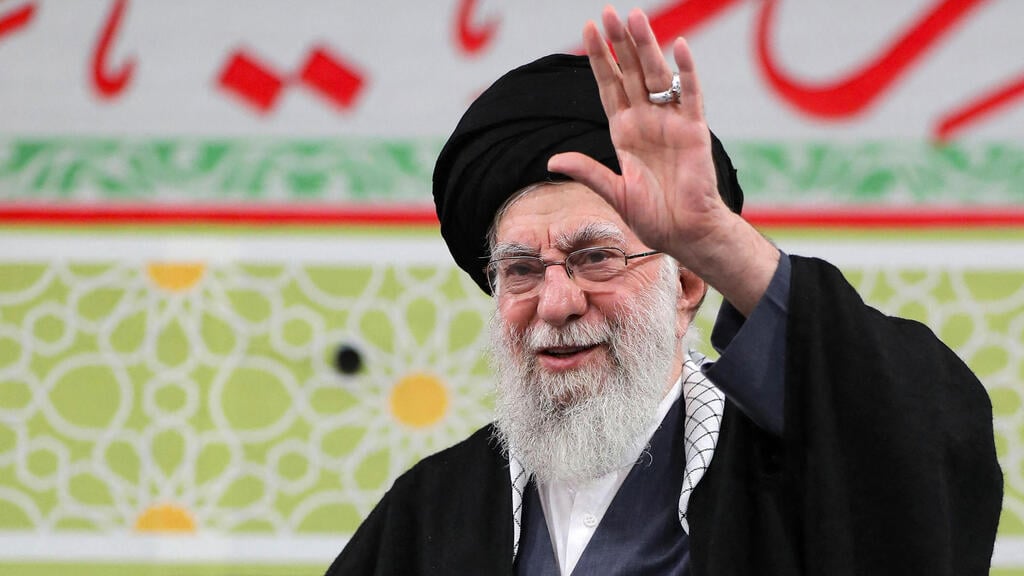
Ali Khamenei
(Photo: AFP Photo / HO / Khameni.IR)
Trump may be seeking to build international legitimacy, particularly among Middle Eastern states, allowing him to say: I tried diplomacy, Iran refused, and now I have no choice but to act. That is how Venezuela unfolded, when Trump attempted diplomacy with Nicolas Maduro, and after it failed, US forces moved decisively. But Iran is not Venezuela. Its regime is far more brutal and sophisticated.
Senior Israeli officials argue that while Trump missed a rare opportunity to topple the ayatollahs’ regime through decisive action, that opportunity will return. Supreme Leader Ali Khamenei will not remain in power much longer. If he does not fall now, he will fall later.
Israel’s central fear is that if Iran accepts US nuclear demands, Trump will claim a historic achievement, prevent another war, and move closer to fulfilling his ambition of winning the Nobel Peace Prize. From Israel’s perspective, that would not be enough. The nuclear issue matters, but ballistic missiles are no less critical.
‘A return to naïve diplomacy would be a fatal mistake’
Prof. Yaakov Nagel, former head of Israel’s National Security Council, warned that US entry into negotiations with Iran without enforcing tough, concrete preconditions would be a grave strategic error and a betrayal of millions of Iranians who oppose the regime.
Any agreement that eases sanctions or injects funds into the regime, he said, would enable Iran to rebuild its nuclear, missile, and terrorist capabilities and move back toward a nuclear weapon after 2028. Following the severe damage inflicted on Iran’s nuclear, missile, and drone infrastructure during the 12-day war, Nagel said the sole legitimate goal of any future talks must be the complete and verified dismantling of all remaining or restored capabilities. He cautioned against a return to what he described as naïve diplomacy that allows Iran to stall, extract concessions, and emerge stronger. “That would be a fatal mistake,” he said.
Nagel cited the lessons of the 2015 nuclear deal, arguing that half-measures and weak agreements only strengthen authoritarian regimes. Demands that were once final negotiating goals, zero enrichment, zero ballistic missiles, and zero support for terrorism, must now be prerequisites for talks. “Without a credible, immediate, and even applied military threat, Iran will never agree to these terms,” Nagel said. The only way to prevent Iran from obtaining nuclear weapons, he argued, is the complete dismantling of its capabilities in advance, potentially accompanied by military action. Any alternative, he warned, guarantees strategic failure and endangers the region, US allies, and the Iranian people themselves.