

President Donald Trump is weighing a range of military options against Iran, including strikes on senior leaders, with the stated aim of encouraging protesters to take to the streets, according to U.S. officials cited by Reuters. As Trump escalates his threats, Iranian officials and allied media are issuing increasingly stark warnings of their own.
Iran’s Tasnim news agency reported Thursday that the Iranian military has received “1,000 strategic drones.” According to the report, the drones were built by military experts in cooperation with Iran’s Defense Ministry “in accordance with new threats and lessons learned from the ‘12-day war.’” The drones are capable of striking stationary and mobile targets at sea, in the air and on land, the agency said.
Trump: 'A beautiful armada is sailing to Iran — I hope it makes a deal'


Iranian army commander Amir Hatami, who ordered the drones added to the arsenal, said the military is focused on maintaining and improving strategic advantages for rapid warfare and a “crushing response” to threats.
Threatening messages have also come from Iran-backed groups and media. The Lebanese newspaper Al-Akhbar, which is aligned with Hezbollah, carried a front-page headline Thursday reading: “Iran is preparing. War is preferable to surrender.”
Trump said Wednesday that the United States has dispatched a large naval force toward Iran. In a post on his Truth Social platform, he described a “massive armada” led by the aircraft carrier Abraham Lincoln, saying it is larger than the fleet previously sent to Venezuela.
“It is ready, willing, and able to rapidly fulfill its mission, with speed and violence, if necessary,” Trump wrote.
He urged Iran to “come to the table” and negotiate what he called a “fair and equitable deal” that would prohibit nuclear weapons. “Time is running out, it is truly of the essence,” he wrote.
Trump also referenced a previous U.S. military operation he called “Operation Midnight Hammer,” which he said caused major destruction in Iran after Tehran failed to make a deal. “The next attack will be far worse,” he warned.
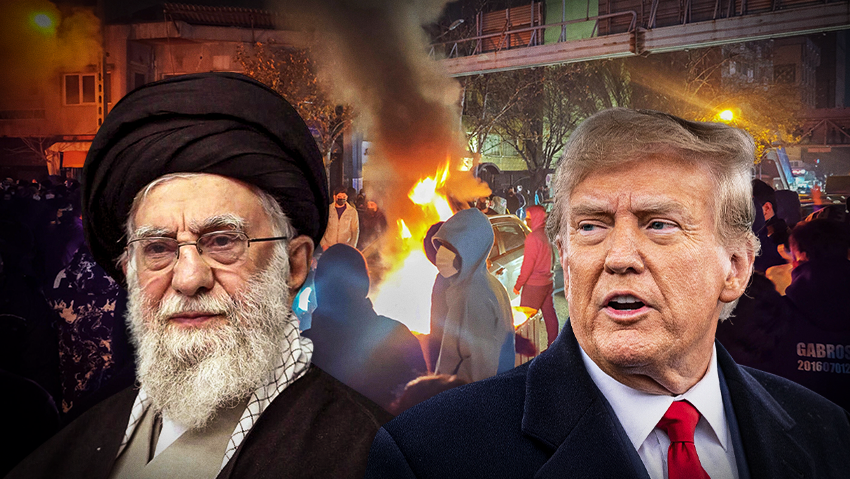
Iran warned Wednesday that it would respond forcefully to any U.S. attack. Foreign Minister Abbas Araghchi said Iranian security forces are “with their finger on the trigger” and ready to respond to aggression against Iran’s air, sea and land. He said lessons learned from the “12-day war” would allow Iran to respond with greater power, speed and impact.
Ali Shamkhani, an adviser to Supreme Leader Ayatollah Ali Khamenei, said talk of a limited strike on Iran was an illusion. Any U.S. military action “at any level,” he said, would be considered the start of a war and would draw an immediate response, including against Israel.
“Our response will be immediate and unprecedented,” Shamkhani said, adding it would target “the aggressor, all its supporters and the heart of Tel Aviv.”
During mass protests in Iran, Trump previously warned that the United States would act if the government killed demonstrators and told protesters that “help is on the way.” In recent days, after a violent crackdown that opposition groups say killed thousands, Trump has focused his public statements on demanding that Iran quickly enter negotiations on a new nuclear deal.
Trump has not publicly detailed U.S. negotiating demands. However, U.S. and European officials told The New York Times that Washington has pressed Iran to halt uranium enrichment entirely, limit the number and range of its ballistic missiles and end support for regional proxies, including Hamas, Hezbollah and Yemen’s Houthi rebels. Those officials said talks have stalled with no sign of progress.
Axios reported Thursday that the Trump administration is hosting senior Israeli and Saudi security and intelligence officials this week for talks focused on Iran amid the possibility of a strike. According to the report, Israel’s military intelligence chief, Maj. Gen. Shlomi Binder, met this week with senior officials at the Pentagon, the CIA and the White House to brief them on specific intelligence related to Iran.
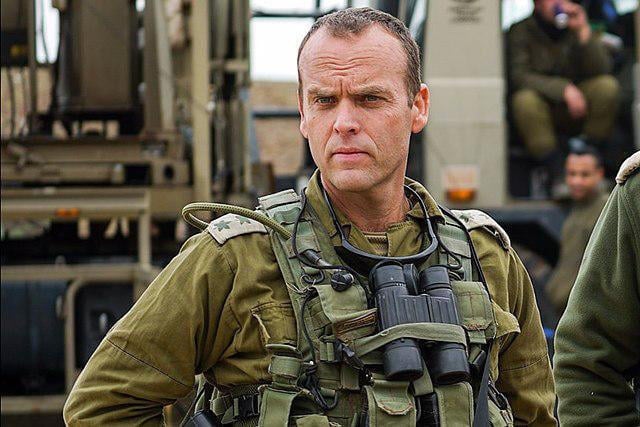
(Photo: IDF)
Reuters reported that Trump’s options have expanded following the arrival of the Abraham Lincoln in the Middle East and the announcement of a large regional air exercise. Two U.S. officials familiar with the discussions said Trump wants to create conditions for regime change in Iran and is considering strikes on commanders and institutions Washington blames for violence, partly to embolden protesters.
Another U.S. official cautioned Reuters that Trump has not made a final decision and may not ultimately choose military action. Several Arab officials and Western diplomats said they fear U.S. strikes could weaken Iran’s protest movement rather than strengthen it, particularly after the regime’s harsh crackdown.
An Iranian official told Reuters that Tehran is preparing for a military confrontation while continuing to use diplomatic channels. An Israeli official described as familiar with the planning said airstrikes alone would not topple Iran’s Islamic Republic and that even killing Khamenei would not end the system.
Two Western officials said a leadership change could break the nuclear stalemate but warned that a power vacuum could allow Iran’s Revolutionary Guard to seize control. The Wall Street Journal reported that several Middle Eastern governments, including Saudi Arabia, Qatar, Oman and Turkey, are attempting to mediate talks between Washington and Tehran to avert a military clash, but those efforts have so far failed.