

When U.S. President Donald Trump decided to postpone his visit to China, originally planned for late March, he assumed that by the time he arrived in Beijing, the war with Iran would be far behind him. In practice, Trump is expected to land in China on Wednesday night with the war still sputtering in an unclear direction, and above all with himself arriving from a far weaker diplomatic position than he had hoped.
During Trump’s first visit to China as president, in 2017, Beijing still did not quite know what to make of the reality TV host who had suddenly become U.S. president. This time, the picture is entirely different: Trump will arrive in China as it is far stronger, more confident and more experienced than it was nearly a decade ago, while he himself is facing grim polls at home, international criticism and broad global disapproval.
Gallery
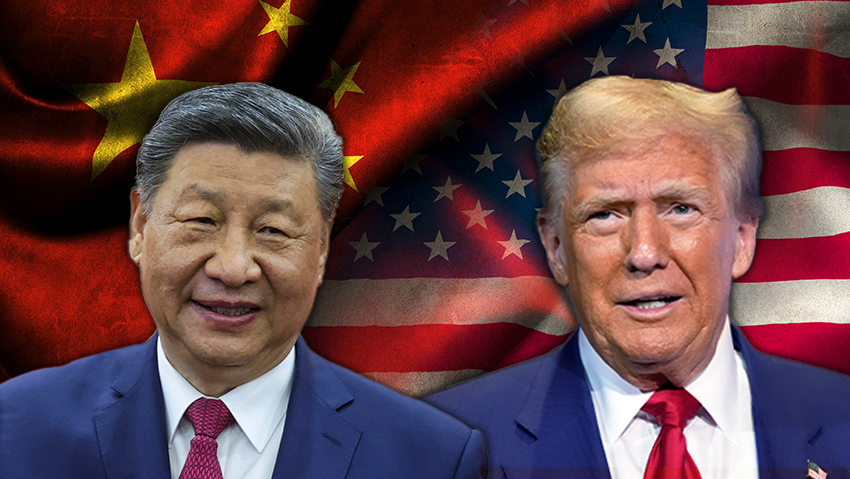
Trump and Xi
(Photo: Shutterstock' AFP / JOHN HAMILTON / US DEPARTMENT OF DEFENSE, AP PhotoAlex Brandon8)
At their meeting this week, Trump and Chinese President Xi Jinping, the leaders of the world’s two largest economies, will try to stabilize relations between Washington and Beijing after months of tension: reciprocal tariffs, economic threats and sweeping U.S. sanctions on Chinese shipping companies and vessels suspected of doing business with Iran. Last week, China’s government even ordered companies in the country to ignore U.S. sanctions imposed on Chinese refineries.
At the same time, U.S. allies in the region fear Beijing will exploit Trump’s fragile position to push him toward American concessions on Taiwan. The war with Iran and the transfer of U.S. military assets to the Middle East have left Taiwan, Japan and other Washington partners in Asia concerned about U.S. readiness to intervene in the event of a Chinese attack on the island.
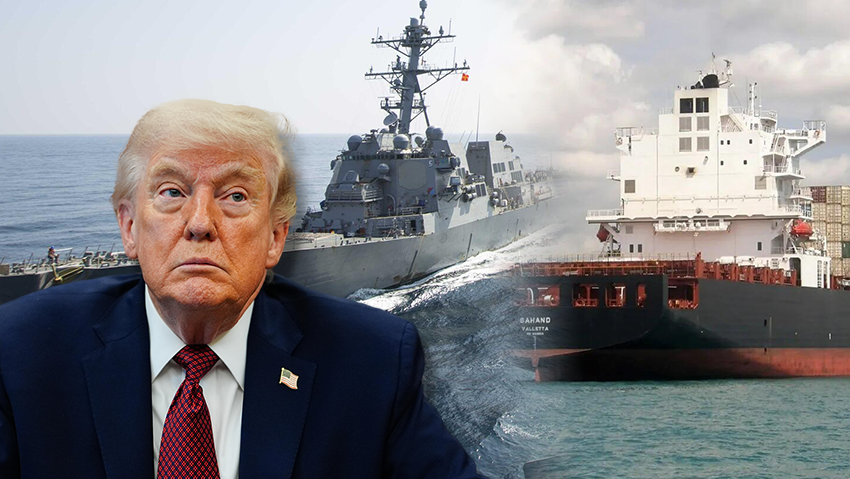
Trump thought the war in Iran would be over by the time he met China’s president; he thought wrong
(Photo: Hans Rosenkranz, Marinetraffic.com, U.S. Navy, AP Photo/Julia Demaree Nikhinson)
Chinese analysts note that unlike his predecessors, Trump has so far avoided a direct confrontation with China over Taiwan. According to assessments, Xi hopes to persuade him to go beyond official U.S. policy and hand Beijing a victory in the form of public “recognition” of its claim that Taiwan is part of China.
Another thing that has changed since Trump’s previous visit to China is Xi’s understanding that he now has an opportunity to present Beijing as a stable and responsible counterweight to American volatility. In the more than 15 months since Trump returned to the White House, Xi has displayed confidence in dealing with him and has refused to blink in the face of repeated tariff threats.
That conduct appears to have caused Trump to respect the Chinese leader. The U.S. president has repeatedly described Xi as a “strong leader,” and even said that “Xi Jinping will give me a big, fat hug when I get there.”
A 'state visit-plus'
Trump is expected to land in Beijing on Wednesday night. The following day, he will attend an official welcoming ceremony and meet with Xi before the two tour the Temple of Heaven, a 15th-century religious complex symbolizing the link between earth and heaven. On Thursday evening, Trump will attend a state dinner, and on Friday he will have lunch with Xi before returning to Washington.
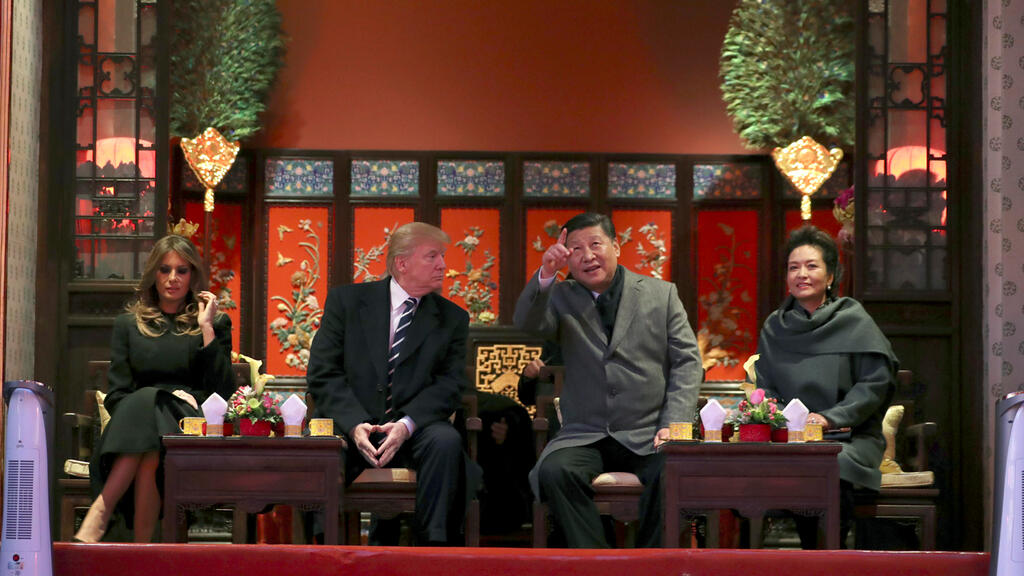
Trump’s previous visit to China: a display of pomp, grandeur and wealth
(Photo: AP)
In 2017, China gave Trump what it called a “state visit-plus” — a display of pomp, grandeur and wealth of the kind the U.S. president particularly enjoys. This time, it will be interesting to see how far Beijing chooses to go. “China's comprehensive national power has grown significantly since 2017,” William Klein, who helped organize Trump’s previous visit to Beijing, told The Washington Post.
Trump, for his part, has recently been complaining more and more about long flights and extended absences from the White House and his properties in Florida and New Jersey. His aides hope they will be able to keep him in a good mood — and above all focused — because Washington also understands that China is coming to this summit from a much stronger starting point. “President Trump goes into that meeting in a terribly weakened position,” Democratic Sen. Jack Reed, the ranking member of the Senate Armed Services Committee, told Fox News.
When Trump visited Beijing in 2017, Xi was in the midst of a sensitive process of consolidating his power within the Chinese Communist Party and was signaling that he intended to dominate Chinese politics for many years. Since then, he has only grown stronger: He secured a third term in 2023 and led massive investments in technology, artificial intelligence, manufacturing and green energy — steps that have turned China’s economy not only into a more threatening rival to the United States, but also into a global leader in fields once dominated by America.
Beijing now believes it is coming to the meeting with no intention of making unilateral concessions. “China will not make unilateral compromises this time, and it has all the means to fight back if the U.S. bullies it again,” Wang Yiwei, a former Chinese diplomat and now a council member at the Chinese People’s Institute of Foreign Affairs, told The Washington Post.
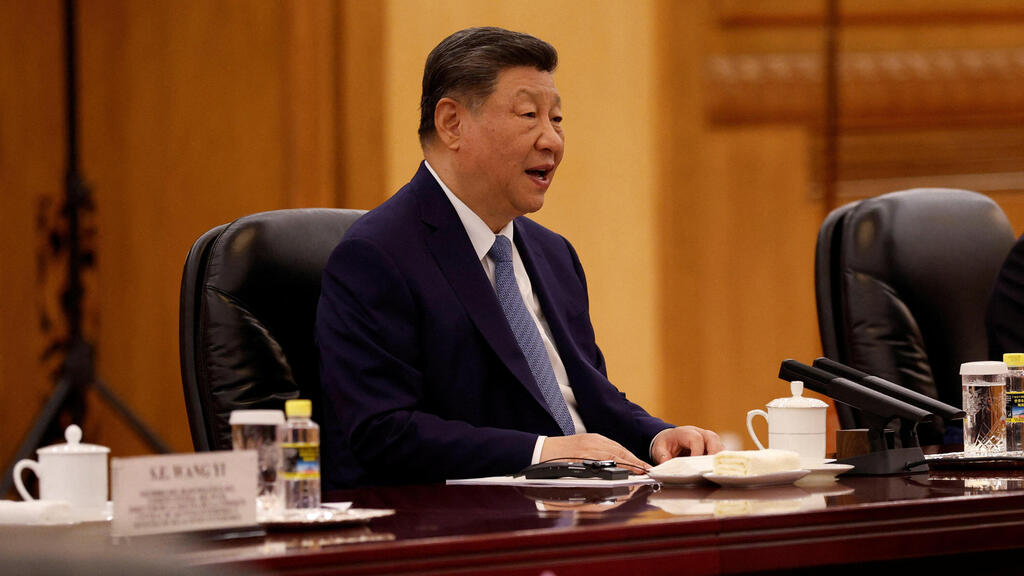
Chinese President Xi Jinping
(Photo: Haruna Furuhashi/Pool via REUTERS)
That willingness to fight back was evident late last year, when China leveraged its near-total control of rare earth minerals. In response to Trump’s repeated tariff moves, China tightened export controls, disrupting global access to critical raw materials needed by advanced technology industries. In doing so, it effectively forced the United States into an economic ceasefire in October.
A U.S. official told The Post that after Trump pushed too far in his second term, China reassessed and adjusted its approach, concluding that continued appeasement or submission to his threats and demands would only invite more pressure.
According to the official, Xi’s refusal to bend showed Washington that China holds strong cards in rare earth minerals and is willing to use them. The official said China’s dominance in the field gives it major leverage over the United States, shaping every calculation, and raised concern over how another use of that pressure could affect the U.S. economy.
In February, the U.S. Supreme Court struck down most of the import taxes Trump had imposed, including a 145% tariff on imports from China — handing Beijing another victory. Until recently, China had tended to choose its battles with the United States carefully and tried to minimize any possible damage to its economy. Now, according to an emerging consensus among experts, China believes it can enter into friction with Washington in certain areas at a reasonable cost, and sometimes with almost no harm at all.