

Behind the walls of Iran’s prisons and detention facilities, far from public view and under heavy internet restrictions, disturbing testimonies have accumulated in recent weeks about a new wave of repression by the regime — not only against those who took part in anti-regime protests in January.
Detainees, their relatives and human rights groups describe violent arrests, prolonged interrogations, beatings, starvation, denial of medical care and torture aimed at breaking regime opponents, journalists, activists and protesters.
According to an investigation by The Guardian in Britain, with some testimonies now emerging following the relative easing of internet restrictions in the country, the wave of arrests has widened since the war between the United States and Israel against Iran began in late February. It now includes political prisoners, journalists and civil activists. Some describe severe violence from the moment of arrest, and physical and psychological harm that continues even after their release.
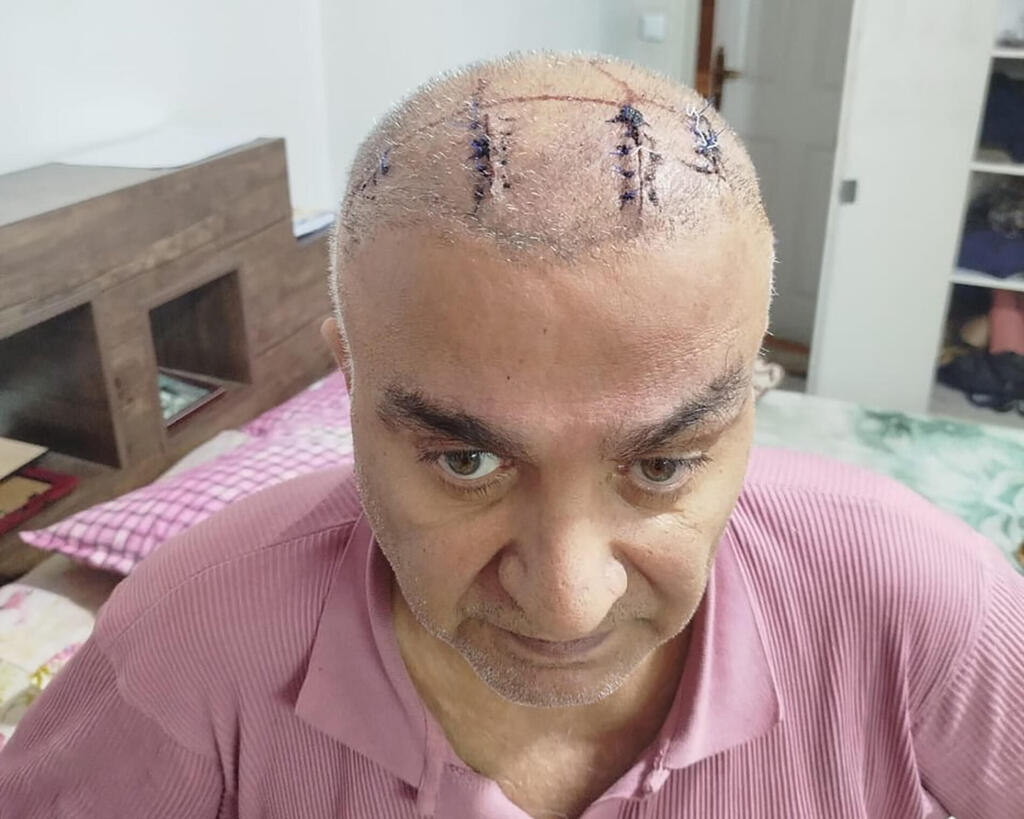
One of the central stories in the investigation is that of Iranian writer Hamid Asefi, 63, who says armed intelligence agents broke into his Tehran apartment, beat him severely and eventually released him, saying it had been an “administrative error.” Weeks later, he said, doctors found he had extensive bleeding in his brain.
Asefi was not home on the afternoon of March 5 when armed intelligence agents broke into his Tehran apartment. According to his testimony to The Guardian, they smashed the door with a heavy hammer and an ax, searched apartments in the building looking for him and finally encountered him when he returned home.
One of the agents, Asefi told the British newspaper, drew a gun and shouted at him to stop. “Before I had time to respond, struck me forcefully on the back of the neck and spine with the butt of his weapon, dragging me into the apartment,” he said. When he asked to see an arrest warrant, he said, the violence intensified: “Heavy blows were directed at my ribs, kidneys, temples and the back of my head. The beating was so severe that I lost consciousness once. When I regained consciousness, the assault continued”
Asefi said he was then taken blindfolded to a detention facility. There, he said, an interrogator accused him of signing a statement condemning the regime’s suppression of the January protests and of being in contact with the Israeli government. He insisted he had not signed such a statement and was eventually released. According to him, he was told his arrest had been an “administrative error.”
But the harm did not end with his release. Three weeks later, he was rushed to the hospital, where an MRI revealed extensive bleeding in his brain. “Death was no longer a distant possibility; I could feel its shadow completely across my face," he said. He underwent surgery and is now recovering.
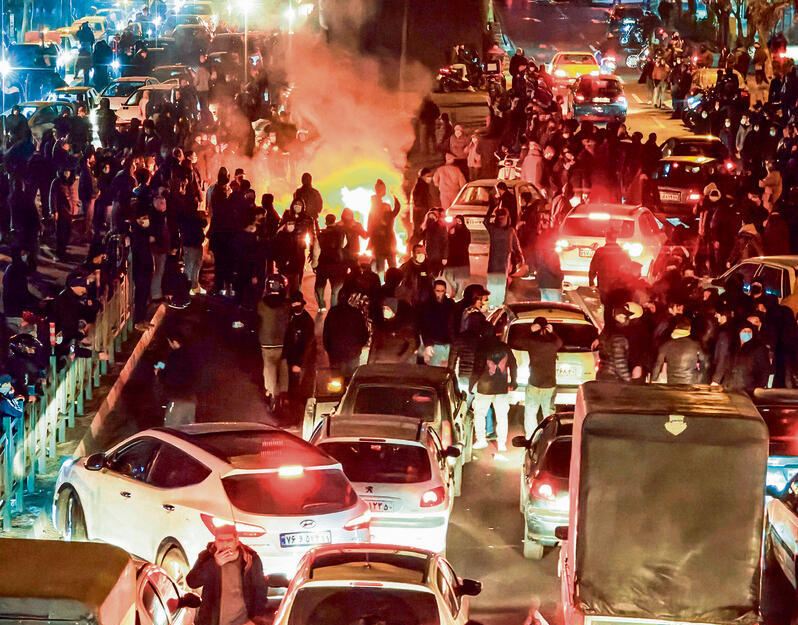
Protests in Iran in January. 'Blood flowed in the streets'
(Photo: Getty Images)
According to the investigation, Asefi’s case is part of a growing wave of testimonies emerging from Iran as the regime’s internet restrictions begin to ease. Alongside those arrested for involvement in the January protests, political prisoners, journalists and activists have also been detained in a wider crackdown since the outbreak of the war. Interviews with detainees, relatives and human rights organizations paint a grim picture of a prison system in which, according to the testimonies, torture, beatings, starvation, denial of medical treatment and even deaths in custody are taking place.
'Prisoners wear diapers because the conditions are so poor'
Amnesty International told the British newspaper it had documented torture and abuse of detainees since February 28, including mock executions through staged hangings, guns being placed in prisoners’ mouths, severe beatings, hanging by the hands and feet, prolonged solitary confinement, and denial of food and medical treatment.
One testimony came from Mehnaz, a pseudonym for a 23-year-old protester, who said that during a protest in Tehran’s Haft Hoz neighborhood on January 8, she saw protesters shot with machine guns.
“I cannot forget that sight, blood flowing in the street as we ran to safety,” she said. According to her, she was not arrested that day, but several days before the first U.S. and Israeli strike on February 28.
“They barged in, handcuffed me and took me to the Qarchak prison,” she said. “They told me they arrested me over social media posts which were anti-regime."
Mehnaz, who works in high-tech, said she was repeatedly interrogated for more than two weeks and denied food and water. “I lost 8 kilograms in just two weeks. There are tortures that do not leave bruises, but stay with you forever,” she said.
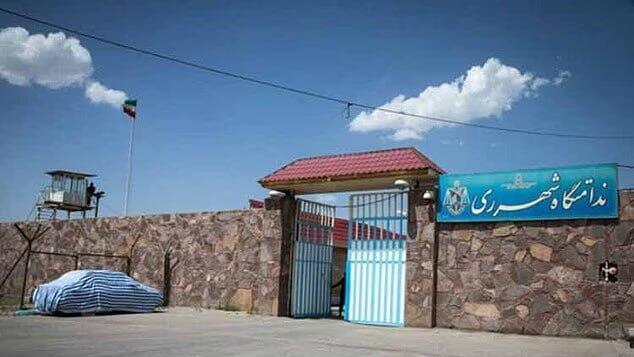
Qarchak prison: a 'hellhole'
She said more than 80 women were held in the ward where she was imprisoned, in such severe overcrowding that they had to sleep on the floor. The sanitary conditions, she said, were so poor that she asked her family to bring her adult diapers.
Qarchak prison has long been known for its harsh conditions, and is referred to in Iran as a “hellhole.” The U.S.-based Center for Human Rights in Iran reported last October that at least three female prisoners died within a week after being denied medical treatment.
Mehnaz believes she was released only because authorities wanted to make room for thousands of additional detainees arrested following the war.
Others, according to the report, did not leave the prison system alive. One of them was Hesam Alaeddin, a 40-year-old father of two. According to a source close to him, Alaeddin was arrested in April in Tehran during a search for Starlink devices — and then disappeared inside the prison system.
“They raided his mother’s house and his brother’s house. They beat up his brother too and arrested them,” the source told The Guardian. “When they took Hesam away, they beat him severely in front of his daughters, aged 10 and 11.”
For weeks, the source said, his family tried to find out where he was being held. “Every time they went to the prison, they were told he had been moved to another location. It has been relentless torture for the family,” the source said.
Eventually, weeks later, the family received a call telling them to come collect his body. Relatives said that when his body was returned there was “not a single bone left intact.” The source broke down in tears while telling The Guardian: “They beat him to death. Hesam was a loving father, husband, brother and son. His wife is terrified, and his daughters cannot understand why he is not coming home.”
The journalist who made a bracelet from the hair torn from her head
Activists and journalists also describe particularly violent arrests. Mojgan, a human rights activist from Tehran, said she took part in a January protest. Weeks later, she said, five masked agents broke into her home, hit her in the head with a gun and took her blindfolded to a detention facility.
“They broke my toe and they just wanted to terrorize and frighten us,” she said.
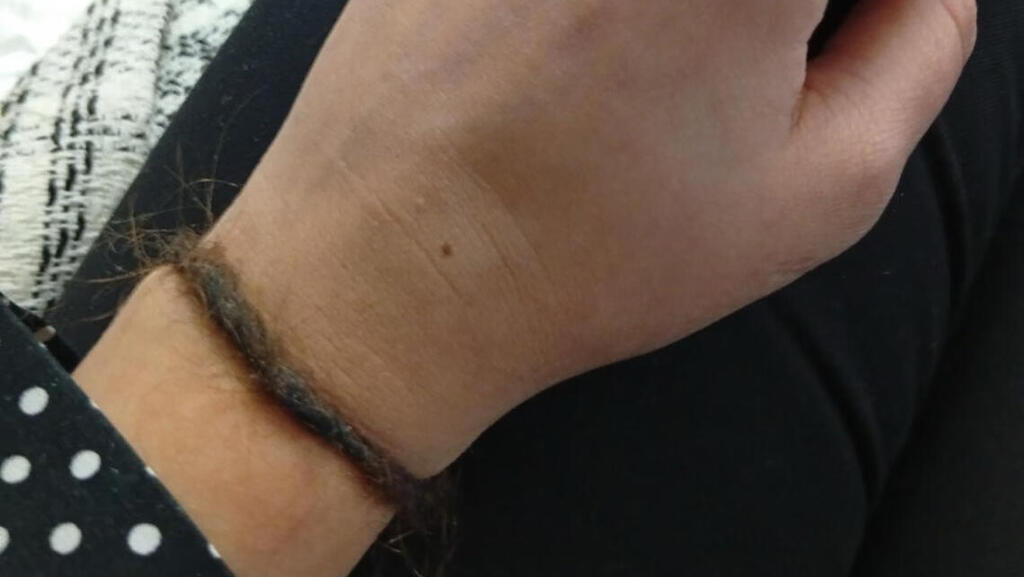
Bracelet made from her hair that had been torn out because she refused to wear a hijab
(Photo: The Guardian)
According to the Committee to Protect Journalists, Iranian journalist Vida Rabbani was arrested January 31 after signing a statement condemning the suppression of the protests and calling for an end to authoritarian rule. Her lawyer wrote that she was taken to an intelligence detention facility in the city of Sari, where she was severely beaten. Her husband, Hamidreza Amiri, wrote after visiting her in prison that her body was covered in bruises and that her hair had been torn out because she refused to wear a hijab.
Rabbani herself told The Guardian that she was attacked repeatedly in detention. “They kept calling me a savage and violently tried to force me to wear a hijab,” she said.
In one case, she said, an interrogator pulled her hair violently. “I didn’t realize then but later on the prison floor, when I touched my hair, clumps fell out in my palm. I collected those and made this hair bracelet out of it.”
She said the same interrogator also sexually assaulted her and tried to strangle her. Rabbani has since been released, but said she suffers from panic attacks and insomnia.
“They have a way to torture you without leaving a visible trace,” she said. “But now I can’t sleep and have to take antidepressants and sleeping pills.”