


Against the backdrop of escalating tensions in the West Bank and mounting uncertainty over the future of the Gaza Strip, three experts on Palestinian affairs presented sharply conflicting visions for Israel’s next strategic move.
The discussion took place Monday at the National Security Conference organized by ynet and Yedioth Ahronoth in partnership with the Institute for National Security Studies.

The panel included Naomi Neumann, a Washington Institute researcher and former head of the Shin Bet’s research and policy development unit; Dr. Anat Roth, director general of the Shiloh Forum and a researcher of the settlement movement; and Brig. Gen. (res.) Udi Dekel, head of the INSS program From Conflict to Agreements and former head of the Israeli negotiating team with the Palestinians under prime minister Ehud Olmert.
The debate focused on the increasingly volatile Palestinian arena, the future of the Palestinian Authority and a conflict that continues to divide Israeli society.
Neumann described the Palestinian system as being at an unprecedented low, marked by the division between Gaza and the West Bank, political paralysis, an absence of leadership and the disappearance of any diplomatic horizon.
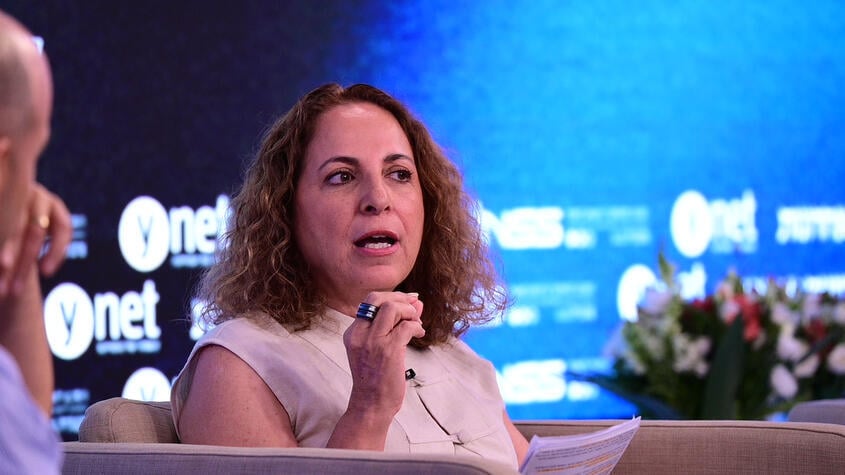
Naomi Neumann
(Photo: Yuval Chen)
From the Palestinian perspective, she said, Israel continues to determine their fate, which has not improved in any way following the October 7 massacre and the ensuing war. “The Gaza Strip is in a kind of limbo,” she said. “On the one hand, there is no high-intensity war, and on the other, there is no diplomatic solution to their problem.”
Although Israel controls at least 63% of the territory and Hamas has been militarily weakened and lost public support among Palestinians, Neumann said the terrorist group continues to exercise civilian control, silence opposition and maintain its hold on the ground. In the West Bank, she warned of a “deceptive calm” concealing a growing pressure cooker.
She identified five factors that, in the Palestinian view, are fueling instability: a deterioration in personal security because of what she described as settler terrorism; movement restrictions, including checkpoints; severe economic damage caused by the suspension of Palestinian workers’ entry into Israel and the freezing of clearance revenues; the effect of the Gaza war; and fears of a change to the status quo on the Temple Mount.
Neumann warned that the weakening of the Palestinian Authority poses a danger to Israel, which requires a functioning PA for security coordination and counterterrorism operations.
‘If you ask the Palestinians about Oslo, they will laugh’
Roth argued that the Oslo Accords are effectively dead. She said the Palestinians violate almost every provision of the agreements, from conducting independent foreign relations and an international diplomatic campaign against Israel to continued involvement in terrorism.
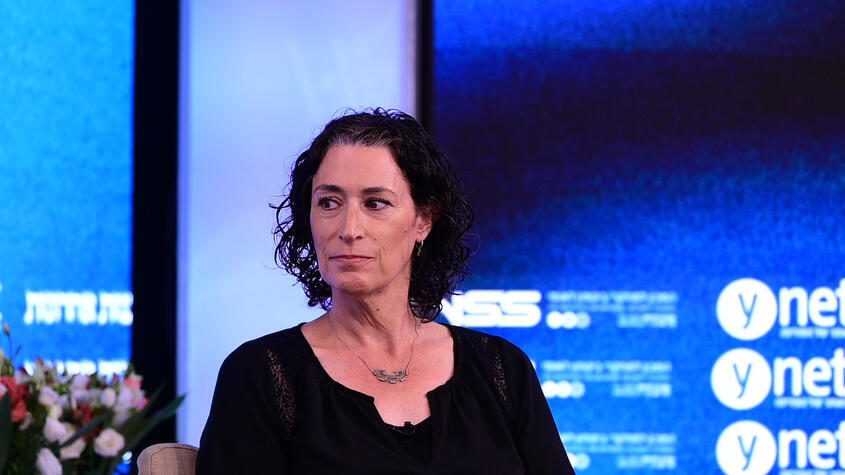
Dr. Anat Roth
(Photo: Yuval Chen)
Despite that, she argued, Israel’s governing institutions continue to bind themselves to the Oslo framework. “Israel is still operating according to Oslo’s code and operating system,” Roth said. “If you ask the Palestinians, they will laugh at you. They will say: What, don’t you hear? Don’t you see? We keep saying that we are not committed.”
According to Roth, the Palestinians are pursuing a consistent, unilateral effort to establish a state without recognizing Israel, with the ultimate ambition of controlling all the territory “from the river to the sea.”
She said the October 7 massacre completely shattered the idea that Israel could withdraw from territory, shelter behind fences and manage its security remotely. The Israeli public, she argued, no longer grants legitimacy to further withdrawals, while the two-state solution has fallen off the agenda.
Israel should therefore stop treating Oslo as binding and develop an alternative that guarantees national security without permitting the establishment of a Palestinian state, she said.
Roth also accused the Palestinian Authority of continuing to support terrorism and act aggressively against Israel in the international arena. She compared Israel’s assumptions surrounding Oslo to the strategic conception that preceded October 7 in Gaza.
“The two-state idea is off the table,” she said. “We need to find an alternative that will allow the Palestinians to live as well as possible while guaranteeing the security of the State of Israel, not only the settlements, but the entire State of Israel.”
‘Walking blindly into hell’
Dekel offered a starkly different assessment. He warned that Israel was “walking blindly into hell” by adopting the sovereignty and decisive-victory strategy promoted by Finance Minister Bezalel Smotrich.
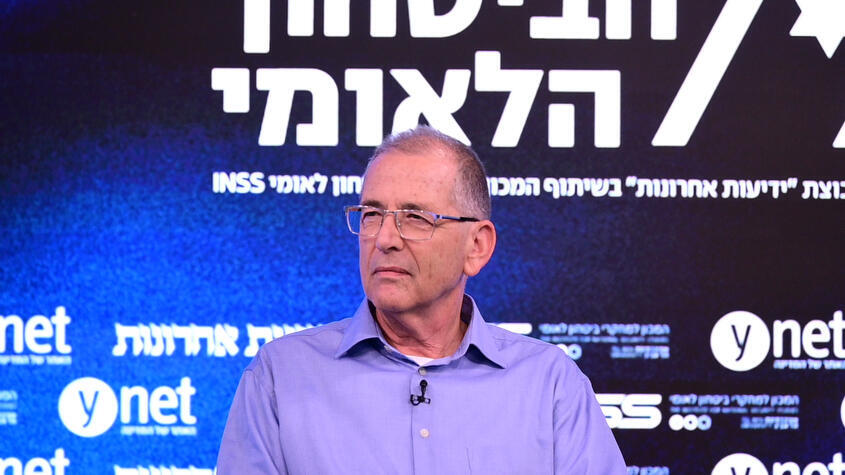
Brig. Gen. (res.) Udi Dekel
(Photo: Yuval Chen)
Applying Israeli sovereignty in the West Bank, he argued, would bring about 3 million Palestinians into Israel and create a one-state reality.
Such an outcome, he said, could lead to civil war, international sanctions or the transformation of Israel into a state of all its citizens, any of which would destroy its character as both a Jewish and democratic state.
Dekel also criticized efforts to bring down the Palestinian Authority, warning that its collapse would impose a heavy economic and security burden on Israel. As an alternative, he proposed a process of political, territorial and demographic separation.
Under his model, Palestinians would receive administrative autonomy in part of the territory, while Israel would establish strict security arrangements, retain full freedom of military action and control the external envelope.
He argued that such an arrangement could prevent the emergence of a single state and open new opportunities for regional normalization.
“I am proposing an idea that is a path, not a solution,” Dekel said. “I do not believe there is a solution to this conflict. There is no solution to this conflict, but it is possible to reach a certain path that may in the future create security arrangements and diplomatic agreements. We need to get onto that track.”
“I am also not entering the debate over whether Oslo exists or not,” he added. “That is no longer relevant.”