


"The problem is that the IDF is the governing authority, but the solutions to nationalist crime are not military ones." That is how a senior security official summed up one of the most sensitive issues currently facing Israel's defense establishment.
Behind the scenes, amid escalating violence in the West Bank, IDF Chief of Staff Lt. Gen. Eyal Zamir convened a high-level meeting with senior security officials. The meeting resulted in a series of operational measures aimed at curbing the violence, improving law enforcement and closing intelligence gaps that have developed over time.
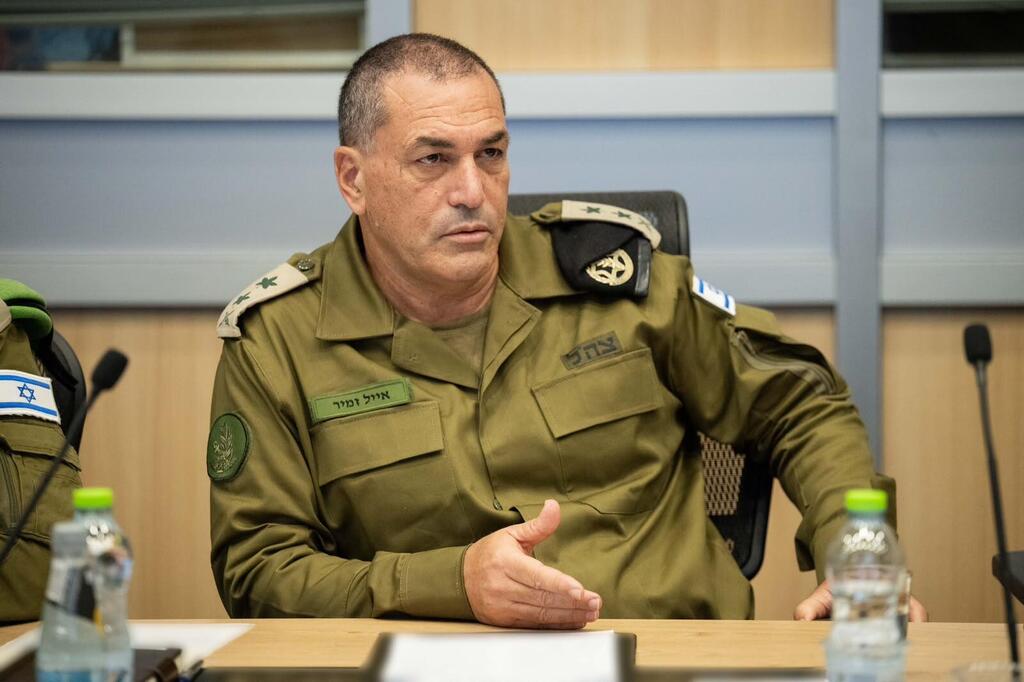
The IDF recognizes that responsibility for security in the area rests largely with the military, while confronting Jewish rioters presents soldiers with a challenge fundamentally different from the missions for which they were trained.
"We don't have the tools to deal with them. You're deploying more soldiers when what's needed are police officers," the senior official explained. "Combat soldiers arrive after fighting in Lebanon and then have to deal with Israelis. They don't know how to handle Israelis. Can you imagine a situation in which a soldier from the 202nd Battalion might, God forbid, shoot Jews?"
According to the official, these are no longer isolated incidents that can be contained by deploying additional forces or through localized intervention. He stressed that the scale of the phenomenon and its consequences now extend well beyond the military's area of responsibility.
"These are criminals who have lost all restraint and are defying the authority of the state," he said. "This is a shared mission that requires joint efforts. It has become a national and international problem."
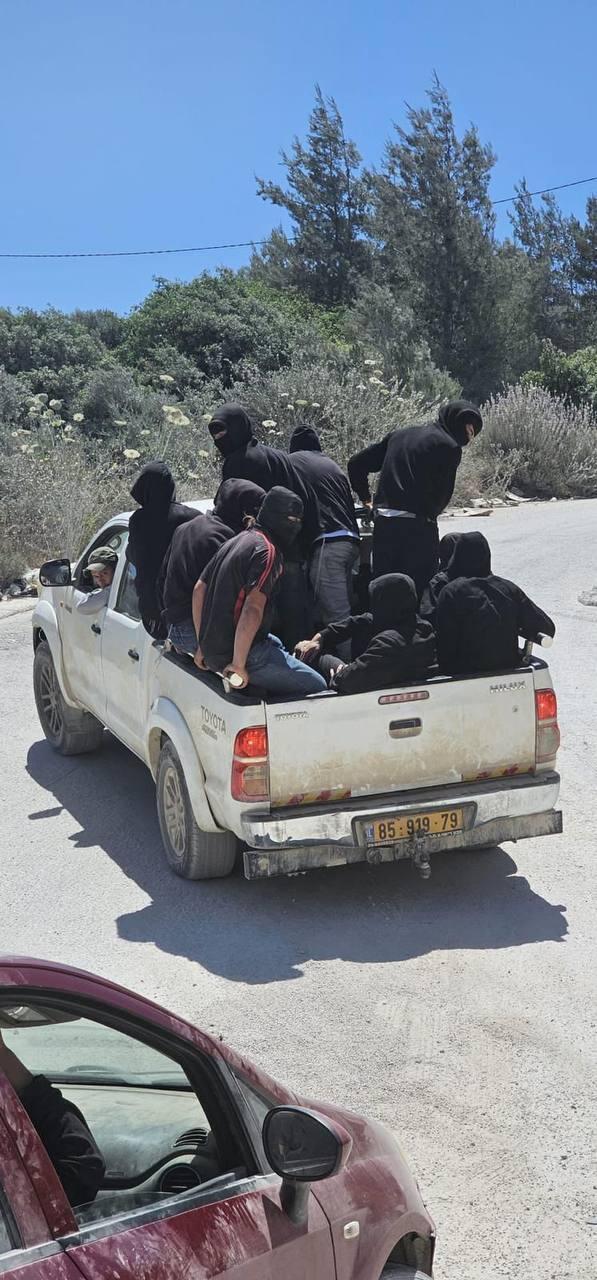
Masked men arriving in pickup trucks in Huwara, June 2026
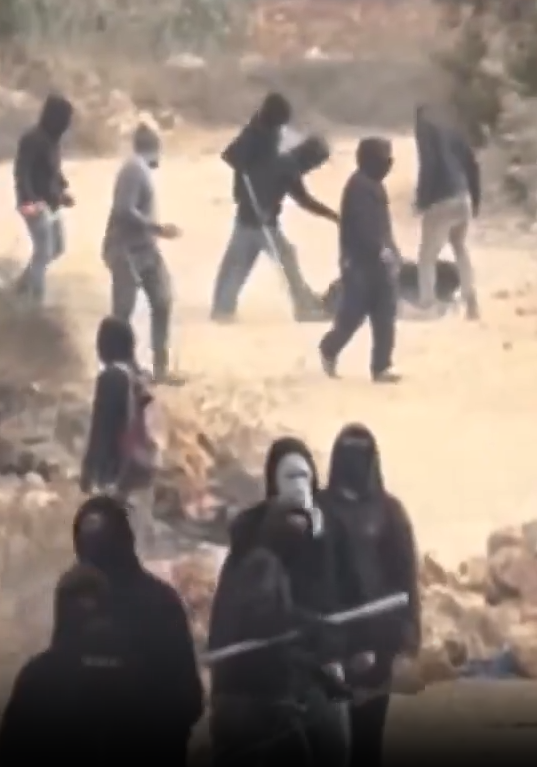
Footage of an attack on a photojournalist
(Photo: Reuters)
The meeting chaired by Zamir included senior representatives of the IDF, Shin Bet security agency and Israel Police. Among those attending were a representative of the Shin Bet division responsible for preventing Jewish extremism, a representative of the Coordinator of Government Activities in the Territories (COGAT), IDF Central Command chief Maj. Gen. Avi Bluth and Judea and Samaria District police commander Deputy Commissioner Moshe Pinchi.
Bringing all these officials together around one table reflects a growing recognition within the defense establishment that combating nationalist crime requires a change in approach: less reliance on military forces for policing duties and greater coordination between intelligence gathering, police enforcement and operational activities.
More forces, more command centers
Some of the measures were already implemented before the meeting. The IDF recently reinforced its presence in the West Bank with additional forces, including the headquarters of the 98th Division and the Paratroopers Brigade, which is operating in areas including the Shiloh Valley.
However, military reinforcements alone are not enough to provide the necessary response. The defense establishment is now seeking to change how responsibilities are divided on the ground so that police forces can focus on incidents of nationalist crime.
One of the central measures approved concerns preparations for November, when a new Border Police unit is expected to be established to focus exclusively on nationalist crime.
Until the unit is established, during the remaining days of October, IDF soldiers are expected to replace Border Police officers at some of the positions and checkpoints where they are permanently stationed in the West Bank.
The move is intended to free up additional Border Police personnel to concentrate on law enforcement and responding to violent incidents.
But deploying more soldiers is not necessarily the solution if they are required to handle situations that fall outside their training and designated responsibilities. The IDF wants combat soldiers to focus on security missions, while police forces assume a greater share of responsibility for crime prevention and law enforcement involving Israeli civilians.
Footage of an attack on diplomats in the West Bank over the weekend
(Video: Amit Orfali, Roni Federman)


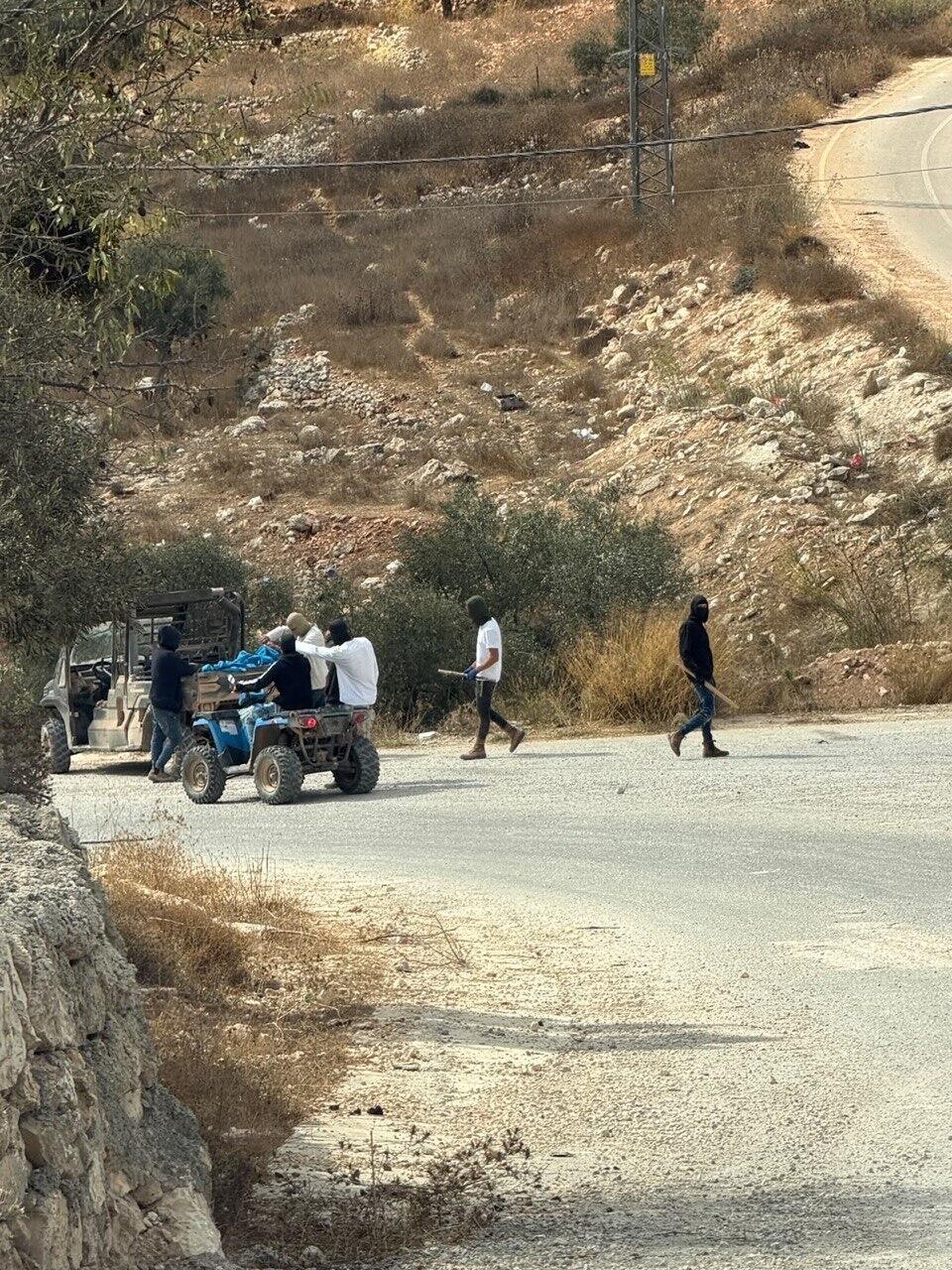
Settlers attacked European diplomats near the Palestinian village of Taybeh
Another measure ordered by Zamir is the reestablishment of a joint interagency command center to coordinate the activities of the IDF, police and Shin Bet.
The command center was originally established following a push by Pinchi but was later shut down because of insufficient personnel.
Under the new arrangements, Border Police forces equivalent to two companies will be assigned to the effort, including officers freed up when IDF soldiers take over some of their existing positions.
The goal is to create a joint framework that will improve coordination between the agencies, consolidate their efforts and enable faster information sharing among those responsible for identifying and preventing violent incidents.
The main gap: Intelligence
The defense establishment recognizes that the problem goes beyond the number of police officers and soldiers deployed on the ground.
One of the main shortcomings identified during the meeting concerns intelligence: the ability to identify organized groups, provide advance warnings of potential incidents and reach flashpoints before violence erupts.
Various measures are also expected to be introduced to strengthen intelligence gathering on Jewish rioters and their plans.
"There is an intelligence problem," one security official acknowledged. "There are incidents involving large crowds where additional rioters arrive to escalate the violence before security forces even become aware of what's happening. This is a gap we must close."
At the same time, Zamir instructed officials to promptly present him with the results of the use of administrative exclusion orders, along with a list of the main individuals involved in recent violent incidents and information on efforts to monitor them.
He also directed officials to expand the use of these orders if necessary, with the aim of determining whether administrative measures are effective in curbing the violence or whether changes are needed in how they are applied.
In doing so, Zamir is seeking to shift the response to nationalist crime from a primarily reactive approach to one whose effectiveness is also measured by results on the ground.
Military uniforms do not grant immunity
The meeting also addressed the conduct of IDF soldiers themselves.
Zamir ordered that instructions to soldiers be clarified and reinforced, with particular emphasis on soldiers on leave who become involved in incidents primarily connected to illegal outposts.
In cases where soldiers participate in such activities, the military has been instructed to impose tougher penalties, potentially including removal from combat service, depending on the circumstances and severity of their actions.
The message to soldiers is clear: Wearing a military uniform does not grant immunity, and being on leave does not exempt them from the obligations and restrictions that apply to them.
The defense establishment wants to make clear that soldiers cannot exploit their military status.
Ultimately, the meeting chaired by the IDF chief of staff signals an attempt to move beyond condemnations and isolated responses to violent incidents toward a coordinated action plan: reinforcing security forces, redistributing responsibilities between the IDF and Border Police, strengthening intelligence capabilities, establishing a dedicated police unit and reassessing enforcement and disciplinary measures.
The real test, however, will be implementation.
The question is not simply how many additional forces will be deployed to the West Bank or how many new units will be established. Rather, it is whether the defense establishment can identify potential incidents before violence erupts, respond quickly to violent confrontations and establish a credible deterrent that will reduce the likelihood of further attacks.
Senior security officials understand that allowing the current situation to continue is not merely an operational challenge. It is also a test of the state's ability to enforce the law equally and maintain its authority on the ground.