

Israel's embassy in Japan has issued a notice to all Israelis in the country, urging them to follow local authorities and listen to instructions broadcast by the media over fear that a tsunami will reach Japan's shores. “Stay away from the coastline, don’t go out to take pictures, and avoid low-lying areas. This is a serious and dangerous situation, and I hope it ends safely,” Gilad Cohen, Israel’s ambassador to Japan, told Ynet.
Following the massive 8.8-magnitude earthquake that struck Russia’s Kamchatka Peninsula in the Far East, tsunami waves up to five meters high were recorded along Russia’s coastline on Wednesday morning, and waves reaching 1.3 meters were also observed along Japan’s shores. Authorities warned that higher waves were still approaching and began evacuating coastal areas.
"The government has stated there’s a serious tsunami threat. All eastern coastlines should remain on alert over the next 24 hours,” Cohen said.
Gallery
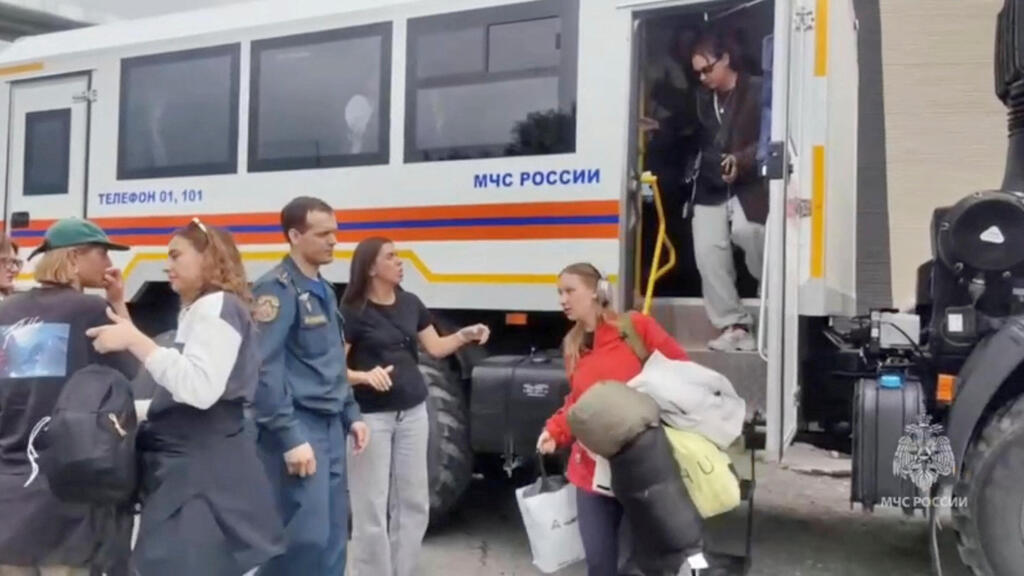
Evacuation of residents of Kamchatka,, Russia after tsunami struck
(Photo: Handout via Reuters)
“We’re taking care of Israeli citizens and ask anyone with problems or concerns to contact the embassy,” Cohen said. “The best precaution during a tsunami warning is simply to avoid the coast. We’re working to ensure everyone is in a safe location. So far we’ve received inquiries, but no distress calls or incidents have been reported.”
In Hawaii, receding water lines were observed on several beaches, indicating incoming tsunami waves, and residents were urged to seek shelter and stay away from the ocean. U.S. authorities warned that “dangerous tsunami waves” were spreading across the Pacific, and the U.S. Coast Guard instructed ships in at-risk zones to leave the ports.
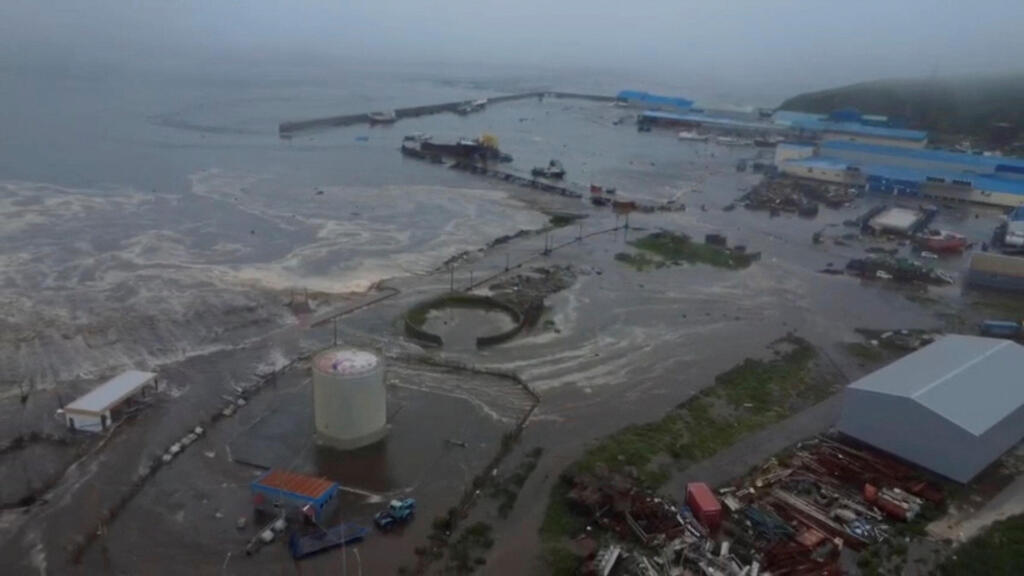
Parts of Russia's Far Eastern Kamchatka Peninsula under water after tsunami hit
(Photo: Handout via Reuters)
Shortly after the alert, traffic jams formed on Honolulu’s roads as thousands fled to higher ground hours before the expected arrival of the tsunami waves. Misha Kraker, an Israeli tour guide currently in Honolulu, told Ynet he had reached a high safe area. “There are zones: red, yellow with massive waves, and green, the safe zone,” he explained. “We climbed even higher to be sure.”
He said many tourists asked him for advice, and his main tip was “just go up to higher ground.” As for the major traffic jams, he said: “Most of the congestion is in the red zone, resorts, hotels, and residential areas. Everyone’s trying to leave on the same roads, so it creates a real bottleneck. Some people are stuck in hotels, staying on upper floors—hoping for the best.”
Michal, an Israeli vacationing in Hawaii, told Ynet that she had been evacuated from her hotel to a designated assembly area until the danger passes. “There are probably a few thousand people here,” she said. “This is a pre-designated safe area for tsunamis, located on high ground behind a mountain. We’re here waiting for it to pass.”
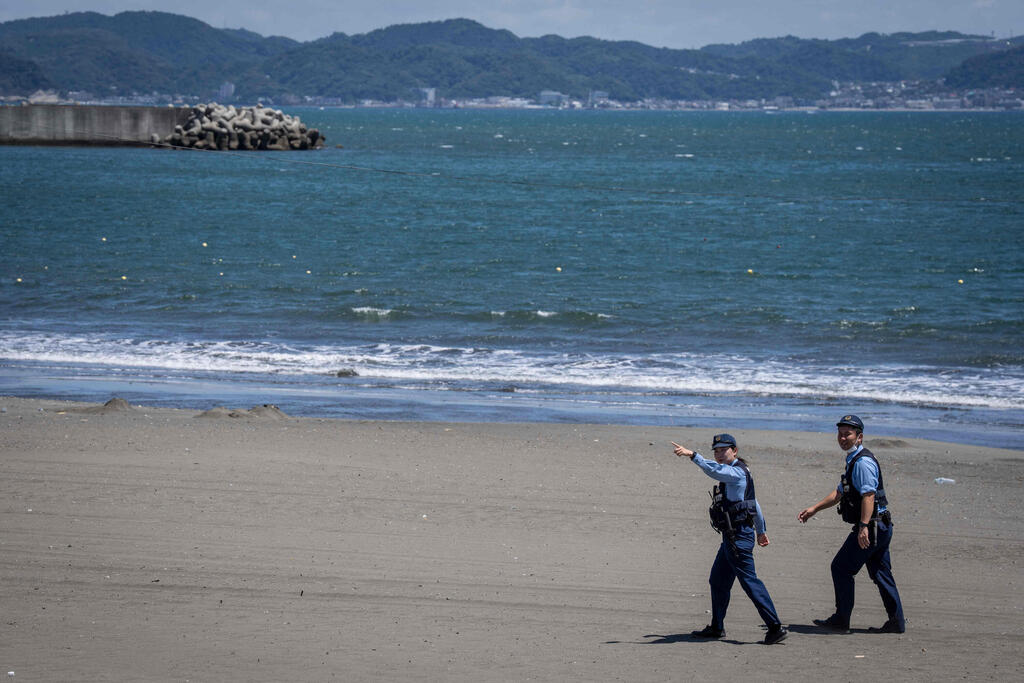
Preparing for tsunami in Japan
(Photo: Yuichi Yamazaki / AFP)
She added, “We’re Israelis—we’re used to extreme situations. There’s not much panic.” She’s in regular contact with her family in Israel: “At first, my kids and parents were worried, but once we reached the safe zone, the stress levels dropped. We’re getting updates via loudspeaker roughly every hour.”
Dr. Ron Avni, an earthquake expert at Ben-Gurion University, explained that “this very powerful earthquake is expected to affect not just Hawaii, but the U.S. West Coast as well. It’s wise to move to higher ground. If there are traffic jams in Hawaii, then getting to the fifth floor in a hotel is a good idea.”
Get the Ynetnews app on your smartphone: Google Play: https://bit.ly/4eJ37pE | Apple App Store: https://bit.ly/3ZL7iNv
He said tsunami waves could also reach South America, Australia and the Philippines. “They could be meters high, wave after wave flooding the area,” Avni said. “The 2004 tsunami reached all the way to Africa. Waves like these could certainly hit the U.S. West Coast. The clock started ticking hours ago, when the quake hit. Deep-sea waves can reach speeds of 800–900 km/h. As they near shore, their speed decreases, but wave height increases.”
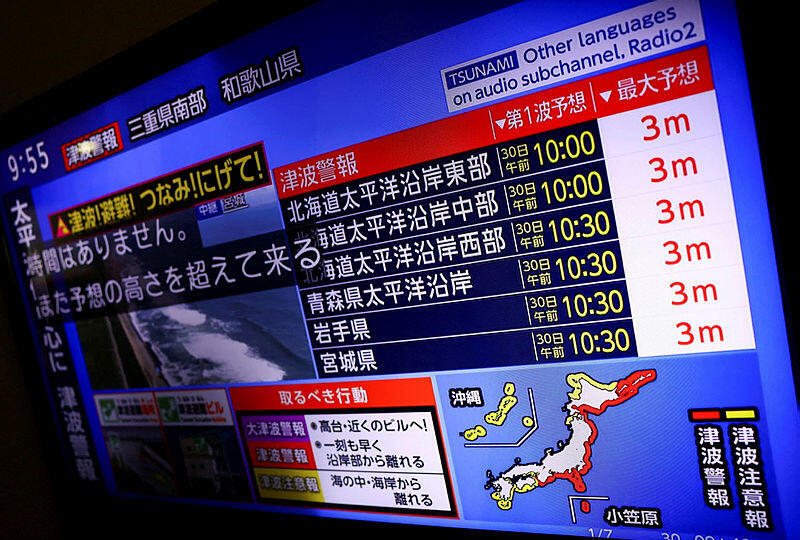
Tsunami warnings in Japan
(Photo: Reuters)
Regarding the possibility of a tsunami in Israel, Avni said the chances are minimal, but stressed that “we are not prepared in terms of infrastructure.” He noted that “in 2008, the government decided to allocate 3.5 billion shekels over 25 years to reinforce public buildings, hospitals and schools according to location and condition. The plan began in 2010 but was halted after two years due to disputes among the Finance, Health, and Education ministries over funding—so it was barely implemented.”
He added: “The State Comptroller reported that of 1,500 schools slated for earthquake reinforcement since 2010, only 50 have been reinforced. So the government is not ensuring the plan is executed. When it hits us, it will hit with full force.”