


Iran is boasting of its achievements in the short war, but it is not alone. In Yemen, the Houthis are also celebrating what they describe as a “strategic victory,” after quickly joining the campaign with missile fire toward Israel and a declaration of a maritime blockade in the Red Sea.
For the Iran-backed terror group, the speed of its intervention has become a symbol of growing confidence. Its leaders appear convinced that the “axis of resistance” has emerged stronger, not weaker, from the latest round of fighting.
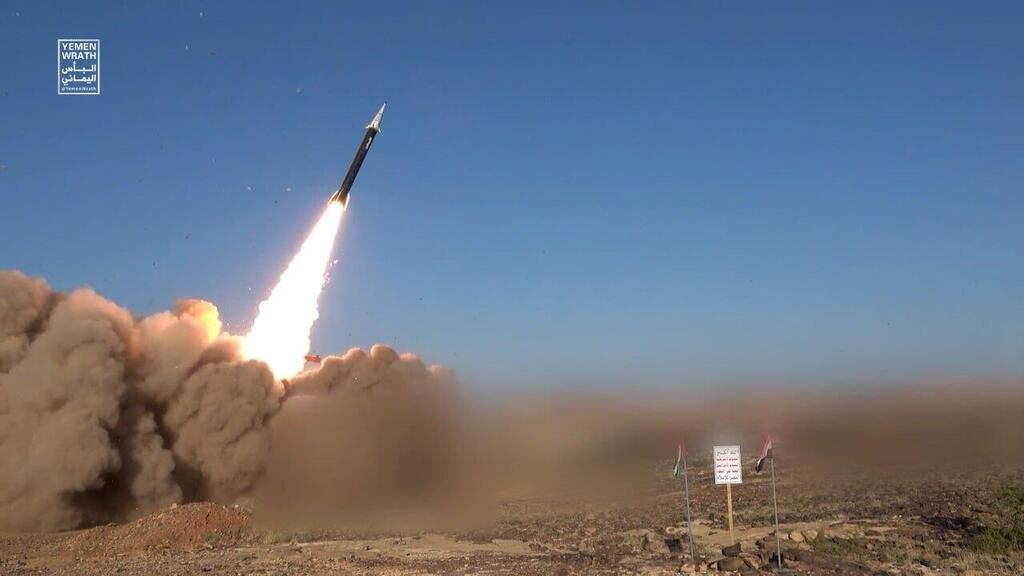
The Houthis train for war with Israel


A Yemeni researcher who opposes the Houthi regime and is familiar with developments inside the country told ynet that the picture is deeply troubling. In his view, “halting the strikes against Iran and its proxies is a catastrophic strategic mistake.”
The latest escalation came as the United States struck targets in Iran overnight on orders from President Donald Trump, after he accused the Islamic Republic of downing an American Apache helicopter over the Strait of Hormuz. Tehran responded by attacking American targets in the Persian Gulf and Jordan. After hours of fire, Iran’s Revolutionary Guards said their forces had “completed their response and are prepared to confront any aggression.”
The Houthis joined the fighting alongside Iran on Sunday, claiming responsibility for “launching missiles at sensitive targets belonging to the Israeli enemy in Jaffa” and announcing a “complete ban on enemy navigation in the Red Sea.”
Their entry into the campaign was notably swift. A “well-informed military source in Sanaa” was quoted Monday morning by the Lebanese newspaper Al-Akhbar, which is affiliated with Hezbollah, as threatening that the Houthis still had “major military surprises for the enemy.”
“What really impressed me was the speed with which they intervened,” the Yemeni researcher said on condition of anonymity. “The moment Iran attacked, the Houthi Foreign Ministry rushed to endorse the move, and it did not take long before the Houthis fired at Israel.
“In fact, the Houthis may be even more pleased with the Iranian attack against Israel than Hezbollah is, because they had a perception that Hezbollah intervened to support Iran in its recent actions, only to be abandoned by Tehran while it pursued its own interests.”
Iran’s conduct, he said, had created internal pressure among the Houthis. “Indeed, if Israel stops the strikes against Hezbollah, as recent reports suggest, this will not only save Hezbollah but also strengthen all the arms of the Iranian axis in the region.
“Among the Houthis, there seems to be a sense of relief and a rise in confidence. The Iranian move is seen as proof that Tehran remains fully committed to its allies.”
The researcher argued that the war against Iran “failed to achieve any of its main objectives.”
“The regime did not fall, Iran’s missile capabilities were not completely reduced, the threat from it did not disappear and its nuclear program was not eliminated,” he said. “Now, the objective of dismantling its proxies has also failed. Therefore, the Houthis’ satisfaction is entirely justified.”
He said the Houthi announcement about “closing the Red Sea to Israel” may be even more significant than the missile fire itself.
“It demonstrates how far the Houthis are willing to go in future involvement,” he said. “Although this step is dangerous for Saudi efforts to move closer to them, the Houthis continued making threats without considering the consequences.
“In fact, given the situation in the Strait of Hormuz, a blockade at Bab al-Mandab would have a greater impact on Saudi Arabia and the other Gulf states than on Israel, which at least has another outlet through the Mediterranean Sea.”
The researcher said that before the latest short campaign, and after the major assassinations of senior Iranian officials, there had been signs of unease within the Houthi security apparatus.
“This was reflected in tighter security measures in Sanaa and other areas under their control, greater restrictions on communication between different levels of the leadership and increased monitoring of internal movement,” he said. “These measures indicated that Houthi leaders expected possible retaliation or a direct strike. However, the heightened alert seems to have subsided following the latest developments.
“The current Houthi thinking is: since Iran supported Hezbollah, it will certainly support us if problems arise. In practice, previous doubts about the reliability of Iranian support have diminished.” As an opponent of the terror regime in his country, the researcher said stopping attacks against Iran and its proxies now would be a grave mistake.
“Halting the strikes against Iran and its proxies now is a catastrophic tactical and strategic mistake by any measure,” he said. “In general, the Houthis are expected to interpret the latest development as serving their strategic interests.
“From their point of view, and from the point of view of their allies, these events strengthen, rather than weaken, the axis of resistance. This perception, whether accurate or not, empowers them and encourages their future actions.”
While Houthi leaders project a growing sense of immunity, ordinary Yemenis are collapsing under repression, poverty and disease. The Yemeni researcher said public reactions inside the country can broadly be divided into two camps: those who sympathize with the Houthis and those who dislike them and feel fear and anxiety over their actions and the consequences.
“Houthi supporters are their mobilized social base,” he said. “Their reactions were expected, positive and even celebratory. They see the latest developments as part of a broader regional confrontation in which the Houthis view themselves as a legitimate and active player. The Houthis focus on this group.”
As for their opponents, he said, the Houthis deal with them “through a combination of repression, economic pressure and broad security surveillance, which prevents any public or organized expression of opposition.” For that reason, he said, the internal social balance has not changed.

Houthi demonstrators in Sanaa, Yemen’s capital, in support of Iran and Hezbollah
(Photo: Mohammed Huwais/AFP)
A source in Sanaa also said the public in Yemen was “surprised that the Houthis announced their participation in the war and imposed a maritime blockade on Israel.”
Against the backdrop of the brutal repression of civilians, the source said: “We hear many people saying the Houthis have returned to their old ways. Before this, people were already optimistic that they would not return to fighting, but now they are confused and wondering whether they do not feel what the people are going through and do not feel their pain.
“Where are we going with them? On the Yemeni street, you can see one person laughing, out of surprise and not happiness, and another crying. It is a very strong contradiction.”
Another Yemeni security source said that, from his perspective, most Yemenis in areas under Houthi control do not see the group’s attacks against Israel as a real achievement or as a step with tangible impact.
“They see it as a useless act that achieves nothing and only brings more harm to Yemen and its citizens,” he said. “Many civilians believe these missiles and drones have not managed to have any real effect on Israel. Their direct result has been to increase the likelihood that Yemen will face military strikes and retaliation, which will worsen their suffering.”
He added that while the group is busy issuing threats and joining external battles, the average Yemeni citizen is living through an unprecedented reality.
“The salaries of millions have been suspended for years, and they lack the most basic services, food, medicine, fuel and job opportunities,” he said. “These issues matter more to Yemenis than any confrontation from which they see no benefit.
“Many also fear that these actions will lead to further economic isolation and military escalation, with civilians ultimately bearing the consequences.
“The Houthis pay little attention to the human and economic losses caused by their policies and are prepared to continue this approach regardless of the consequences for the population. Political and military considerations are the main drivers of their decisions.”