

Iran claimed Tuesday afternoon that two oil tankers sailing through the southern shipping lane of the Strait of Hormuz struck mines and exploded. The Iranian announcement came as Tehran stepped up pressure on vessels attempting to pass through the strait, partly in an effort to drive up oil prices in the hope of "punishing" President Donald Trump ahead of the U.S. midterm elections.
Iranian officials told Reuters on Tuesday afternoon that Tehran was convinced the United States was planning to resume the war to break the deadlock in the Middle East. "Iran is preparing for renewed Israeli and US attacks, not for a deal with America to end the war," one official told the news agency. "The clerical establishment is determined not to give Trump a political victory."
Iranian footage: Vessel sinks after attack in Strait of Hormuz


Footage from Hormuz: 'iPhones floating after ship was sunk'
The officials acknowledged that the Iranian regime had deliberately prolonged negotiations with the United States in the hope of inflicting a political defeat on Trump in the midterm elections. The American president, it should be recalled, announced that the United States would not bomb Iran before November 3, the date of the midterms. In Tehran, however, officials expect that "bombing will resume, sooner or later."
In recent weeks, despite an increase in Iranian attacks on tankers, the United States has managed to dramatically increase the flow of oil from the Persian Gulf. According to The Washington Post, it has done so through operations involving fighter jets, drones and special forces that help guide vessels entering and leaving the Persian Gulf. Iran, meanwhile, has carried out attacks on approximately 30 tankers a week. This month, according to data from United Kingdom Maritime Trade Operations, Iranian forces have attacked more than 20 vessels, one of which sank.
Gallery
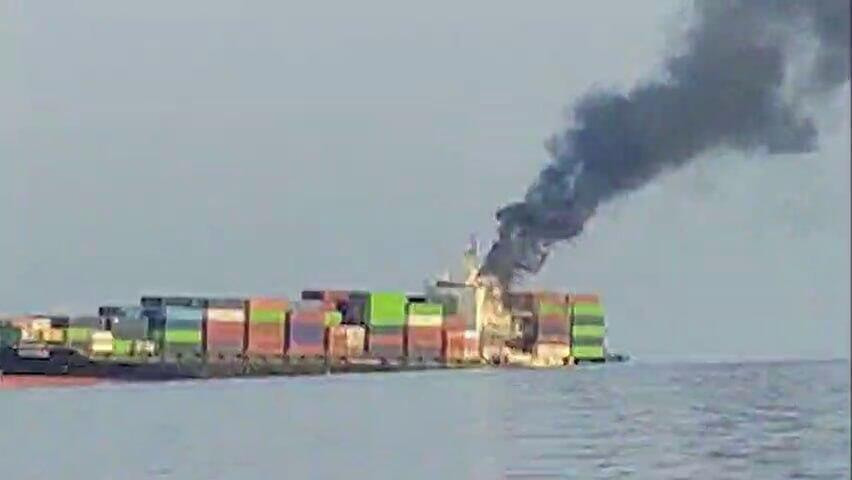
Purported footage of a container ship that sank in the Strait of Hormuz after allegedly striking a mine, according to Iran
Pakistan's army chief, Asim Munir, arrived in Iran Tuesday. He has been one of the key intermediaries between the United States and Iran since the ceasefire declared between the two countries at the end of their most recent war. Munir is considered one of Pakistan's most powerful figures, having steadily expanded his political influence relative to the country's civilian government in recent years.
Iranian Foreign Ministry spokesman Esmaeil Baghaei said he did not know the purpose of Munir's visit. "We need to speak with him to find out what the visit will be about," Baghaei said.
The Iranian spokesman also acknowledged the renewed threat of war in the Middle East in recent days. One example is the warnings Prime Minister Benjamin Netanyahu has issued to Iran and its proxies. Tuesday morning, Netanyahu again warned the Iranians against launching an attack on Israel.
Baghaei, for his part, said Tehran had no intention of making concessions on its nuclear program and reiterated its insistence on controlling the Strait of Hormuz.
"We live day and night with the possibility of war. We are not in a state of peace. Iran's defenders are prepared to repel any hostile action," he declared. "Our positions and demands are clear. The message received from the other side was insufficient and incomplete. We have made our positions clear."
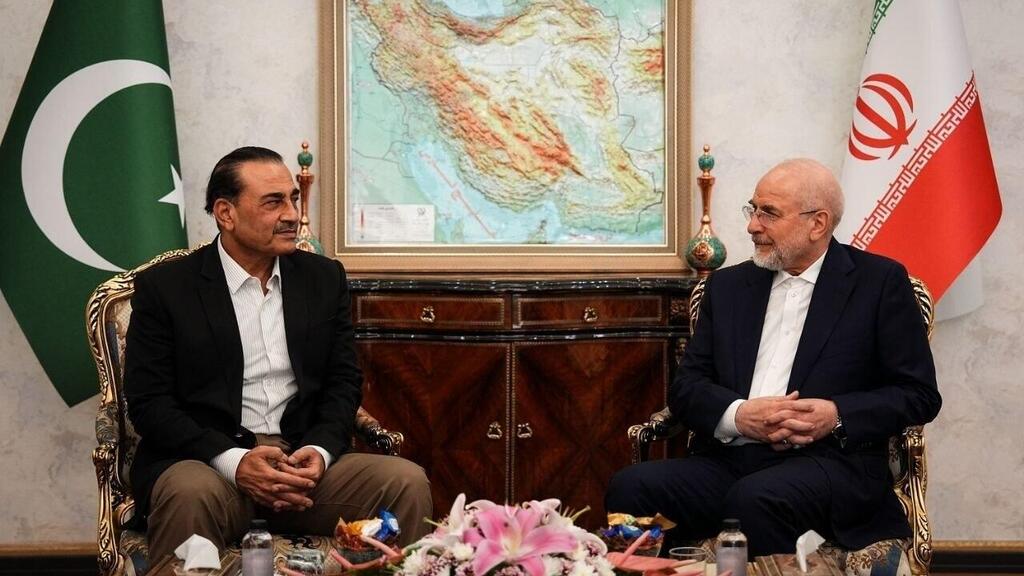
Asim Munir during a previous visit to Iran with Parliament Speaker Mohammad Bagher Ghalibaf; Tehran says the purpose of his current visit is unclear
Tehran's desire to control the Strait of Hormuz has led it to characterize American operations in the waterway as "smuggling." One issue currently attracting considerable attention in the Iranian media is the U.S. midterm elections, particularly energy prices and Trump's declining approval ratings.
The Washington Post quoted a Western diplomat and an Arab diplomat who described how senior Iranian officials have become focused on punishing Trump in the midterm elections, much as the Iran hostage crisis damaged President Jimmy Carter politically in 1980.
"They're obsessed," the Arab diplomat said of senior Iranian officials. "They think they can bring down a presidency."
Munir arrived in Iran a day after Russian Foreign Minister Sergei Lavrov visited Tehran, where he met, among others, with President Masoud Pezeshkian and Foreign Minister Abbas Araghchi.
"Our common view with Russia is that regional issues have no military solution," Araghchi said following Lavrov's visit.
First published: 15:06, 10.20.26