

Almost a year has passed since former Hezbollah Secretary General Hassan Nasrallah was eliminated on Sept. 27, 2024 — yet his figure continues to tower over the organization and its supporters in Lebanon and beyond.
His successor, Naim Qassem, a longtime senior member of Hezbollah since its founding in the 1980s, struggles to fill the void left by Nasrallah. Although he has given many speeches since his appointment, calls of “At your command, Nasrallah” are heard again and again — evidence that Nasrallah’s popularity and authority still eclipse those of his replacement. His image still appears in demonstrations in Beirut and Dahieh, and adorns walls in southern Lebanese villages, the Bekaa and other Shiite strongholds.
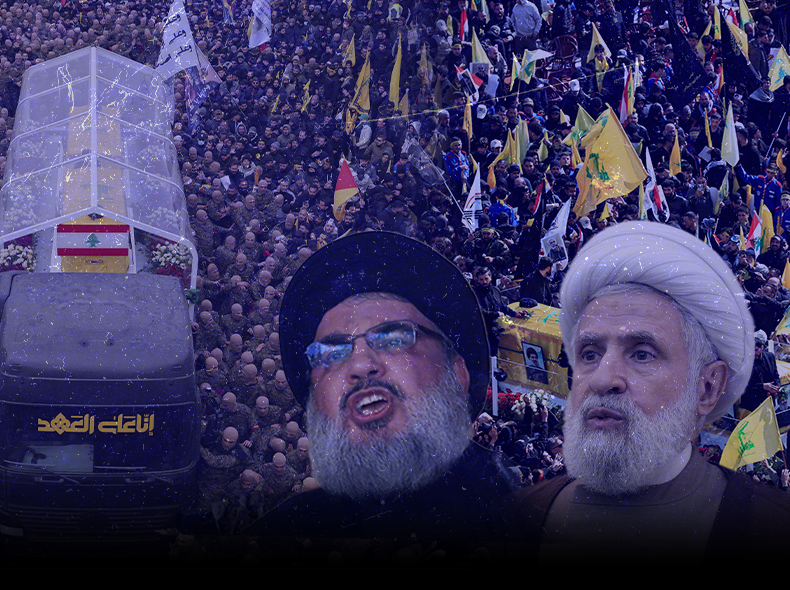
One who has taken particular care to preserve his image is his son, Mahdi Nasrallah. In recent years, he has cultivated an aura of religious authority, opened social media channels, and dresses exactly as his father did. In doing so he succeeds in attracting attention and harnessing the nostalgia surrounding Nasrallah to build for himself a modest degree of status and influence, even if modest compared to that of his father.
Ahead of the first anniversary of his killing, Mahdi managed to confuse his father’s admirers. On Sept. 10, he hinted he would release a video “that will delight Nasrallah’s lovers,” sparking rumors on social media that his father was alive.
That same day, he published a further statement clarifying that the rumors were false, writing: “Hezbollah and we, his family, have repeatedly made clear that he was killed. There is no place for manipulation, tests or lies on this matter.” The following day, he released the promised video, unveiling the “surprise” — a new book titled My Memories with My Father, available for purchase in Lebanon and expected to debut soon also in Iraq.
'At your command, Nasrallah!': memorial for slain Hezbollah leader in Beirut


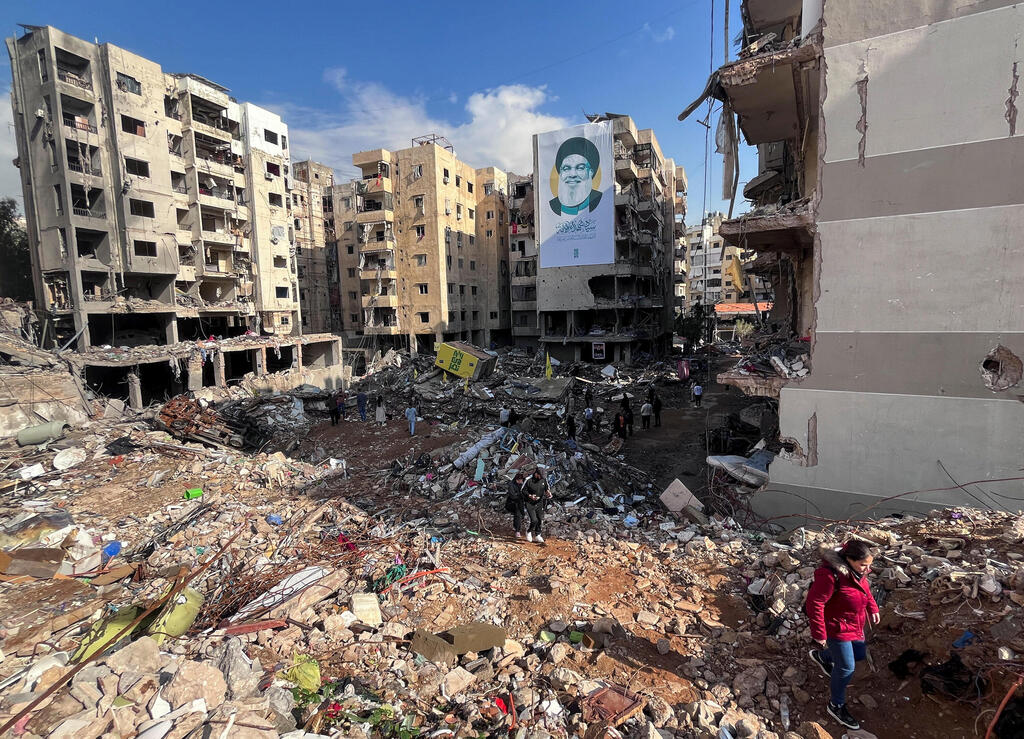
A bombing site in Haret Hreik in Dahieh, Beirut, which formerly served as Hezbollah’s central command, where Nasrallah was killed
(Photo: REUTERS/Amr Abdallah Dalsh)
Since Nasrallah’s death, two focal sites have in the past year become associated with his legacy. The first is the site of the killing in Haret Hreik in Dahieh, Beirut, which formerly served as Hezbollah’s central command. The site, left in the ruins of the attack, has become a pilgrimage destination for his supporters, who visit the spot where he died. In recent months, mass events and demonstrations in support of Hezbollah have been held there, alongside the attack’s ruins preserved as a memorial.
The shrine that became a headache
The second focal point is Nasrallah’s burial site, a shrine located between the two roads to Rafik Hariri International Airport in Beirut. The shrine has also become a pilgrimage site.
Iran’s secretary of the Supreme National Security Council, Ali Larijani, visited the shrine last August and said from there, “We will always stand by you. We do not interfere in the internal affairs of other countries, but we confirm our support for resistance movements around the world.”
Nasrallah's shrine in Beirut
Iran’s secretary of the Supreme National Security Council, Ali Larijani, visits Nasrallah's shrine
Iranian Foreign Minister Abbas Araghchi also visited the shrine during his trip to Lebanon last June and declared there, “Israel’s defeat is certain. Nasrallah’s blood will ensure that victory.”
Alongside images of the ornate shrine, claims about its upkeep have surfaced. The website Lebanon 24 reported last Saturday on chaos around the shrine, and residents of Bourj al-Barajneh in Dahieh complained that the area has become a gathering place for undocumented migrants, a playground for children and a car park.
It was alleged that “less than a year has passed since his burial,” yet the shrine area is already poorly maintained, and that responsibility for addressing the issue lies with the Bourj al-Barajneh municipality, the Dahieh municipal union, Hezbollah and the relevant security agencies.
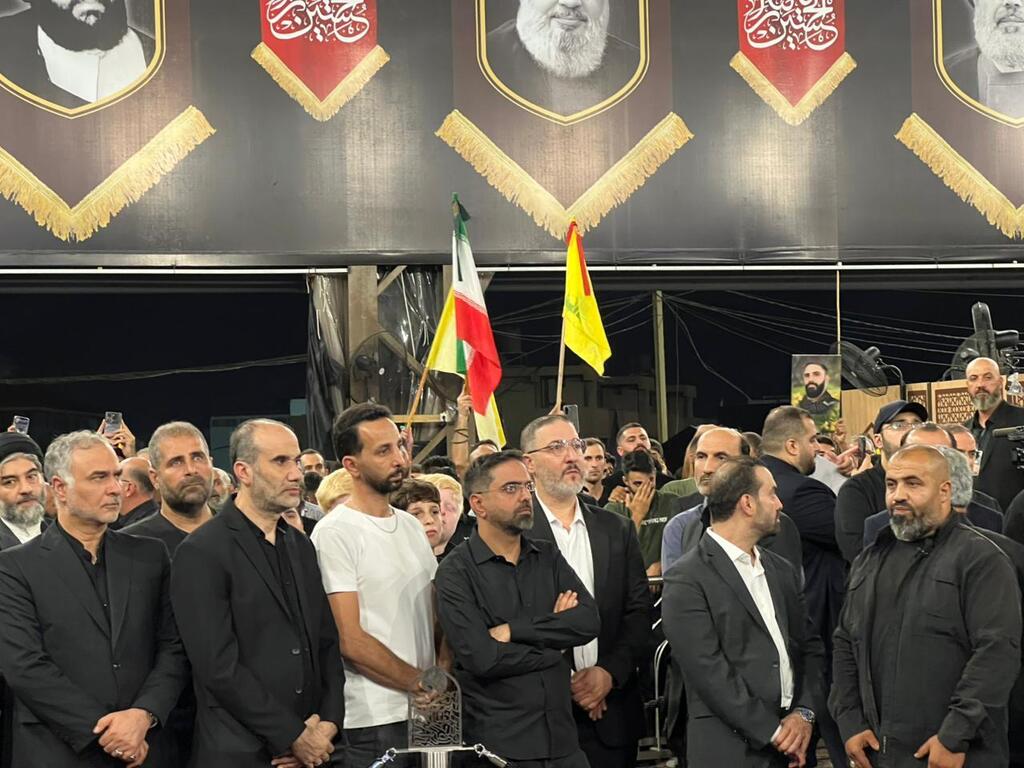
Iran’s secretary of the Supreme National Security Council, Ali Larijani, visits Nasrallah's shrine
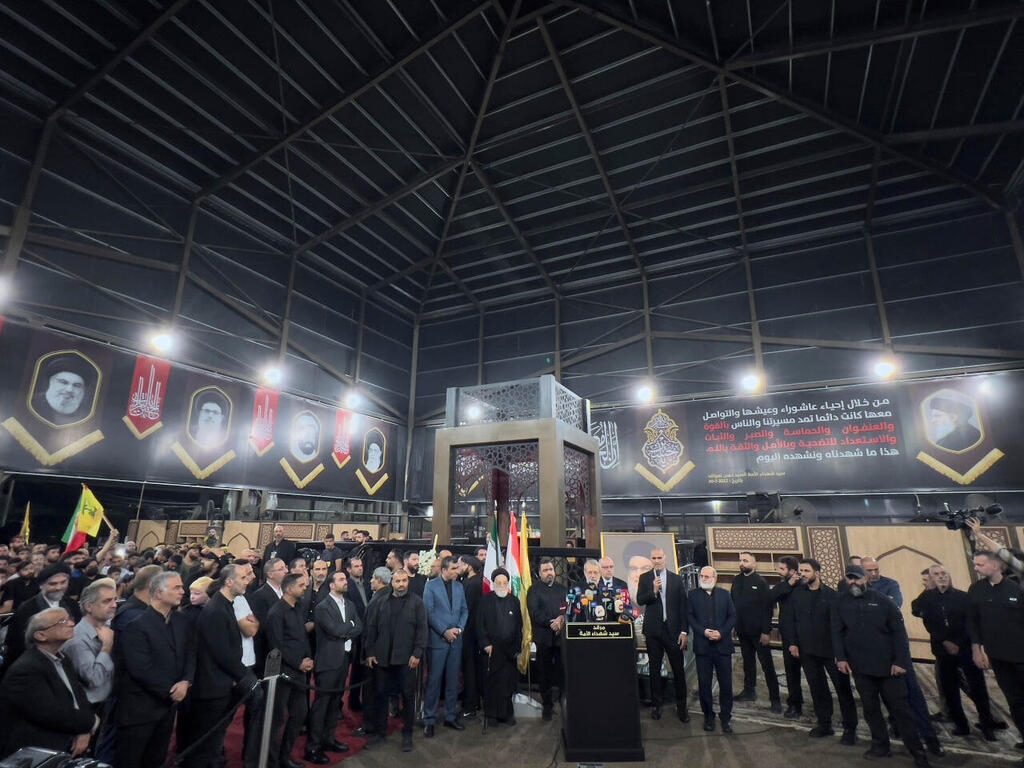
Iran’s secretary of the Supreme National Security Council, Ali Larijani, visits Nasrallah's shrine
(Photo: AP Photo/Hussein Malla)
In recent months, there has also been criticism in Lebanon of the sums invested in constructing the shrine, provoking the ire of Hezbollah supporters who saw it as an affront to Nasrallah’s sanctity.
An organization without a leader
“Formally, Nasrallah has a successor, but in practice no one can step into his shoes,” Orna Mizrahi, former deputy head of the National Security Council and now a senior researcher at the Institute for National Security Studies, told Ynet. “There is a glorification of him. By their reckoning, he deserves it. He led the organization for more than 30 years to a very high, relatively dominant position within the internal system, not to mention the other elements: developed military capabilities, and the relationship with Iran that was maintained and expanded.”
She said Nasrallah was also responsible for dealings with Arab actors on Iran’s behalf, as well as for the organization’s social, political and military systems. “To some extent, you could say Hezbollah was Nasrallah,” she added. “There was an identity between the organization and him. That is why I call it post-Nasrallah Hezbollah, Hezbollah 2.0.”
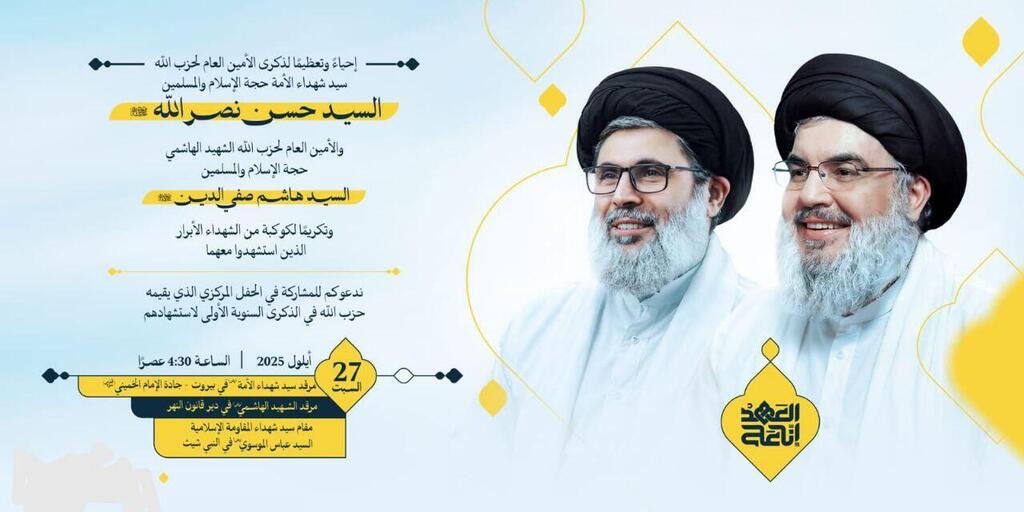
An invitation to a memorial for Nasrallah and Safieddine
Mizrahi added, “Bottom line, Hezbollah is at a very low point right now, but they continually manage to recover and adapt, with compromises and flexibilities they make according to the accepted Shiite concept of taqiyya. For example, we do not know the new structure of their military apparatus.” According to Mizrahi, “The Shiite vision is that in the end things will be good, although it may take time, and Hezbollah’s vision remains the same.”
The term “taqiyya,” which Mizrahi invoked, is associated primarily but not exclusively with Shia Islam. The term permits a form of dissimulation in certain circumstances — concealing the truth, belief or outwardly projecting something else — to protect against religious or material harm. In the context of Shia Hezbollah, it refers to outward activity that does not match the organization’s real intentions or actions.
“Hezbollah is at a point today where its members will do everything covertly, taking time and breathing room without expending forces, in order to return to what they had before,” Mizrahi said. “The question is who will be the obstructing forces and what we should do. We need to understand this and think about what we must do better. Some believe Hezbollah can be eradicated; I am not sure.”
Hezbollah not defeated
Mizrahi explained the significance of Nasrallah not only to Hezbollah, but to Lebanon’s Shiites more broadly. She noted that his persona differed from that of other senior clerics: “He wasn’t a spiritual father, but rather a father who cared for them in every way. He was a figure they identified with. It’s not the spiritual aspect they’re missing — it’s his presence in their day-to-day lives.”
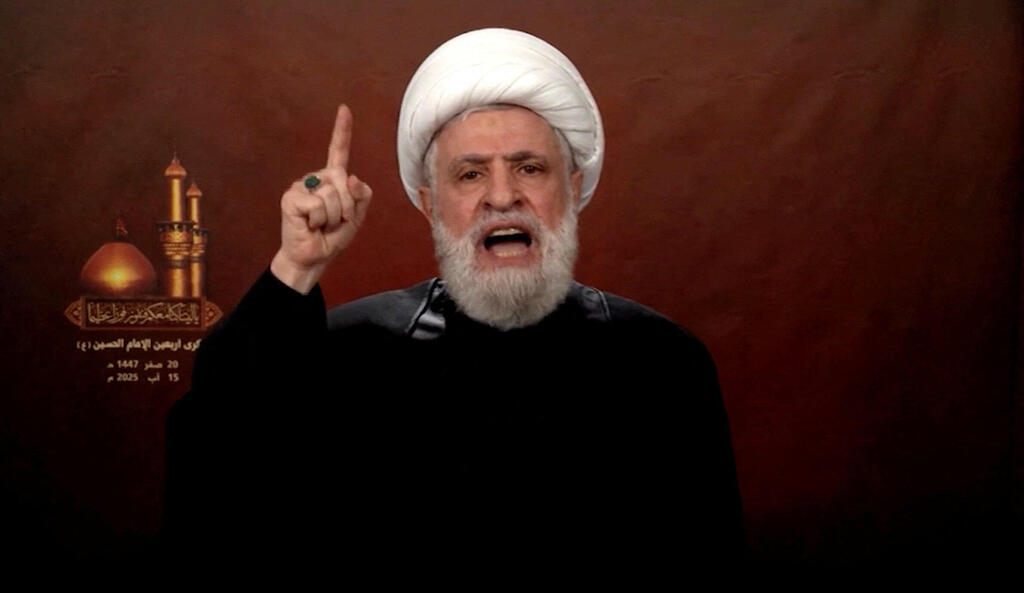
Naim Qassem
(Photo: Al Manar TV/Reuters)
According to Mizrahi, some residents have yet to return to homes that were destroyed, and the terror group is assisting some of them with compensation and rent payments. “From Hezbollah’s perspective, rehabilitating the population is a crucial part of its own recovery, because that population is not only dependent — it’s also the base of support for the movement and its source of manpower. So it’s very important to preserve those ties to the idea.”
Regarding Qassem, Mizrahi noted: “He doesn’t have Nasrallah’s charisma. Even though in his speeches he says the same things — sometimes in more bombastic language, because Nasrallah could be very evasive — he won’t be Nasrallah, but he can grow into the role. He’s been there all along.”
She said Nasrallah’s assassination dealt Hezbollah a serious blow, but did not bring the group down. “They’re at rock bottom, and from here they can only go up. Over the past year, they’ve begun to develop a new set of priorities — what they’re willing to fight for, and what they’re not. They’re still fighting to keep their weapons, but they’re not fighting, for example, to restore deterrence with Israel, because they’re not capable. Their military capabilities are more limited — and so are their internal Lebanese ones — so for now they’re letting that front lie.”
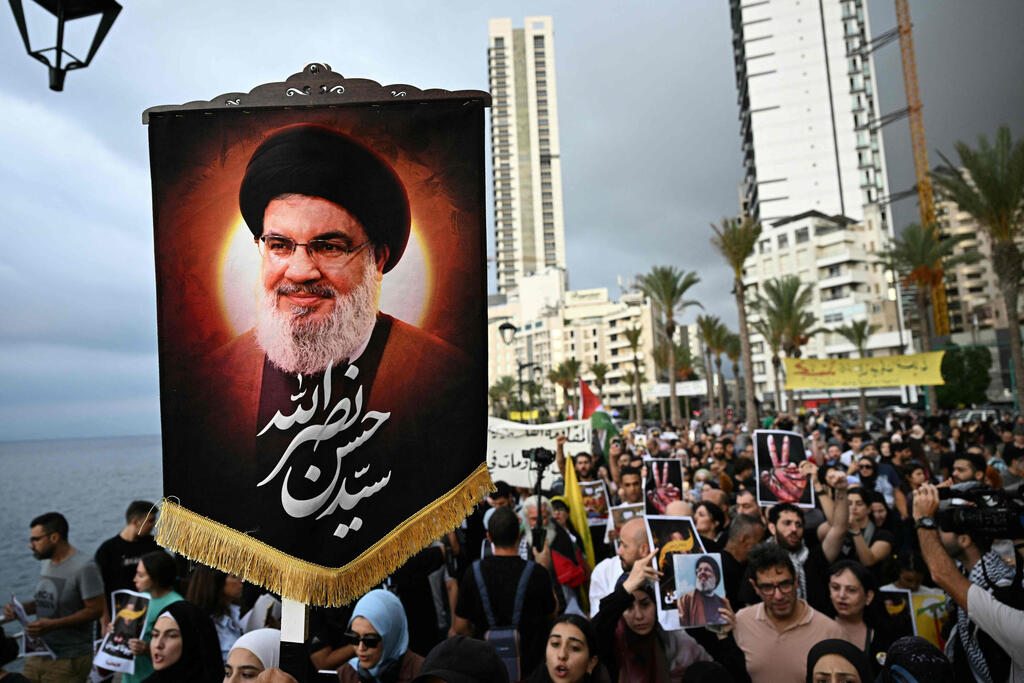
(Photo: Joseph EID / AFP)
Meanwhile, an Israeli security official told Saudi outlet Al Hadath that Hezbollah’s recovery efforts would be met with force. “Hezbollah is trying to rebuild, which requires constant vigilance. The group must be disarmed — there is no room for a ‘gray area.’ Anyone building military capacity against Israel is not immune, whether a foot soldier or commander.
“The option of a broad ground operation in Lebanon is on the table, if necessary,” he added. “There is no time limit regarding Lebanon, but Israel won’t wait long. If Hezbollah is not disarmed, Israel will expand its operations inside Lebanon. The coming year will be decisive. If steps are not taken to address Hezbollah’s weapons, we will intervene in Lebanon.”
Lebanon’s wall of fear begins to crack
At the same time, internal Lebanese discourse surrounding Hezbollah has grown louder. A year after Nasrallah’s killing, public criticism of the group has become routine. The war with Israel has weakened Hezbollah militarily and organizationally, and the broader Shiite-Iranian axis has been strained by the collapse of Assad’s regime in Syria and Iran’s ongoing war. Added to this is the rise of political factions in Lebanon not aligned with Hezbollah.
One of the main issues to emerge in recent months is the question of who controls weapons in the country. Hezbollah strongly opposes relinquishing its arms, insisting that any discussion on the matter must take place only as part of a comprehensive national defense strategy. In Hezbollah’s view, the government should instead focus on halting Israeli strikes in Lebanon, securing a withdrawal from the south, returning Lebanese prisoners and rebuilding areas destroyed in the war.
On Sept. 5, the Lebanese government approved a plan by the Lebanese Armed Forces to consolidate control over weapons. The plan, presented by Army Commander Gen. Rodolphe Haykal, was approved without a timeline for implementation — a detail that helped ease Shiite concerns.
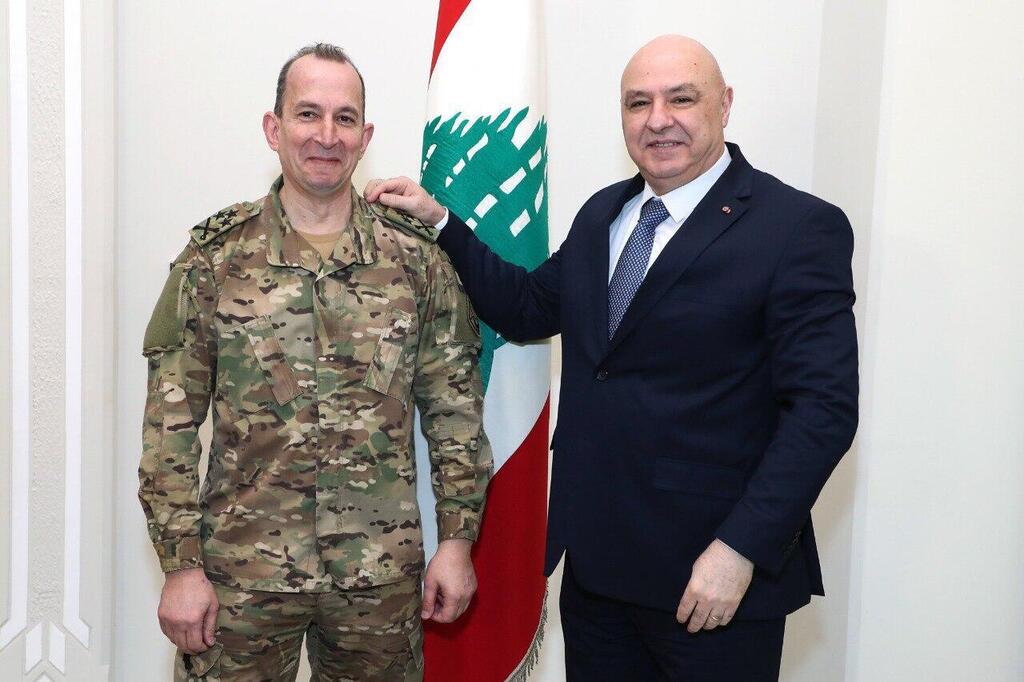
Lebanese Army Commander Gen. Rodolphe Haykal and President Joseph Aoun
Parliament Speaker Nabih Berri, Hezbollah’s most senior Shiite ally, later said, “These are positive developments, and I believe the poisonous atmosphere is beginning to lift.” Berri is currently considered one of Lebanon’s three most powerful figures, alongside President Joseph Aoun and Prime Minister Nawaf Salam. Both Aoun and Salam stressed that the decision to centralize weapons under state control is irreversible. Salam emphasized that the move was consistent with the 1989 Taif Agreement, the president’s inaugural address, and the cabinet’s policy statement.
According to the London-based Arabic-language newspaper Asharq Al-Awsat, Hezbollah is now focusing its opposition on the Lebanese government and Prime Minister Salam, while ignoring President Aoun and the leadership of the Lebanese Armed Forces.
Conflicting reports have emerged about Hezbollah’s cooperation with the army in areas south of the Litani River. Political sources claimed that cooperation has diminished and could delay the mission, while security sources maintained that Hezbollah is still cooperating for now. Under the government’s plan, the Lebanese army is expected to submit monthly progress reports, but no date has yet been set for the first.
The head of Hezbollah’s Executive Council, Sheikh Ali Daamouch, warned that "anyone who believes the resistance can be broken through pressure and threats is mistaken." He urged the government not to "incite the army into a confrontation with the resistance or the Lebanese people." He added that the only solution lies in a national dialogue on a defense strategy and that the group is open to discussion, but will not accept any alternative proposals.
At the same time, legal and civic initiatives against Hezbollah have been gaining traction within Lebanon. Last summer, Asharq Al-Awsat reported on a lawsuit filed against Qassem, alleging that his statements harmed national security and incited sectarian tensions. While the chances of a legal outcome are slim, the lawsuit itself is seen as an attempt to break Lebanon’s long-standing “fear barrier.”
This conversation is also taking place among analysts and scholars. Dr. Ghassan Bou Diab, director of the Demokrattia Center for Research and Strategic Studies in Washington, argued that the weapons issue requires a comprehensive and radical solution “for all Shiite militias everywhere.” In an interview with Ynet, Bou Diab claimed that Lebanon’s president, prime minister and parliament speaker had all benefited from Hezbollah’s weapons.
“It was those weapons that brought Joseph Aoun to power, and Nabih Berri served as Hezbollah’s political and military arm,” he said. When asked whether there is a Shiite opposition to Hezbollah, he replied, “There are Shiite groups, but Hezbollah — along with the Shiite Amal Movement — has been creative in violently eliminating every form of opposition. Their grip on every aspect of the state, from minor appointments to major positions, has rendered the opposition nearly irrelevant.”
Fighter jets over Lebanon on the anniversary?
Amid growing Lebanese debate over Hezbollah’s role and rising calls for its disarmament, the group is also preparing to mark the first anniversary of Hassan Nasrallah’s assassination. Senior Hezbollah official Ali Daher released details last Tuesday about the commemorations for both Nasrallah and his short-term successor Hashem Safieddine. The official slogan for the anniversary is “We are loyal to the covenant.”
Israeli Air Force jets fly over Nasrallah and Safieddine's funeral procession
Activities began Thursday, with the main event taking place Saturday — a speech by Qassem and a popular rally across Lebanon at 6:21 p.m. In addition, on Oct. 1, a ceremony is planned at Nasrallah’s shrine to commemorate the victims of the exploding pager operation, and on Oct. 12, a large gathering is scheduled at Beirut’s Sports City in honor of both secretary-generals. Daher added, “This anniversary comes at the height of the Israeli enemy’s arrogance and violence.”
Lebanese broadcaster MTV reported, citing a source close to Hezbollah, that unlike the funerals, the group has not issued official invitations for the anniversary events, and participation will be voluntary. The source recalled that during the funerals of Nasrallah and Safieddine in February — roughly five months after their assassinations — Israeli Air Force jets flew over Lebanon, and suggested the possibility that Israel might carry out a similar flyover during the upcoming memorial.