


During a security discussion on Gaza held last week in the presence of Prime Minister Benjamin Netanyahu and Israel’s senior defense leadership, including IDF Chief of Staff Lt. Gen. Eyal Zamir, the question resurfaced of who would govern the Gaza Strip on “the day after” the war.
The issue has been a source of repeated friction throughout the war between Zamir and Netanyahu.
IDF Chief of Staff Eyal Zamir tours southern Gaza
(Video: IDF)


According to several officials familiar with the discussion, Zamir expressed skepticism about the effectiveness of the International Stabilization Force that the United States seeks to establish as part of President Donald Trump’s 20-point plan for Gaza, known as the ISF. The force is intended to enter the Strip and disarm Hamas.
Zamir told the forum that the IDF is preparing operational plans under which the Israeli military itself would carry out the disarmament of the terrorist organization, meaning another Israeli military operation in Gaza.
Gallery

IDF Chief of Staff Eyal Zamir, Prime Minister Benjamin Netanyahu
(Photo: IDF, Alex Kolomoisky)
Against that backdrop, Zamir pressed Netanyahu to instruct the IDF on what scenario to prepare for if Israel is forced to carry out the disarmament, specifically, who would govern Gaza afterward. Zamir, who opposes an Israeli military administration in the Gaza Strip but presented it as a possible “day after” option if no alternative exists, warned that Israel could find itself back in a situation in which Hamas regains strength, as it is currently doing.
Netanyahu did not provide an answer regarding who would rule Gaza if the stabilization force fails and the IDF is required to disarm Hamas.
Under the Trump plan, the international stabilization force would be tasked with disarming Hamas and governing a rehabilitated Gaza Strip under a technocratic administration overseen by a “Peace Council” led by the United States and other countries. Netanyahu shares the skepticism regarding the force’s ability to carry out the disarmament but Washington still wants to exhaust the option.
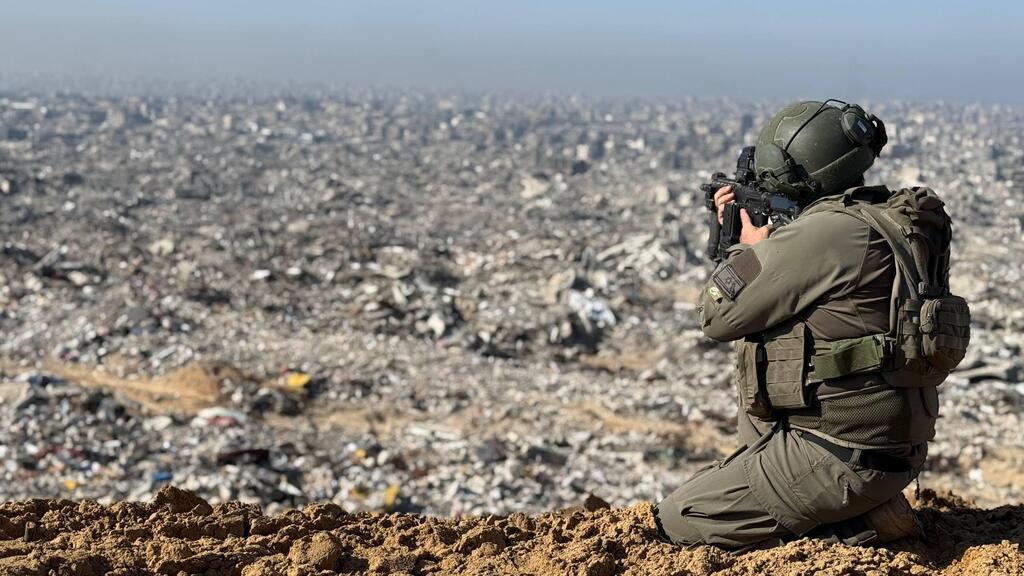
The Gaza Strip
(Photo: Roni Green Shaulov)
Meanwhile, a pilot project known as “Green Rafah” is expected to move forward. The plan involves constructing facilities in an area to which Gaza residents would be allowed to return on the Israeli side of the so-called yellow line only after undergoing security screening.
Finance Minister Bezalel Smotrich and other Likud ministers oppose the move, arguing it violates the principle of “no rehabilitation before disarmament.”
However, the pilot reflects a commitment Israel made to the United States several weeks ago in discussions between Netanyahu, his close associate Ron Dermer and the U.S. administration, particularly ahead of Netanyahu’s visit to Trump’s Florida estate. Domestic political pressure in Israel has so far failed to halt the plan.
Israeli officials are now asking the Americans to uphold the principle of “rehabilitation in exchange for disarmament” by first disarming an additional area of Gaza not under Israeli control, similar in size to the planned Green Rafah zone, so the situation in southern Gaza would remain balanced.
Some ministers fear the United States will push for rehabilitation and disarmament simultaneously in stages, disarming a small area while rebuilding it at the same time.
Among the contingency plans discussed in case the stabilization force fails is the disarmament of southern Gaza, including the Khan Younis and Rafah areas, while relocating the civilian population northward. After the south is disarmed, residents would return following security screening, and the IDF would then launch operations in northern and central Gaza to disarm Hamas.
Representatives of Israeli military intelligence confirmed in closed briefings to the Knesset Foreign Affairs and Defense Committee that Hamas has been rebuilding across multiple fronts since the fighting paused, including weapons production, training, operational doctrine, manpower and organizational learning.