


The IDF struck Hamas infrastructure overnight between Sunday and Monday that the terrorist organization had used to advance plans for attacks against Israel and Israeli forces.
The strikes came in response to an explosive device that detonated under an IDF engineering vehicle known as a “Panda” after the vehicle drove over it in the Yellow Line area in the northern Gaza Strip.
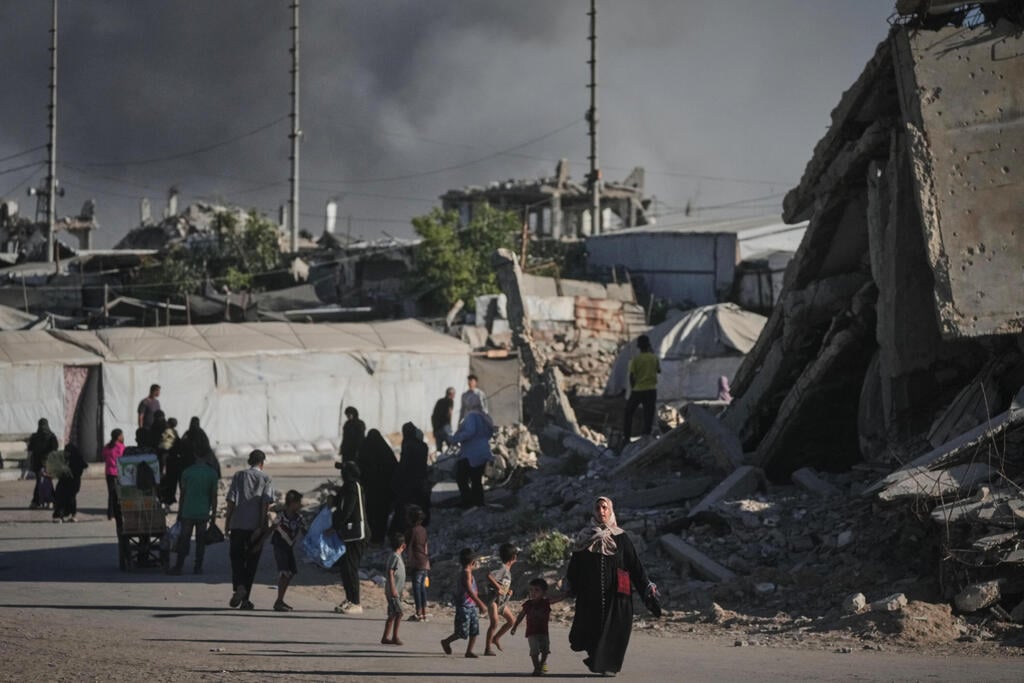
(Photo: AP Photo/Jehad Alshrafi)
The incident was considered unusual despite causing no casualties, and the IDF described it as another Hamas violation of the ceasefire. The military is still examining when the device was planted.
According to the IDF spokesperson, “This constitutes a blatant violation of the ceasefire agreement by the Hamas terrorist organization. IDF troops under Southern Command are deployed in the area in accordance with the agreement and will continue to operate to remove any immediate threat.”
The military said it views the incident seriously and considers it a blatant and deliberate Hamas violation. Officials added that anyone who believes the ceasefire can be exploited to rebuild the terrorist organization “is making a grave mistake.”
Last week, the IDF killed five Hamas company commanders and four platoon commanders in the Gaza Strip and captured the head of the terrorist organization’s internal security apparatus.
According to security officials, Hamas feels it is being pursued and is therefore carrying out terrorist activity while attempting to rebuild itself.
ynet recently revealed that after Prime Minister Benjamin Netanyahu toured an IDF position along the Yellow Line, he and Defense Minister Israel Katz instructed the military to formulate a plan for a regional pilot model in the Gaza Strip similar to the framework being implemented in southern Lebanon.
Under the emerging framework, which was raised during the discussion by Katz, supported by Netanyahu and, as in Lebanon, would be coordinated with the United States, designated areas in Gaza would be selected for the entry of international forces. Those forces would begin clearing the areas, establishing governance and preventing Hamas members from returning.
As in Lebanon, the intention in Gaza is to choose areas outside the Yellow Line where the IDF is not physically present but maintains observation over them. In practice, IDF troops would not actually withdraw from a particular area. Instead, the ability of international forces to clear it of terrorist infrastructure would be tested.
Unlike Lebanon, however, the situation in the Gaza Strip is significantly more complicated because there is currently no agreed governing entity capable of assuming responsibility for civilian affairs.