

A senior Iranian official said indirect talks between Iran and the United States are expected in early March and that the possibility of reaching an interim agreement exists, even as significant gaps remain between the two sides over sanctions relief and uranium enrichment.
In comments to Reuters, the official said Tehran and Washington differ over the scope and mechanism of sanctions relief. Iran maintains that its right to uranium enrichment under the framework of the Nuclear Non-Proliferation Treaty must be recognized.
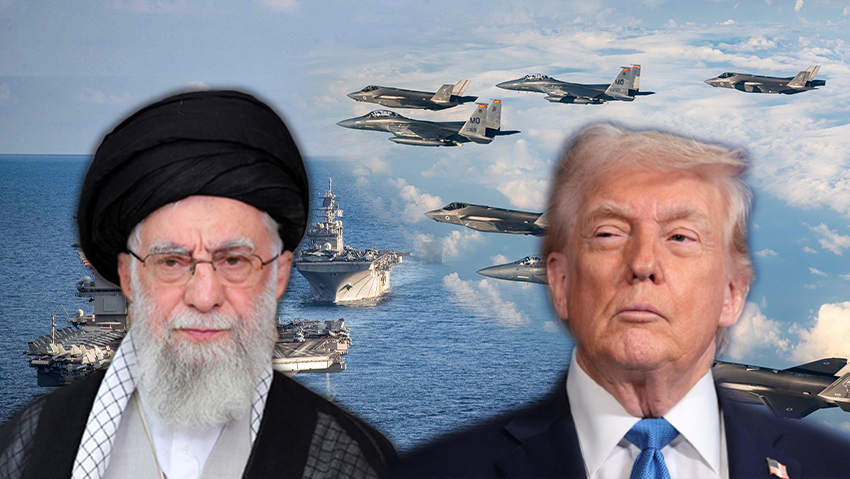
(Photo: REUTERS/Jonathan Ernst, Office of the Iranian Supreme Leader/WANA (West Asia News Agency)/Handout via REUTERS)
Tehran could seriously consider a mix of exporting part of its highly enriched uranium stockpile, reducing its enrichment purity level and participating in a regional consortium, the official said.
At the same time, the official stressed that Iran would not hand over control of its oil and mineral resources to the United States. However, U.S. companies could participate as contractors in Iran’s oil and gas fields, the official said.
The remarks came as Steve Witkoff, President Donald Trump’s special envoy to the Middle East, said Saturday that the president is questioning why Iran has not agreed to a deal on its nuclear program.
In an interview with Fox News, Witkoff told Lara Trump, the president’s daughter-in-law, that Trump is “curious” about Iran’s position.
“He's curious as to why they haven't ... I don't want to use the word capitulated, but why they haven't capitulated,” Witkoff said.
Witkoff said Trump is asking why, “under this sort of pressure with the amount of naval power that we have over there,” Iran has not approached the United States to state it does not seek a nuclear weapon and outline what it is prepared to do.
According to Witkoff, Trump’s red lines require Iran to maintain “zero enrichment” of uranium. He said Iran has enriched uranium beyond levels required for civilian purposes.
Trump has called on Iran to reach a nuclear agreement while maintaining a U.S. military presence in the Middle East in case diplomacy fails.
On Friday, Trump urged Iran to “better negotiate a fair deal.” He also cited a figure of 32,000 protesters killed in Iran, a number advanced by Iranian opposition groups that is significantly higher than other estimates.