

For a company at the center of the artificial intelligence boom, Nvidia is entering its latest earnings report with a surprisingly unfamiliar label: relatively cheap.
The world’s most valuable company is expected to report another quarter of extraordinary growth after Wall Street closes Wednesday. Analysts expect fiscal second-quarter revenue of roughly $92 billion, nearly double the level a year earlier, with adjusted earnings also expected to rise close to 100% to about $2.09 a share.
Yet Nvidia’s valuation has been moving in the opposite direction.
At Tuesday’s closing price of $213.05, Nvidia was valued at about $5.16 trillion and traded at roughly 21 times expected future earnings, according to StockAnalysis. That compares with a forward multiple of roughly 20 for the S&P 500 in recent FactSet data. In other words, investors are now paying only a modest premium to the broader market for a company whose revenue and profit are still expanding at extraordinary rates.
That does not make Nvidia cheaper than the S&P 500 on every measure, and different data providers calculate forward earnings multiples differently. But the direction is unmistakable. Nvidia’s forward P/E stood near 36 times in fiscal 2025 and above 50 times during parts of the AI boom. Current estimates put it near its lowest level in years. A July analysis based on Yahoo Finance AlphaSense data placed the multiple at 22.2, its lowest since at least 2019.
That creates one of the more unusual setups in the stock market.
Nvidia shares have risen about 14% this year, but earnings estimates have been climbing much faster. The stock also remains below its May record and entered this week after seven consecutive declining sessions, its longest losing streak since 2022. Shares finally rebounded more than 2% Tuesday ahead of the results.
The question facing investors is therefore no longer simply whether Nvidia can deliver spectacular numbers. Wall Street largely assumes it will.
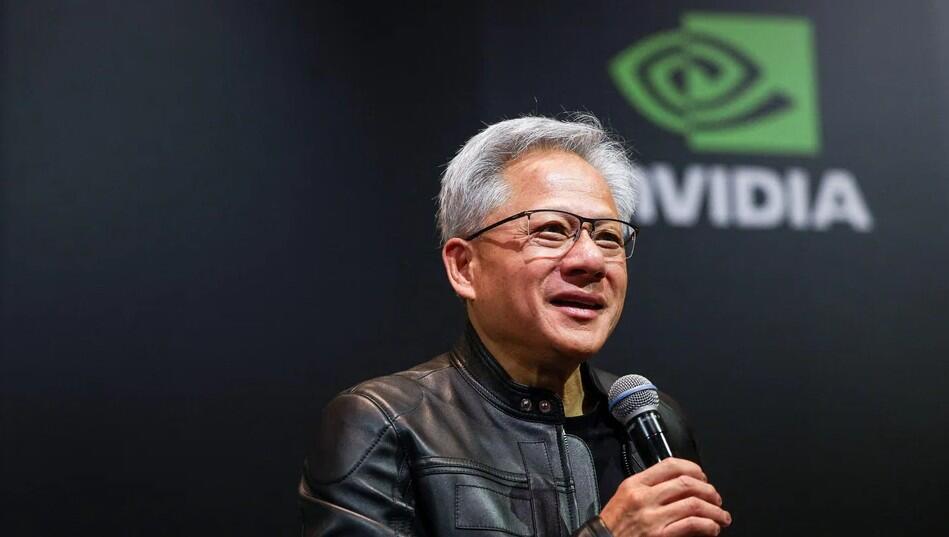
Nvidia CEO Jensen Huang
(Photo: AFP)
“We’re anticipating good news here, but so is everybody,” Siebert Financial chief investment officer Mark Malek told Barron’s. “Good news isn’t good enough anymore, and any kind of misread or misstep could be a big challenge.”
The pressure reflects Nvidia’s unusual role in the market. Its chips remain the central hardware behind much of the global AI infrastructure boom, meaning its results have become a referendum not only on Nvidia but on hundreds of billions of dollars being spent by Microsoft, Meta, Alphabet, Amazon and other companies on data centers.
Wall Street expects the growth to continue. Consensus estimates put revenue for the following quarter at roughly $104 billion, while some analysts believe it could exceed $110 billion as newer systems ramp up.
But investors increasingly want answers about what comes after the current spending frenzy.
One focus will be Nvidia’s rapidly expanding role in financing the AI ecosystem itself. The company recently unveiled a $500 billion financing platform, adding to concerns among some investors that increasingly complicated financing arrangements between chipmakers, cloud companies and AI developers could create circular demand. Goldman Sachs analysts have said investors will be looking for more clarity about the sustainability of that spending.
China is another unresolved problem.
Nvidia has struggled to generate meaningful sales from AI processors approved for the Chinese market. CEO Jensen Huang has repeatedly argued that China could eventually represent an annual opportunity of around $50 billion, but Nvidia said in May that it had not yet recorded revenue from H200 sales to Chinese customers.
Then there is competition.
Advanced Micro Devices is pushing deeper into large AI systems, while major Nvidia customers are developing their own custom chips. Investors will be watching for Nvidia’s assessment of whether its dominant market share can survive as AI infrastructure expands beyond the first phase of the boom.
Nvidia’s next-generation Rubin platform will be crucial to that argument. Rubin is expected to succeed the Blackwell generation, but analysts have warned that shortages and higher prices for advanced memory could constrain how quickly the new systems can be deployed. Citi analysts recently said Rubin installations may be more limited by memory availability than previously expected.
Nvidia is simultaneously trying to prove that AI growth will extend well beyond giant data centers.
This week the company unveiled Jetson Orin Nano 2, a compact AI computer aimed at robots, drones and other devices that run AI locally rather than relying entirely on cloud data centers. The product is part of Nvidia’s push into what it calls “physical AI,” with robotics potentially becoming another major market for its hardware and software.
The immediate financial contribution will be small, with the new system expected to become available in the first half of 2027. But strategically it illustrates Nvidia’s attempt to repeat the data-center playbook in robotics: sell not merely a chip, but an entire hardware and software ecosystem.
That makes Wednesday’s earnings report a particularly revealing test.
A forward P/E near 21 would look expensive for an ordinary company. Nvidia is anything but ordinary. Its trailing revenue has risen about 71%, while net income has more than doubled, and Wall Street still expects another quarter of nearly 100% sales growth.
The shrinking valuation therefore carries two possible messages.
The bullish interpretation is that Nvidia’s earnings have grown so quickly that its stock price simply has not kept pace, leaving one of the AI boom’s strongest companies unusually inexpensive relative to its own history.
The more cautious interpretation is that Wall Street no longer believes today’s extraordinary growth rates can last. Questions over AI spending, competition, China, component costs and financing are being reflected in the multiple before they appear in the earnings.
That is why Nvidia may need to deliver more than another record quarter on Wednesday.
For years, the challenge was proving that the AI boom was real. Now, with Nvidia trading at roughly the same forward earnings multiple as the S&P 500, the market is asking a different question: how much longer can the boom remain this profitable?