

A growing wave of Western trade restrictions on products made in Israeli settlements threatens to deal a severe blow to Israeli industry in the West Bank, with Palestinian workers expected to be among the first to suffer. According to estimates by industry officials and economists, around 4,000 of the roughly 18,000 Palestinians legally employed in Israeli factories and industrial zones in the territory could lose their jobs in the near future. There are also concerns that some factories could close or relocate their operations inside Israel's pre-1967 borders.
The crisis is developing following a series of decisions and initiatives in Western Europe and Canada aimed at restricting trade in goods produced in Israeli settlements in the West Bank and East Jerusalem.
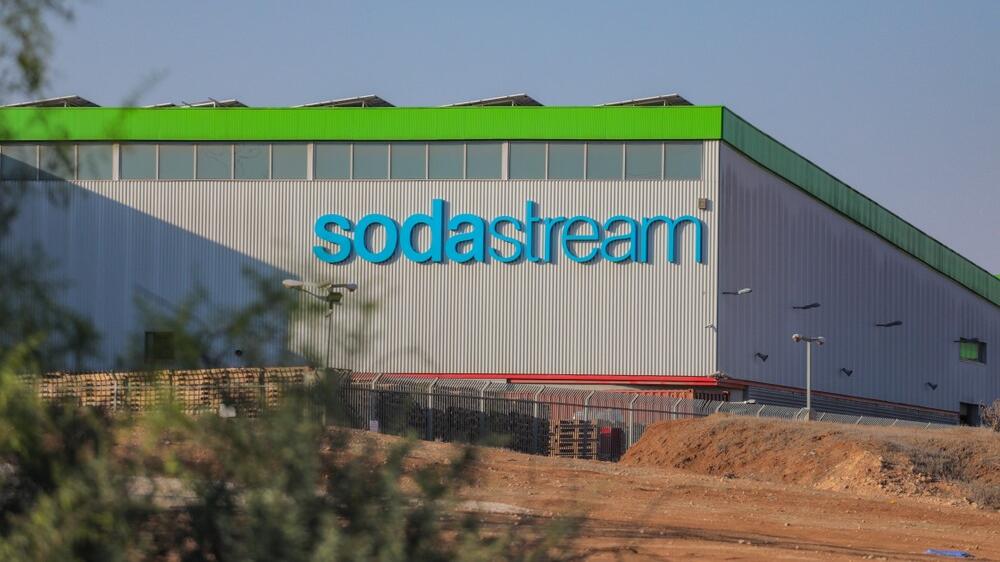
SodaStream's factory in the Negev. The company said its relocation was not driven by boycott pressure
(Photo: Shutterstock)
Import bans have already taken effect in Spain, Ireland and the Netherlands. Ireland's ban came into force on September 15, followed by the Netherlands on September 22. Britain announced in September that it would introduce legislation expected to take effect within six to nine months. France and Canada have also announced plans to ban imports of settlement products, while Belgium and Norway are advancing legislative initiatives.
Denmark, Finland, Sweden, Poland, Portugal and Iceland have also joined the broader effort to varying degrees. In a joint statement with other countries, they announced plans to pursue national trade restrictions, support European-level measures or consider similar steps. However, there is no uniform ban, and the scope and implementation timetable vary from country to country.
The consequences are already being felt. Israel's Economy and Industry Ministry, its Foreign Trade Administration and the Manufacturers Association of Israel report a sharp decline in orders from overseas and the cancellation of long-term distribution contracts. Industry officials fear losing markets in Western Europe on which many factories in the region depend.
Industrial zones facing losses
Among the main industrial centers at risk is Barkan, home to factories producing plastics, textiles, metal products and food. Another is Mishor Adumim, one of the largest industrial zones in the West Bank, where manufacturing plants and commercial businesses employ thousands of Palestinian workers from surrounding communities. Israeli factories also operate in the Ariel industrial zone.
Industry leaders point to the case of SodaStream, which became a target of the Boycott, Divestment and Sanctions (BDS) movement. In 2015, the company closed its factory in Mishor Adumim and transferred production to a new facility in the Idan HaNegev industrial park near Rahat in southern Israel. SodaStream said at the time that the move was driven by commercial considerations rather than boycott pressure.
Hundreds of Palestinian workers lost their jobs following the closure. In February 2016, another 74 longtime Palestinian employees who had continued working at the new plant were dismissed after Israeli authorities declined to extend their permits to enter Israel. In May 2017, permits were granted allowing them to return to work.
At the time, European officials expressed regret over the loss of income suffered by hundreds of Palestinian families. Industry representatives now fear a similar outcome on a much larger scale.
Israel is seeking to halt the trade restrictions through its Foreign Ministry, Economy and Industry Ministry and public diplomacy efforts. However, those efforts are coming late, with some of the bans already in force. The measures are also being introduced against the backdrop of continued violence by extremist settlers in the West Bank. Western governments have cited settler violence and settlement expansion as reasons for the restrictions they are pursuing.
Israel's response includes legal and diplomatic efforts, alongside direct talks with governments in Europe and Canada. Israeli officials are emphasizing that damage to the factories would jeopardize Palestinian livelihoods and undermine economic cooperation between Palestinian workers and their Israeli employers.
 Avraham (Novo) Novogrotcki, president of the Manufacturers Association of IsraelPhoto: Michael Topiol
Meanwhile, the Foreign Trade Administration is working to help factories in the West Bank find alternative markets in East Asia, Latin America and countries not participating in the restrictions. Authorities are also examining assistance and compensation programs for businesses affected by canceled international contracts, as well as ways to ease security and regulatory requirements associated with employing Palestinian workers. The goal is to prevent factory closures and a further rise in unemployment across the region.
"The boycott of factories in Judea and Samaria is a cynical measure that first and foremost harms Palestinian workers," Avraham (Novo) Novogrotcki, president of the Manufacturers Association of Israel, told ynet and its financial supplement, Mamon. "While various organizations present it as a moral step, in practice those paying the price are thousands of workers and their families who are losing a stable and dignified source of income."
"Instead of building economic bridges between Israelis and Palestinians, some are choosing to tear them down," Novogrotcki added. "Industry creates jobs, stability and hope, while the boycott creates exactly the opposite."