


The Defense Ministry’s Families, Commemoration and Heritage Department said Thursday it has begun implementing an amendment to the Bereaved Families Law, known as Section 47, under which IDF orphans and widows will receive grants worth thousands of shekels.
The payments will include one-time grants and fixed additions to monthly benefits. Starting Thursday, some 800 orphans ages 21 to 30 will receive a fixed monthly benefit for the first time, amounting to 3,651.92 shekels each.
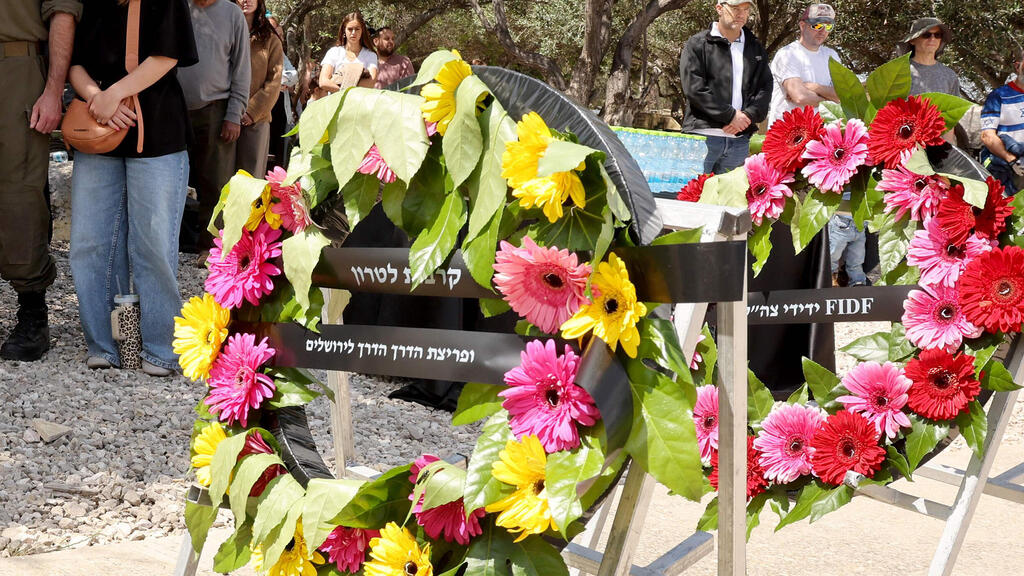
Memorial wreath; greater recognition for families of the fallen
(Photo: Jack Guez/AFP)
Another 1,000 orphans ages 30 to 40 will receive a monthly benefit of 2,000 shekels. Some 7,400 orphans age 40 and over will receive a one-time grant of 50,000 shekels, to be paid in one or two installments.
Until the law was passed on Feb. 1, 2026, and its implementation began Thursday, April 30, 2026, a defense establishment orphan was defined only as someone who was orphaned before age 21 and only until reaching that age.
Under the amended law, defense establishment orphans will be defined as those orphaned before age 21; those orphaned between ages 21 and 30 who have not yet turned 30; and those orphaned after Feb. 1 before age 30. Those who were orphaned after age 21 and are now over 30 remain ineligible for any grant or fixed addition.
In addition, as part of the expanded assistance for widows, some 374 widows will receive a one-time grant for loss of income. About 250 widows with young children have begun receiving a monthly child care supplement: 6,000 shekels a month for an orphan from birth to 3 months old, 3,000 shekels a month from 3 months to 3 years old and 1,500 shekels a month from age 3 to 6.
The Defense Ministry said the amendment marks a major milestone in changing Israel’s policy toward widows and orphans of the defense establishment. It said the law reflects a broader view of support for bereaved families as a lifelong process and strengthens the state’s commitment to providing them with an economic, personal and communal safety net.
Defense Minister Israel Katz said: “Today, a historic amendment has begun. For many years, orphans and widows of the defense establishment carried a heavy burden, sometimes with the feeling that an injustice had been done to them. All the people of Israel know the contribution of our heroic fallen to the security of the state and to our future here.
“Their families deserve to receive the full support framework — economic, personal and communal — to ease, even slightly, their coping with their heavy loss. Our duty is not only to remember but also to act, to accompany and to provide a real, sensitive and just response. This move, which we led together at the Defense Ministry, reflects the deep commitment of the State of Israel to bereaved families and to the fallen, a commitment of compassion, responsibility and justice. We will continue to act to ensure that every family receives the support it deserves, not only in moments of loss but throughout the entire journey.”
Arieh Mualem, deputy director general and head of the Families, Commemoration and Heritage Department, said: “The orphans of Israel’s fallen are the sons and daughters of Israeli society, and it is committed to caring for them as parents care for their children.
“Amendment 47 to the Fallen Soldiers’ Families Law is a moral and historic milestone in the State of Israel’s understanding of its responsibility toward the orphans of Israel’s fallen. It is a clear expression of a commitment that is not limited by time — human, moral and national.
“Orphanhood does not end at age 30. It is a deep identity-shaping experience that accompanies a person throughout life. The amendment strengthens the moral covenant between the state and the orphans of the fallen, a covenant of responsibility, recognition and remembrance. In doing so, it enshrines not only rights but also a living and continuing moral commitment. The department will continue to accompany, embrace, support and recognize the needs of orphans throughout their lives, with a personal, sensitive and respectful connection.”