

Prof. Assaf Razin, one of Israel’s most prominent economists, died Thursday at the age of 85.
Razin served as head of the Economic Planning Authority at the Finance Ministry in the 1970s and as the government’s chief economic adviser. He warned Menachem Begin’s government about the danger of a hyperinflation crisis and was later dismissed.
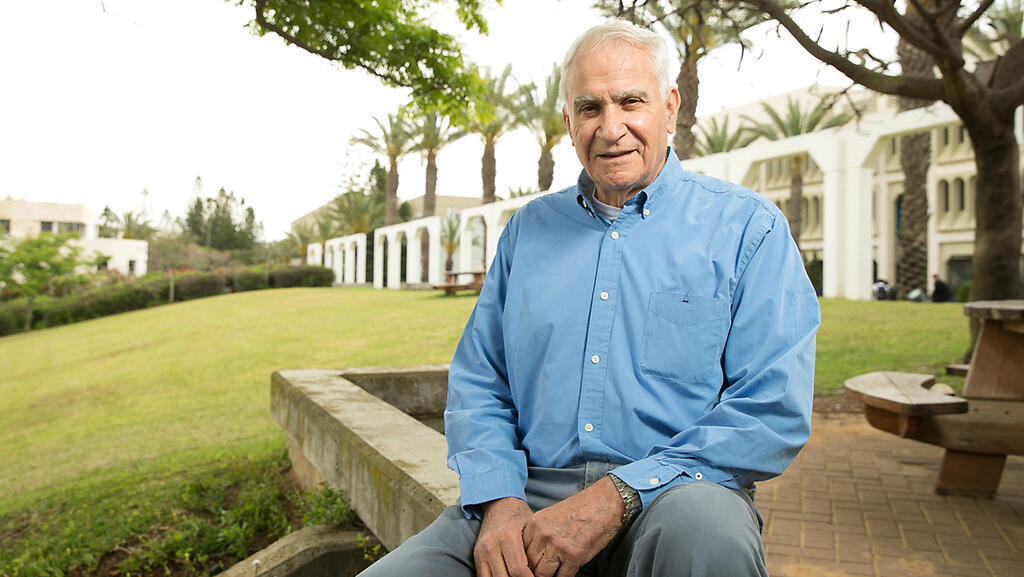
Prof. Assaf Razin
(Photo: Orel Cohen)
Over the years, he advised some of the world’s leading central banks.
Razin was born in Kibbutz Shamir. He was seriously wounded during his military service and was recognized as a disabled IDF veteran.
He completed his doctorate at the University of Chicago, writing on investment in human capital and economic growth. Afterward, he returned to Tel Aviv University, where he served as head of the economics department, dean of the Faculty of Social Sciences and vice rector.
He also taught at Cornell University in New York.
In the 1970s and early 1980s, Razin served as head of the Economic Planning Authority at the Finance Ministry and as the government’s chief economic adviser. After the political upheaval of 1977, Menachem Begin’s government pursued a populist economic policy without fiscal discipline.
As hyperinflation began developing in the early 1980s, Razin warned the government and the public of the economic crisis that would follow unless restraint measures were taken. He was fired.
Razin later served as an adviser to the International Monetary Fund, as well as to the central banks of the United States, Britain, Israel and Hong Kong. He also served as president of the Israel Economic Association.
In 2017, he received the EMET Prize for Art, Science and Culture in the social sciences category for economics. In 2025, he received a lifetime achievement award from the Israel Economic Association.
In a 2018 interview with ynet's sister publication Ctech, Razin described Israel as a rare example of globalization’s success.
“Israel is a unique example of the success of globalization,” he said. “In a certain sense, it is an economic miracle that requires explanation. In 1948, Israel started from the level of a Third World country, and within 70 years, even a little less, it reached the point where it is a member of the OECD, the club of developed, industrialized and wealthier countries. Even within the OECD, Israel is positioned in the middle. It is hard to find many examples like that.”
Among the explanations he pointed to were the success of Israeli exports, immigration from the former Soviet Union and Israel’s ability to integrate into the global high-tech investment world.