

Hong Kong has adopted a new mandatory regulation requiring remote control and monitoring systems on tower cranes for all government construction projects starting April 1, 2026. The regulation marks a significant shift in the construction sector’s approach to safety and technology, moving from optional innovation to an enforced industry standard.
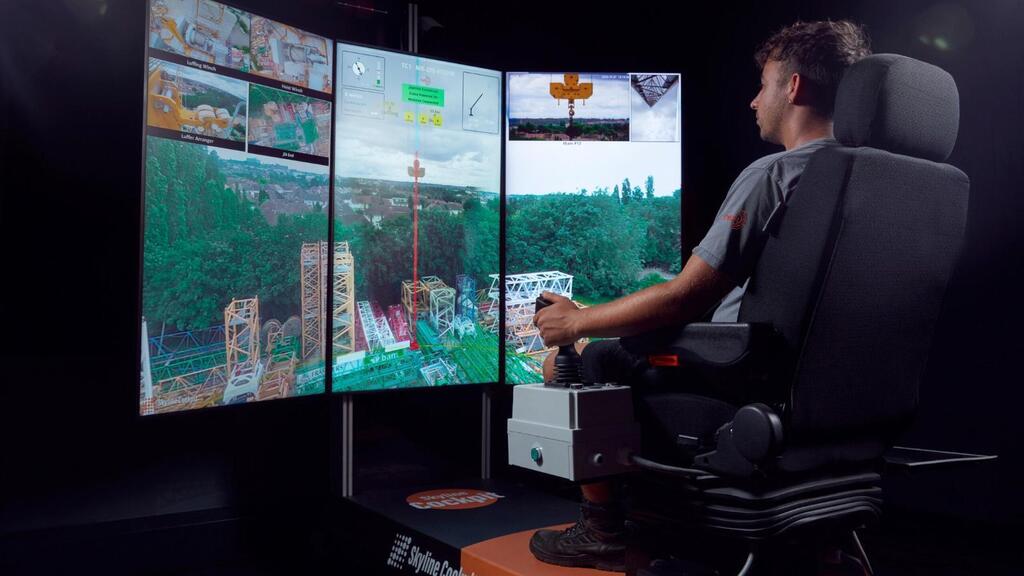
The decision comes on the heels of a successful demonstration of Skyline Cockpit’s remote crane operation system in Hong Kong. Skyline Cranes & Technologies, an Israeli leader in crane technology, completed the first installation of its Skyline Cockpit system in the city. During the demonstration, Hong Kong construction regulators and representatives of the local Construction Industry Council observed operators in Hong Kong controlling a tower crane located in Israel — covering a distance of approximately 9,000 kilometers.
Zachi Flatto, CEO & co-founder of Skyline Cockpit
(Photo: Courtesy)
“It’s a major milestone for the global construction industry,” said Tzachi Plato, CEO of Skyline Cockpit. “The fact that a regulator in Hong Kong is adopting ground‑based crane operation as a mandatory requirement reflects a deep shift in perception — from technology as an option to technology as a standard. Our demonstration, which included control of a crane from Israel, illustrates that the system is mature, safe and ready for broad implementation in future projects.”
Participants praised the demonstration as groundbreaking, highlighting the high level of innovation, enhanced safety and broad potential for the technology’s application in upcoming construction work. The new regulation underscores Hong Kong’s forward‑looking stance on integrating advanced technologies to improve efficiency and safety on construction sites.
Local authorities view such innovations as essential to maintaining Hong Kong’s competitive edge in global construction. The adoption of remote crane control builds on Skyline’s expanding international footprint, including successes in the UK and Scandinavia, reinforcing confidence in the system and in Skyline’s position as a world leader in remote crane operation and construction safety.