

The board of directors of the Jewish National Fund-Keren Kayemeth LeIsrael (KKL-JNF) approved an unprecedented 863 million shekel ($285 million) investment plan this week aimed at rebuilding and strengthening northern Israel, with funding earmarked for housing, education, local infrastructure and community development.
The three-year plan, approved Wednesday night and led by KKL-JNF Chairman Eyal Ostrinsky, is designed to treat northern Israel as a single strategic region stretching from the Lower Galilee and Jezreel Valley to the communities along the Lebanese border, while tailoring investments to the specific needs of each locality.
The initiative comes as northern Israel continues to recover from months of cross-border fighting with Hezbollah that displaced tens of thousands of residents, damaged infrastructure and disrupted local economies.
Under the plan, 362 million shekels ($120 million) will be allocated directly to local authorities for infrastructure improvements and environmental development projects.
Another 150 million shekels ($50 million) will fund the purchase of apartments to be rented at subsidized rates to teachers and other education professionals in an effort to address staffing shortages in the region.
An additional 120 million shekels ($40 million) will finance the "Community Building the Homeland" program, which supports mission-driven community groups relocating to the Galilee and northern Israel, with the goal of attracting about 1,200 new residents.
The package also includes:
- 100 million shekels ($33 million) to purchase apartments in the mixed Jewish-Arab cities of Nof HaGalil, Karmiel and Acre.
- 76 million shekels ($25 million) to establish four new KKL-JNF community centers in Nahariya, Afula, Karmiel and Tiberias.
- 32.5 million shekels ($10.7 million) for 12 communities located within two kilometers (1.2 miles) of the Lebanese border that have not previously received direct assistance.
- 25 million shekels ($8.25 million) for the Misgav Regional Council.
- 25 million shekels ($8.25 million) to be shared by Hatzor HaGlilit and Rosh Pina, which KKL-JNF said were excluded from previous government aid programs.
- 11 million shekels ($3.6 million) to complete construction of the Shibolet community in the Lower Galilee.
- 5 million shekels ($1.65 million) for Kfar Vradim.
- About 5 million shekels ($1.65 million) for cultural events across northern municipalities.
- 2.5 million shekels ($825,000) to finance wildfire protection measures at Kibbutz Hanita, near the Lebanese border.
"This is one of the most significant decisions in KKL-JNF's history on behalf of northern Israel," Ostrinsky told ynet.
"It is an unprecedented investment in both its scope and geographic reach, positioning the north as KKL-JNF's primary strategic priority this year and in the years ahead," he said.
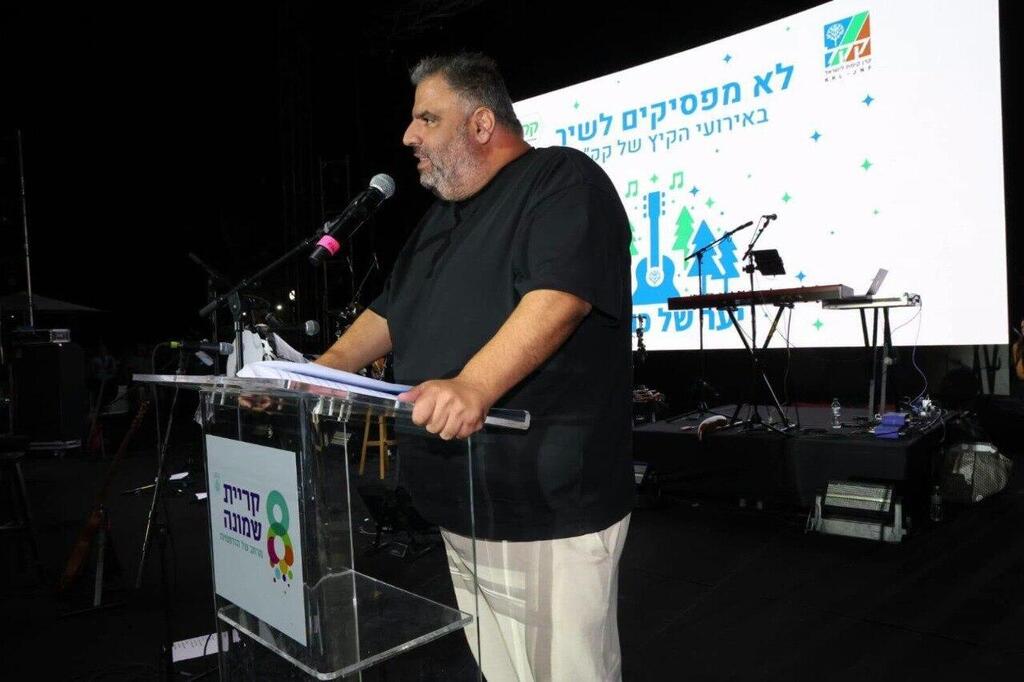
KKL-JNF Chairman Eyal Ostrinsky
(Photo: from Facebook)
"We are investing strategically in environmental development, housing, settlement, education and culture to show residents of the north that they are at the top of our priorities."
Ostrinsky described the initiative as part of a broader national vision encompassing the Galilee, the Golan Heights, the valleys and northern border communities.
Asked whether KKL-JNF was effectively filling a role that should belong to the government, Ostrinsky said the organization was not attempting to replace the state but acknowledged frustration with the pace of government funding.
"KKL-JNF is not seeking to replace the government's responsibility or commitment," he said. "Much more investment is needed, and I wish we could invest another billion shekels beyond what the government has already pledged in its multi-year plans."
He argued that KKL-JNF is able to deliver funding immediately, while government funding often takes much longer to reach communities.
"While the government has not prioritized investment in the border communities, we are bringing unique projects developed in response to the needs expressed by local residents," he said.
Ostrinsky also criticized the government's broader handling of northern Israel, an issue that has been highlighted in reports by the state comptroller.
"The only minister who comes close to competing with us is Minister Yitzhak Wasserlauf," Ostrinsky said, referring to the minister for the Negev, Galilee and national resilience. "People here told me he's known as 'the righteous man in Sodom.' But what concerns me isn't the righteous man—it's Sodom. The question is why there's only one. Where are all the others who were supposed to step up when people needed them most?"
According to Ostrinsky, local government leaders and community organizations increasingly view KKL-JNF as one of the most active organizations operating in northern Israel.
"We're not throwing around 'dumb money' that risks being wasted," he said. "We're investing smart money in specific projects, monitoring them throughout implementation and providing a holistic response that reaches residents through education, culture and community initiatives."
"We're becoming, in many ways, a miniature government."