

Bank Hapoalim reported a record net profit of 9.8 billion shekels ($3.14 billion) for 2025, a 30% increase from 7.6 billion shekels in 2024, as Israel’s largest bank by assets posted stronger core activity and benefited from several one-time items.
The bank, led by CEO Yadin Antebi, said the results reflected a return on equity of 15.9%, up from 13.8% the previous year.

Part of the increase stemmed from the fact that 2024 results were reduced by a large one-time provision related to an efficiency program. Even excluding that factor, the 2025 profit remained significantly higher than in earlier years. The bank earned 7.3 billion shekels in 2023 and 4.9 billion shekels in 2021.
Fourth-quarter net profit totaled 2.08 billion shekels, up 64% from the same period a year earlier.
The bank’s board approved a dividend distribution of 1.24 billion shekels, equal to about 60% of quarterly profit. Of that amount, 991 million shekels will be paid in cash and 248 million shekels will be allocated to a share buyback program. The payout effectively reflects 50% of net profit plus an additional 200 million shekels from excess capital.
Several one-time items also contributed to the jump in profit. The bank recorded about 300 million shekels in tax income related to the start of the liquidation of its subsidiary Bank Hapoalim Switzerland, as well as roughly 380 million shekels received from insurers in connection with the U.S. tax investigation previously conducted against the bank.
Alongside those items, the bank reported strong growth in its core businesses. Net interest income rose 6.8% to 18.1 billion shekels, while fee income jumped 22% to 4.9 billion shekels.
Operating expenses fell 6.7% to 8.4 billion shekels, largely due to an efficiency program launched by Antebi after he took office in August 2024.
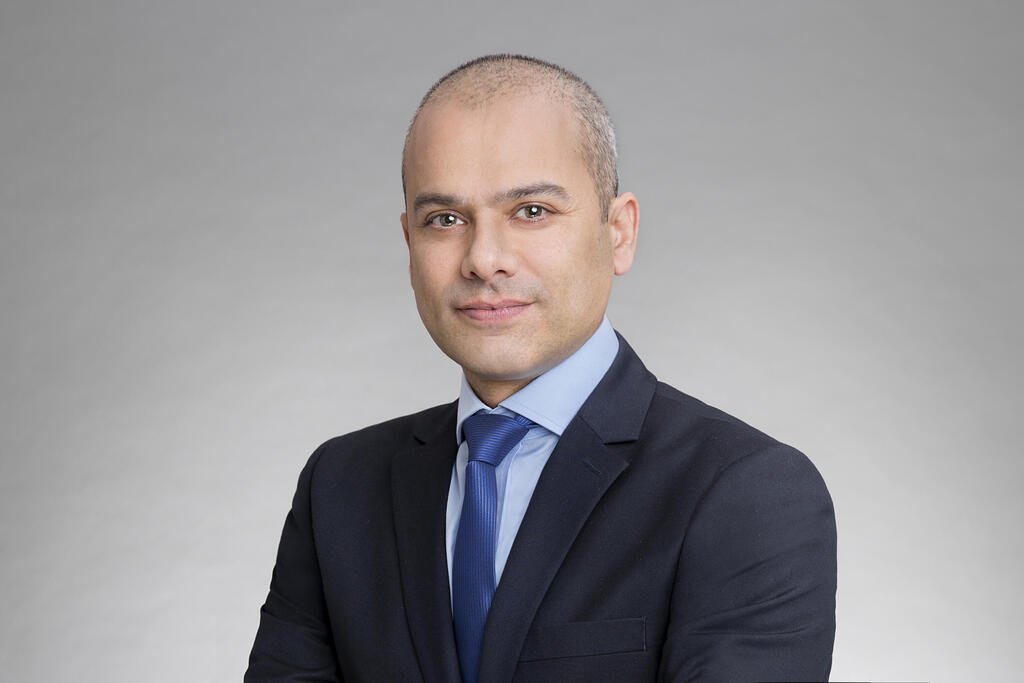
Bank Hapoalim CEO Yadin Antebi
(Photo: Inbal Marmari)
At the same time, credit loss expenses surged 87% to 1.3 billion shekels, mainly due to higher group provisions linked to the expansion of the bank’s loan portfolio.
Credit to the public grew 13.4% overall. As in the wider Israeli banking system, most of the increase came from lending to large businesses, which rose 26% to 176 billion shekels.
The bank’s mortgage portfolio grew 6.8% to 149 billion shekels, while lending to households increased at a similar pace to 42 billion shekels.
The growth in lending helped offset a decline in financing margins caused by moderating inflation and a drop in current account balances — a particularly low-cost funding source for banks. Current account balances fell 1.6% to 147 billion shekels, while the share of interest-bearing deposits reached a record 75%.
Israel’s consumer price index contributed 881 million shekels to interest income, compared with 1.2 billion shekels in 2024.
The bank also reported improvements in credit quality. The share of loans in arrears fell to 0.52% of the loan portfolio, down from 0.62% in 2024 and from 1.06% in 2023. The charge-off rate declined to 0.08% in 2025 from 0.17% a year earlier.
After meeting its financial targets for 2025, Bank Hapoalim updated its goals for 2026–2027. The bank said it expects annual net profit of 9 billion to 10 billion shekels, a return on equity of 14% to 15%, annual loan growth of 8% to 9%, and dividend payouts of 50% to 60% of net profit.
The targets suggest the bank, like others in Israel’s banking sector, may find it difficult to significantly increase profitability amid a macroeconomic environment of lower interest rates and moderating inflation.
Antebi’s compensation cost for 2025 totaled 4.4 million shekels, in line with Israel’s executive pay law that caps salaries in financial institutions. The second-highest compensation cost at the bank was for chief internal auditor Amir Bachar, at 4 million shekels. Board Chairman Noam Hanegbi, who took office in mid-February, had compensation costs of 3.1 million shekels.
The bank’s workers’ union, which has been in dispute with management over the efficiency program and the bank’s bonus plan, sharply criticized the results.
“It is inconceivable that the bank’s management publishes enormous profits of about 9.8 billion shekels and at the same time, in the midst of a war, chooses to directly harm employees’ pockets,” the union said in a statement. “These achievements are the direct result of the work of thousands of employees.”
The union accused management of deliberately stalling negotiations and harming employee welfare in the name of what it called “artificial efficiency,” warning that the labor dispute could escalate further.