

Israeli cybersecurity firms raised a record $8.27 billion in 2025, nearly doubling the previous year’s total and signaling the sector’s continued dominance in the country’s high-tech landscape, according to new data released Sunday by Cybertech Global and research firm IVC.
The figures come ahead of the opening of Cybertech Global Tel Aviv, one of the world’s largest cybersecurity events, taking place Jan. 26–28 at Expo Tel Aviv. The conference is held in partnership with the National Cyber Directorate, the Prime Minister’s Office, the Economy and Foreign Affairs ministries, the Tel Aviv–Yafo Municipality and Ben-Gurion University of the Negev.

The $8.27 billion raised by Israeli cyber firms in 2025 marks an increase of nearly 110% from the $3.96 billion raised in 2024, and surpasses the previous record of $7.5 billion set in 2021. The number of deals remained stable—138 in 2025 versus 136 the previous year—but the average funding per deal soared to $60 million, up from $29 million in 2024.
Analysts attribute the trend to investors concentrating larger sums into a smaller pool of companies, particularly at the Series A and B stages. Seed funding rounds dropped from 71 in 2024 to 63, while Series A rounds jumped from 28 to 37, with funding in that category more than doubling to $1.1 billion. Series B rounds also saw growth, increasing from 14 to 22 deals and from $297 million to more than $1 billion in capital.
Series C activity declined sharply, with just three deals in 2025 compared to seven the year before. Later-stage rounds remained steady, but accounted for the lion’s share of capital, totaling $5.43 billion.
Exit values in the sector surged to an estimated $72.6 billion, largely driven by three major pending deals—Wiz, CyberArk and Armis. Without those, exit value actually declined to $2 billion, though the number of exits increased from 27 to 32.
Israel now counts 597 active cybersecurity companies, up from 546 in 2024. The majority are small firms with up to 20 employees and early revenue, while 185 are mid-sized and 90 are considered large. Most companies—nearly 93%—focus on software and enterprise infrastructure, with hardware and semiconductors making up a small fraction.
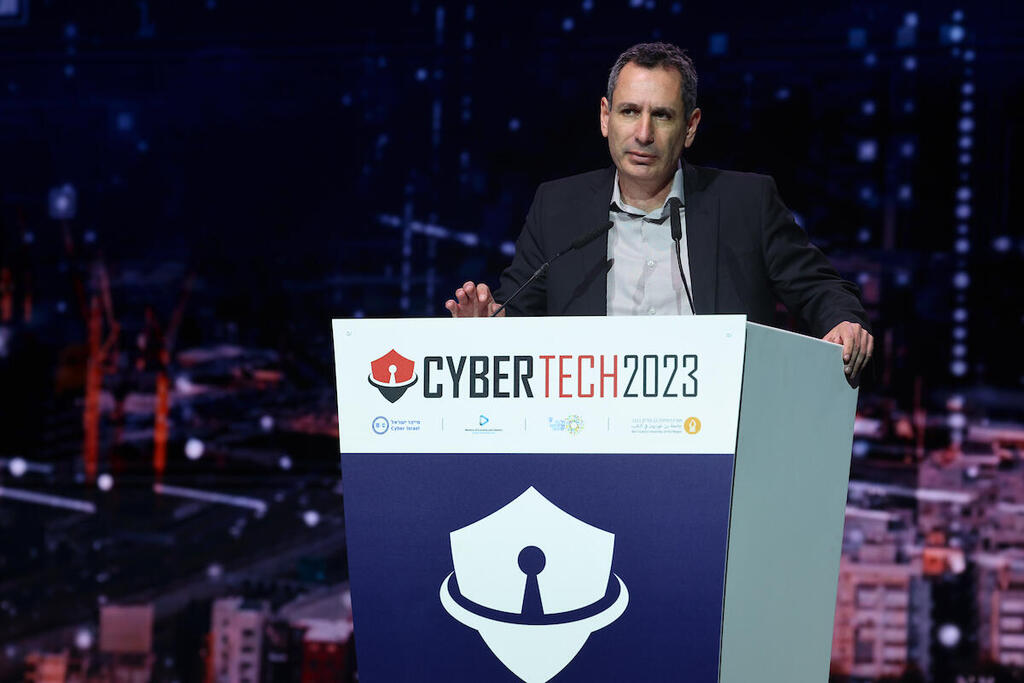
Cybertech founder Amir Rapaport
(Photo: Cybertech)
“Israeli cybersecurity is showing that the sky is the limit,” said Cybertech founder Amir Rapaport. “Amounts that until recently were considered imaginary have shattered the glass ceiling and set a new standard for exits and capital raising. Israeli cyber continues to attract the majority of foreign investment in Israel, even in times of war, and remains the true engine of the high-tech sector.”
Cybertech Global Tel Aviv 2026 is expected to draw thousands of participants from around 50 countries, including leading industry figures, investors, academics and senior government officials. Speakers include Prime Minister Benjamin Netanyahu, President Isaac Herzog, National Cyber Directorate head Yossi Karadi, NVIDIA Israel Managing Director Nati Amsterdam, Wiz Co-Founder Yinon Costica and Noa Argamani, a former hostage and current computer science student.
The three-day event will feature lectures, panels and exhibitions focused on topics such as AI, cloud security, national and international cyber defense, healthcare, space, supply chains and more. It is part of Tel Aviv Tech Week, which includes Sparks, the city’s innovation summit, running through Jan. 30.
IVC, a leading provider of data and analysis on Israel’s high-tech sector, partnered with Cybertech to publish the report.