

The Super Bowl will be played overnight (between Sunday and Monday at 1:30 a.m. Israel time), pitting the New England Patriots against the Seattle Seahawks. Long past being just a sporting event, the game grips much of the American public, with its impact felt across the US labor market the following day.
An analysis conducted in the United States predicts that about 26.2 million workers will be absent from work tomorrow, exceeding last year’s record of 22.6 million absences. The estimated economic cost is more than $5.2 billion in lost wages and productivity, according to Reuters.
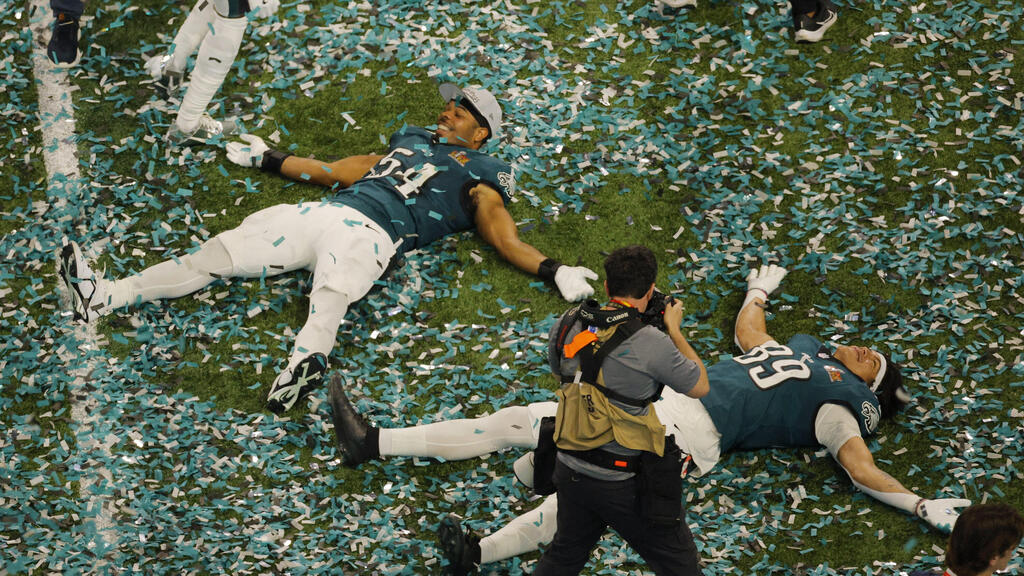
Philadelphia players celebrate their Super Bowl win last year
(Photo: REUTERS/Brian Snyder)
A survey by human resources firm UKG supports the forecast, finding that 48% of workers plan to shorten their workday or miss work entirely the day after the game. Among the reasons cited, 45% said they would need more sleep, 34% reported low motivation and about 27% expected to deal with a hangover, a phenomenon that has earned the nickname "Super Bowl flu."
The Super Bowl is traditionally held on a Sunday and, after Thanksgiving, is the second-biggest food consumption day in the United States. For managers, the implications are clear: the Monday after the game becomes an annual operational challenge, marked by low availability, unexpected lateness and reduced productivity. Some companies respond with later start times, remote work options or office watch parties, while others tighten attendance rules.
4.9 million expected to call in sick
The data also point to partial disruptions in attendance. According to UKG, about 26.6 million workers will miss at least part of the workday tomorrow. Roughly 4.9 million are expected to report sick or not show up at all, while another 4.9 million plan to arrive late without prior notice. At the same time, more than 27,000 employees have already notified their employers that they are taking a day off, nearly one in every 100 workers, a 26% increase compared with a typical Monday in February.
Calls to make the day after the Super Bowl a national holiday resurface every year. A survey by local television stations KARE 11 and KREM 2 found that about one-third of workers support such a move.