


Israel is a country of the rich—don’t let what you see around you mislead you. The wealthy layer of Israeli society is thick, flush with liquid and solid assets, living inside a very defined geographic bubble in Israel—most of the time making sure we hardly notice it.
These are business and industry leaders, high-tech executives, financiers, but also completely ordinary-looking people who happened to inherit an apartment or two in some of the most valuable spots in the country.

The numbers are astonishing: Israel is home to 186,000 millionaires with total assets worth $791 billion, according to the UBS Global Wealth Report. A millionaire is defined as anyone with more than $1 million in assets—making the club surprisingly large.
But millionaires are not considered truly wealthy. They fall into a slightly disparaging category known as “everyday millionaires,” people with between $1 million and $5 million. To enter the ranks of the genuinely rich, you need many millions—at least $10 million to $15 million—where people will treat you as genuinely wealthy.
Average Israeli wealth has doubled compared to global growth
Israel ranks 17th in the world in average wealth per adult, with $284,000 per person, nearly 1 million shekels. But that figure is misleading. Many Israelis live in poverty, and the country ranks second among developed nations in poverty rates, with almost 900,000 children below the poverty line.
According to the World’s Wealthiest Cities Report by Henley & Partners, Tel Aviv and Herzliya (measured together) have 22,600 millionaires, including 76 centi-millionaires (worth $100 million or more) and nine billionaires. The number of millionaires in those cities rose by 25% over the past decade, placing them 46th among the world’s richest cities. Jerusalem has 27 centi-millionaires, and Netanya has 15.
Neither COVID, nor the constitutional crisis, nor two years of ongoing war have slowed Israel’s wealthy. In 2024 the number of millionaires in Israel rose by 3%, pushing Israel up from 18th to 17th in global rankings. The trend has been steady for years: average Israeli wealth grew 8% this year—almost double the global rate—and over the past decade it has risen by 30%.
Swiss banks and family offices rush to Tel Aviv
You don’t need research reports to spot Israel’s wealth—just look at the number of Swiss banks operating in Tel Aviv, at the wealth management firms and family offices that all recognize a vibrant market. HSBC operates a full branch, while UBS, EFG International, Hyposwiss and Pictet maintain investment advisory offices. Dreyfus Bank runs its only office outside Switzerland in Tel Aviv.
Clients of these advisory offices fall into the category of “high net worth individuals” (HNWIs). But compared with the ultra-wealthy—UHNWIs, defined as those with at least $30 million—they are still small players. In recent months, some prospective clients have even been turned away: foreign banks face such heavy demand they are raising the bar for new entrants.

(Photo: AFP)
Wealth management firms are a phenomenon of their own. Hundreds operate in Israel under different names, all with the same goal: to provide personalized, highly profitable service for people with a lot of money. The term “family office” was imported to Israel and caught on quickly. Other firms call themselves “wealth managers” or “trusted advisers.” Israel’s biggest firms manage billions of dollars each.
These services typically include investment strategy, asset allocation, diversification between Israel and abroad, tax planning, insurance, and intergenerational wealth transfer. Even emotional support is part of the package. You’d be surprised how many millionaires need someone to hold their hand and tell them to calm down.
“There’s no doubt there are many clients in Israel,” says Moran Alon, CEO of Pictet’s Tel Aviv office. “The client base is constantly growing. Tech cycles have sped up dramatically, from founding to sale or IPO. That means far more new clients.”
‘There’s the state of Israel, then there’s the state of Tel Aviv’
“Israel has become a country of the rich,” says Moran Siton, founder and CEO of the financial planning firm Four Seasons. “There are two countries: the state of Israel, and then the state of Tel Aviv. Greater Tel Aviv lives on a completely different level, mostly high-tech people. Think about it: every family in Tel Aviv that loses its parents inherits a home worth around 10 million shekels. Israel is full of wealthy people we don’t know about, people the press doesn’t cover, but there are countless new millionaires.”
Eran Reinisch, founder of Intavo Family Office, says the growth of Israel’s wealthy began with the economic liberalization of 1998: “Wealth accelerated here and then exploded with high-tech, defense industries, natural gas—you name it. The economy saw an incredible transformation over the last 20 years. Some say it was thanks to Netanyahu, but it predates him. It’s been here all along and keeps growing.”
Fierce competition for the rich
The wealth boom has sparked fierce competition between premium services at local banks, foreign private banks and independent family offices. Wealthy clients are wooed with luxury dinners, perks of every kind and exclusive investment deals.
Private wealth managers have been gaining ground at the expense of Israel’s commercial banks. “The banks are essentially out of the game,” Siton says. “They’re focusing on credit and deposits. A decade ago each bank had 1,000–1,500 active financial advisers. Today the entire system has 800–900.”
Foreign banks, by contrast, are enjoying the moment. “What they expected to recruit in a few years, they managed in just one,” Siton adds.
High-tech millionaires and new challenges
The 2025 Capital Summit in Eilat, organized by Scala Group with Calcalist, dedicated a session to wealth management and the boom in family offices. Executives described the influx of high-tech clients.
Karen Schwok, founder and CEO of Lucid Investments, a multi-family office and wealth management firm, says: “This group has grown tremendously. In the last three years, five more banks opened offices here, all because of high-tech. Many entrepreneurs and senior executives got rich, and they don’t necessarily have the tools to manage new financial wealth. At first, they copy friends and often burn their fingers. Over time they either develop the skills or turn to advisers. The hardest part is earning their trust.”
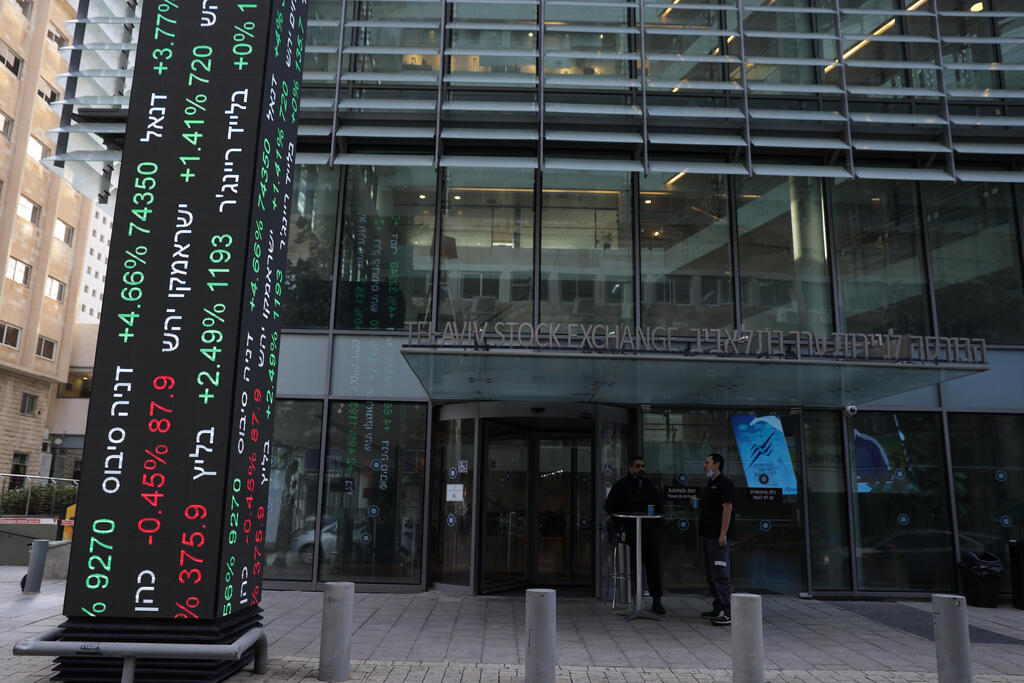
Tel Aviv Stock Exchange
(Photo: Oral Cohen)
Gil Koren, CEO of The Service Group’s family office, says: “There’s a huge difference between creating wealth and managing it. I’ve met industrialists who built factories, worked all their lives, and ended up with major sums. Yet all their money sits in bank deposits. In today’s venture capital world, they could have doubled or tripled their returns.”
Oren Ben Yishai, head of global private banking for Israel at HSBC, adds: “Suddenly dozens of new investment bodies appeared, like mushrooms after rain. They understand there’s enormous money here to invest. The ratio of Israel’s size to the appetite it attracts is insane.”
Wealth and risk
High-tech founders often go from zero to $100 million in a flash. Many then begin to live global lives, buying real estate in the United States and luxury homes abroad. But much of their wealth is illiquid. “On paper they’re multimillionaires,” Ben Yishai says, “but they don’t have the cash flow to match their lifestyle. Part of our job is to free up liquidity.”
Alon of Pictet adds: “We slowly teach them the world of investments and build their confidence. Until a founder experiences their first crisis, you can’t know their risk profile. You have to see how they behave when the market crashes—hold their hand and stop them from selling in panic, help them look for opportunities.”
Politics, war and money leaving Israel
Israel has no shortage of crises. The judicial overhaul protests led many executives to announce they were moving money abroad. The war, now in its second year, has also left its mark. According to Henley & Partners, about 300 millionaires left Tel Aviv in 2024.
Some fear government nationalization measures, while others have normalized the uncertainty, convinced Israel’s economy is resilient. Still, Prime Minister Netanyahu’s rhetoric about a “Spartan struggle” and an “autarkic economy” has reignited concern.
“Of course there was an outflow of funds,” Alon says. “Now the conversation has shifted. It’s no longer about maximizing returns, but about building diversified portfolios that let clients sleep at night. In many cases, it’s money they saved for a home or their children’s wedding—money I believe will come back. Larger clients have increased foreign exposure, but we don’t push that. Our business is here, and we need a strong Israeli economy to create new wealth.”

(Photo: Moti Kimchi)
Koren adds that he has seen both capital flight and returns: “Initially people moved funds out, but a year later money started flowing back. Now we’re seeing demand to move money abroad again. Some clients even say, ‘I don’t want to invest in Israel.’ Others are cutting residency ties, something rare in the past. But it’s not a general trend.”
Siton notes that for some clients, political ideology drives financial decisions: “Part of it is purely personal and political, not financial. But some of it is legitimate diversification and intergenerational planning.”
Ben Yishai agrees that much of the shift predates recent turmoil: “I hear this talk every week—about money fleeing Israel. But in truth, private banking clients made this shift long before the reform debate. They diversified geographically years ago. I’d say 90% of clients with assets abroad moved them well before these recent events.”