

Scala Biodesign, a biotech company developing computational tools for protein engineering, has raised $16 million in a Series A funding round led by Grove Ventures, the company announced Tuesday. Additional investors include TLV Partners, Deep Insight and the Israel Innovation Authority, bringing total funding since the company’s founding in 2022 to $21.5 million.
The new capital will support the global expansion of ScalaOS, the company’s production-grade protein design platform, and further development of its computational architecture for optimizing proteins used in medicines, vaccines and industrial applications. Scala said the funding will also be used to grow its engineering and scientific teams and accelerate commercial adoption.
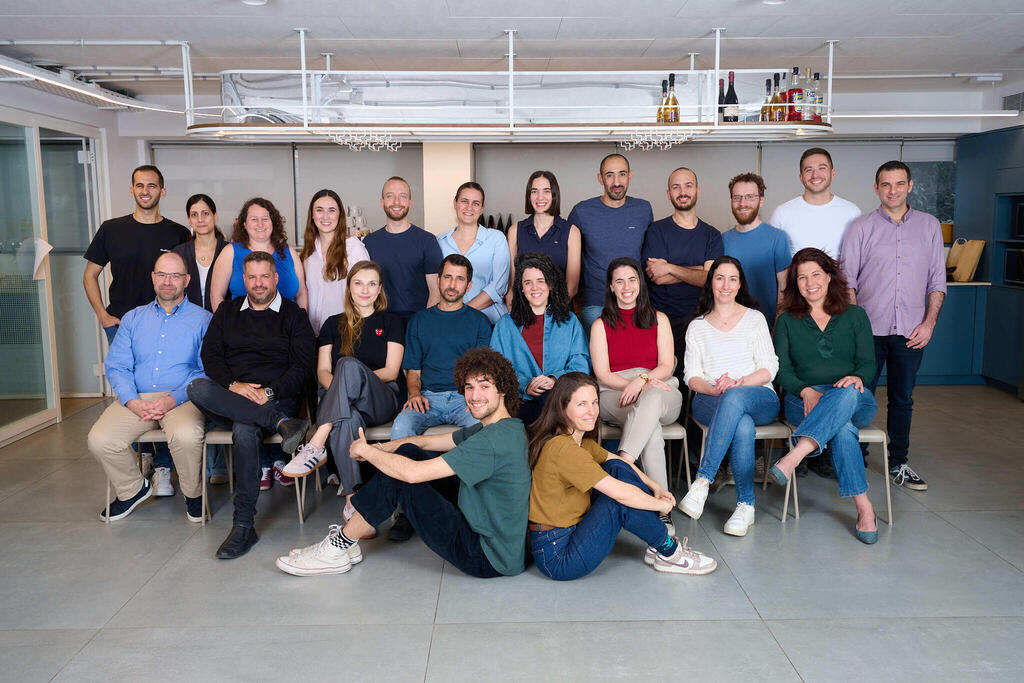
Scala team
(Photo: David Garb)
Protein engineering remains a significant bottleneck in both therapeutics and industrial biotechnology. Natural proteins are often not optimized for performance, stability or manufacturability, while traditional development methods rely on iterative lab experiments that can take years and require substantial investment. ScalaOS aims to address this challenge by integrating computational design directly into research and development workflows.
According to the company, over the past eight months the platform has been adopted by nine of the world’s 20 largest pharmaceutical companies, as well as several chemical firms. ScalaOS combines physics-based modeling, evolutionary data and artificial intelligence models to improve protein performance, often within a single design cycle, reducing the need for repeated experimentation.
“Even the most advanced R&D organizations are limited by the complexity of protein engineering,” said Dr. Ravit Netzer, co-founder and chief executive officer of Scala Biodesign. “By replacing trial-and-error approaches with scalable computational design, we aim to make protein development more predictable and efficient.”
Scala pointed to its collaboration with German pharmaceutical company Boehringer Ingelheim as an example of its technology’s application. The company said its platform helped stabilize difficult drug targets, improving expression levels and enabling further progress in drug discovery programs.
“Scala Biodesign has been a trusted partner for us across multiple targets for more than two years,” said Dr. Dirk Kessler, global head of structural research at Boehringer Ingelheim. “Their platform helps remove a critical barrier in protein research, allowing teams to advance more quickly toward new medicines.”
Renana Ashkenazi, managing partner at Grove Ventures, said improving the speed and reliability of protein design represents a major opportunity in biotechnology. “Scala’s platform enables research teams to address protein engineering challenges earlier and more systematically,” she said.
Scala Biodesign was founded in 2022 by Netzer and Dr. Adi Goldenzweig, along with chief scientist Prof. Sarel Fleishman of the Weizmann Institute of Science, a leading Israeli research institution. The company builds on more than a decade of protein design research conducted across dozens of laboratories worldwide and published in over 150 scientific papers.
The company said its platform supports a range of applications, including therapeutic enzymes, antibodies, gene therapy components and vaccine development, as well as industrial uses such as microbial production of proteins.
Scala Biodesign develops computational technologies designed to accelerate the creation of protein-based medicines and biological products. Its ScalaOS platform is intended to help research teams overcome development bottlenecks and shorten timelines across biotechnology and industrial chemistry.