


Wall Street is in a frenzy over one of the most anticipated public offerings in years: SpaceX, Elon Musk’s rocket, space and artificial intelligence company, is preparing to go public in a deal that could make him the world’s first trillionaire.
In the towers of downtown Manhattan, the banks hired to sell the offering are treating it like a cultural event as much as a financial one. At Goldman Sachs, spaceships have appeared in the lobby. Bank of America plans to light the spire atop its building this week so it resembles a rocket launch. JPMorgan hosted a SpaceX sales presentation for thousands of clients at its Park Avenue headquarters, with the event streamed to the bank’s offices in 26 countries.
CEO Jamie Dimon was there to help sell the deal himself. Musk joined by Zoom. His mother was in the audience. JPMorgan broadcast the presentation live on Twitter, which of course belongs to Musk.
SpaceX, Musk’s rocket, space and artificial intelligence company, is expected to go public next week. Its IPO price has been set at $135 a share, giving the company a valuation of $1.77 trillion. That would make it the largest public offering ever and immediately place SpaceX among the 10 biggest publicly traded companies in the United States.
At that valuation, SpaceX would raise $74.4 billion in the offering, with its market value more than 40% higher than the $1.25 trillion valuation it gave itself only last February. The current record is held by Saudi Aramco, Saudi Arabia’s state oil company, which was valued at $1.7 trillion and raised more than $29 billion when it went public in 2019.
The SpaceX IPO is an enormous undertaking for the 23 banks and brokerage firms Musk hired to sell shares to investors. Bankers are pushing the deal into every corner of the investment world, from giant asset managers to individual investors on Reddit.
More than $500 million in fees is at stake. But there is more riding on it than that. The banks also need the deal to be an unmistakable success, helping build confidence ahead of two more giant public offerings expected in the coming months: OpenAI and Anthropic, the developer of Claude.
According to The Wall Street Journal, Musk is currently worth about $970 billion, most of it in shares. His holdings include $5 billion in The Boring Company, another $5 billion in Neuralink, and $104 billion in real estate, aircraft and other assets. Across his career, that fortune amounts to an average accumulation of $992 per second.
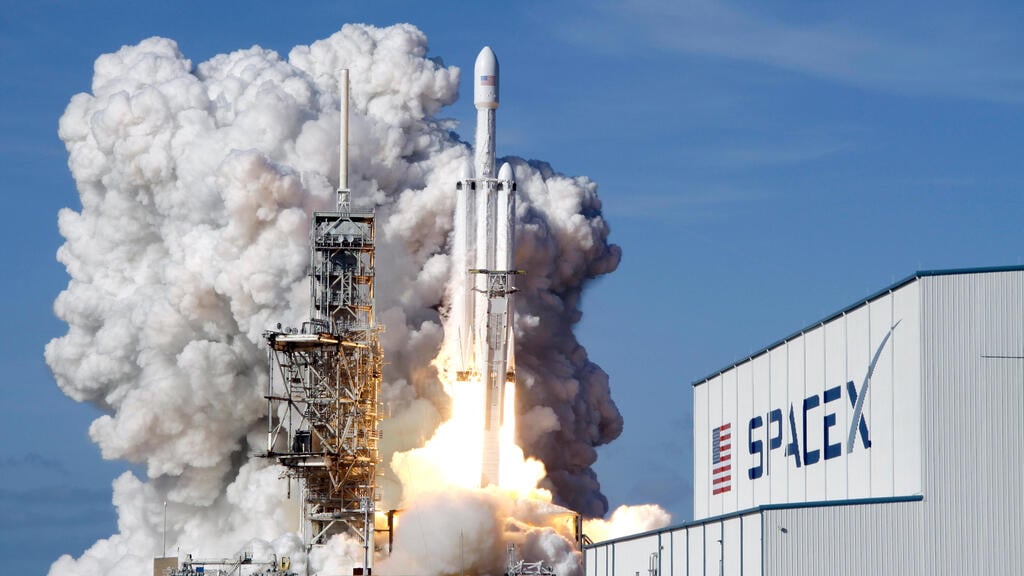
SpaceX
(Photo: John Raoux\AP)
Musk holds 4.8 billion SpaceX shares, or 42% of the company’s common stock, worth $538 billion before the IPO. He also has $167 billion in Tesla. After SpaceX goes public, his stake in the company could rise to $841 billion. In total, his personal fortune could reach about $1.1 trillion, perhaps more.
Musk’s wealth is mostly on paper, not a pile of cash sitting in a bank. But no one has ever even had this kind of option before. One trillion dollars is one million times one million dollars. If a person spent $1 million every hour of every day, it would still take more than 100 years to burn through $1 trillion. An American household earning the median U.S. income, $83,730 in 2024, would need to work more than 11 million years to reach that sum.
Even before actually touching $1 trillion, Musk could buy 2.4 million American homes. He could buy every NFL and NBA team and still have more than $500 billion left. He could buy a fleet of more than 10,000 of the newest private jets and fund their operation, including fuel, for five years. He could buy companies that employ more than 4 million people, including FedEx, Home Depot, UPS, Target and Starbucks.
Musk’s net worth amounts to about 3% of current U.S. GDP. By that measure, he is far richer than John D. Rockefeller, who had been considered the wealthiest American before him. Rockefeller amassed a fortune of about $1.4 billion by 1937, equal to around 1.5% of U.S. GDP at the time.
To understand how hard this level of wealth is to grasp, it is enough to look at what will soon, or already does, count as smaller than Elon Musk: most national economies. According to the International Monetary Fund, only 20 countries in the world have economies larger than $1.1 trillion. Among those Musk would suddenly be worth more than are Taiwan, at $977 billion; Ireland, at $779 billion; Sweden, at $760 billion; and South Africa, his country of birth, at $480 billion.
Manhattan’s economic output, the home of Wall Street and much of corporate America, may be lower than Musk’s estimated net worth. The total value of all assets in Houston, the third-largest U.S. city by concentration of Fortune 500 companies and a thriving oil and gas hub, is about $879 billion. Americans bought 16.3 million new cars in 2025, at a total cost of $789 billion.
And perhaps the statistic that would please Musk most: the combined wealth of the four richest people after him, Google founders Larry Page and Sergey Brin, Oracle founder Larry Ellison and Amazon founder Jeff Bezos, currently stands at $1.09 trillion. That is not $1.1 trillion.
Enormous power, little oversight
Most companies preparing to go public offer a price range for their IPO and then settle on a final price after discussions with investors. Not SpaceX. It did not ask anyone. It simply set the price at $135 a share.
Musk is entirely confident about demand for his market debut. He knows investors have waited a long time for it. SpaceX is also expected to be fast-tracked into many broad market indexes, meaning giant equity funds will be required to buy the shares.
Companies typically go on roadshows before public offerings, traveling across the United States to pitch investors. SpaceX chose a more discreet format for its biggest prospective investors. They come to SpaceX, not the other way around.
Investors arriving for meetings at Morgan Stanley and Goldman Sachs are receiving presentations drenched in personal admiration for Musk. He is described as a “once-in-a-lifetime visionary,” while his company, which speaks of the future colonization of Mars, is presented as a “multigenerational business.”
According to The New York Times, which is deeply connected on Wall Street, bankers in investor meetings are projecting a take-it-or-leave-it attitude. The assumption is that for every hesitant investor, two more are ready to pounce on the stock.
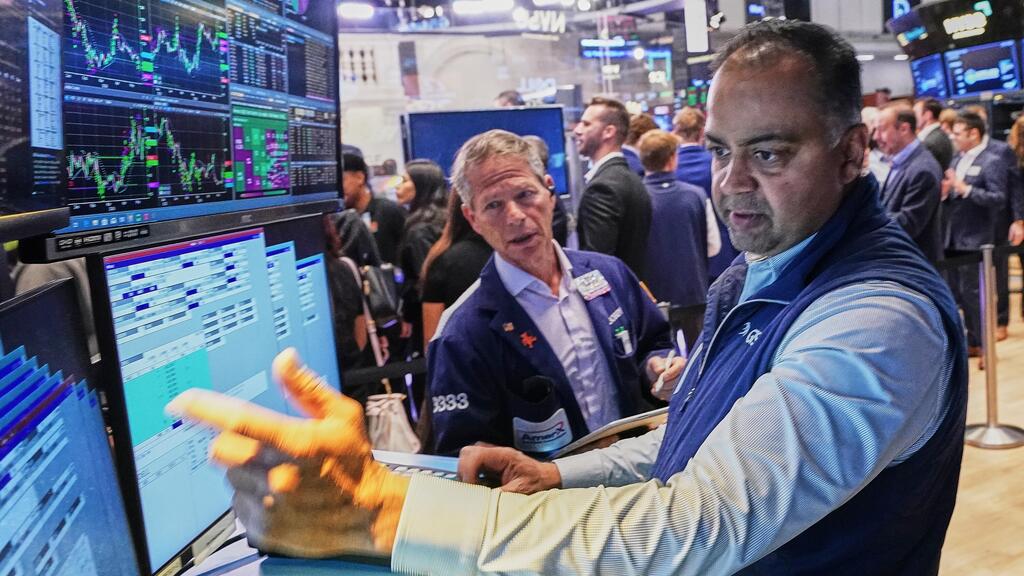
Wall Street awaits SpaceX’s mega-IPO, with excitement and unease
(Photo: Richard Drew\AP)
Unlike what companies traditionally do, SpaceX decided not to disclose quarterly revenue in its IPO registration documents. That is how confident, and arrogant, it is.
“Before investing in a fast-growing company, you would normally expect to see the quarterly breakdown,” Matt Kennedy, a senior IPO market strategist, told The New York Times. He added that the absence of comprehensive quarterly data suggests the company should be viewed mostly through a long-term lens. But this is a world in which even highly serious investors appear to be living in the moment and making decisions based on FOMO.
There are reasons for skepticism. In its prospectus, SpaceX described a potential market of $28.5 trillion, most of it coming from artificial intelligence. Space rockets are exciting, but they remain an extremely exclusive toy. Artificial intelligence is the real business now.
The problem is that SpaceX’s xAI division is considered to be far behind Anthropic and OpenAI. Musk’s dream of building data centers in space may prove too expensive even for him, and physics will also have something to say about it.
Morningstar recently valued SpaceX at $780 billion, on the very conservative end of the spectrum, citing concerns that include the enormous costs and risks of the AI business. Some hedge funds are already looking for ways to bet against SpaceX shares.
The rise of one private individual to such wealth and power also raises heavy political and social questions. Musk already has direct influence over wars, through Starlink satellite internet service in conflict zones such as Ukraine; over freedom of speech, through Twitter; and over the future of science and space.
Trillionaire status would give him the economic power of a superpower, without public oversight.
None of that is likely to change the opening bell. SpaceX is expected to draw immense attention and enormous sums from investors, from the biggest banks to the masses of Musk devotees whose admiration for him will only grow if he becomes the world’s first trillionaire and holds a level of private wealth humanity has never seen before.