

Taxi drivers across Cairo point out restaurants, hotels, gas stations and even nearby building supplies, repeating the same phrase, “That belongs to the army."
According to Euronews report, military-owned brands have become a familiar presence in Egypt’s economic landscape.
Gallery
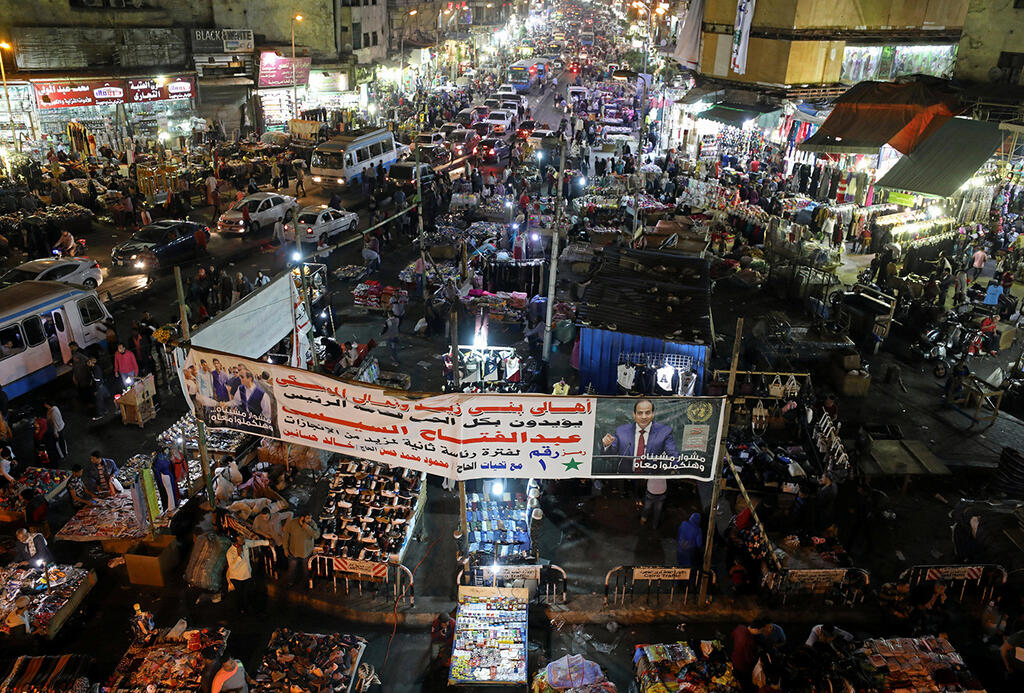
A market in Cairo. Purchase of military-made products is accompanied by a sense of national pride
(Photo: Reuters)
Researcher Matteo Colombo of the Clingendael Institute in the Netherlands says, "products made in military factories are sold in the general economy," and in Egyptian supermarkets, one can easily find "a bottle of water that is produced by the army.”
Colombo notes that for some consumers, buying military-made goods evokes a sense of national pride, even if the quality is lower. But he warns that the military’s growing economic footprint may squeeze out private entrepreneurs and create an uneven playing field.
The military’s economic influence is a key backdrop to Egypt’s negotiations with the International Monetary Fund (IMF). While the fund agreed to lend Egypt €6.8 billion, the disbursements have been delayed due to concerns about an economy "dominated by public-driven investments and state-owned entities, including military ones."
Between civilian and military production
Since 2015, Egypt has faced mounting economic challenges, including inflation that peaked at 38% in September 2023 before dropping to 12.3%. The Egyptian currency has significantly weakened since it was unpegged from the U.S. dollar in 2016.
Military involvement in Egypt’s economy is not new, but its scale has grown sharply since 2011. The army was used as a tool to centralize state control since the 1950s.
Then-President Gamal Abdel Nasser integrated the military into civilian production amid post-independence tensions, particularly in the context of conflicts with Israel. But according to Prof. Khaled Fahmy of Tufts University, “It started actually in the early 60s under Abdel Hakim Aymer, the head of the army under Gamal Abdel Nasser."
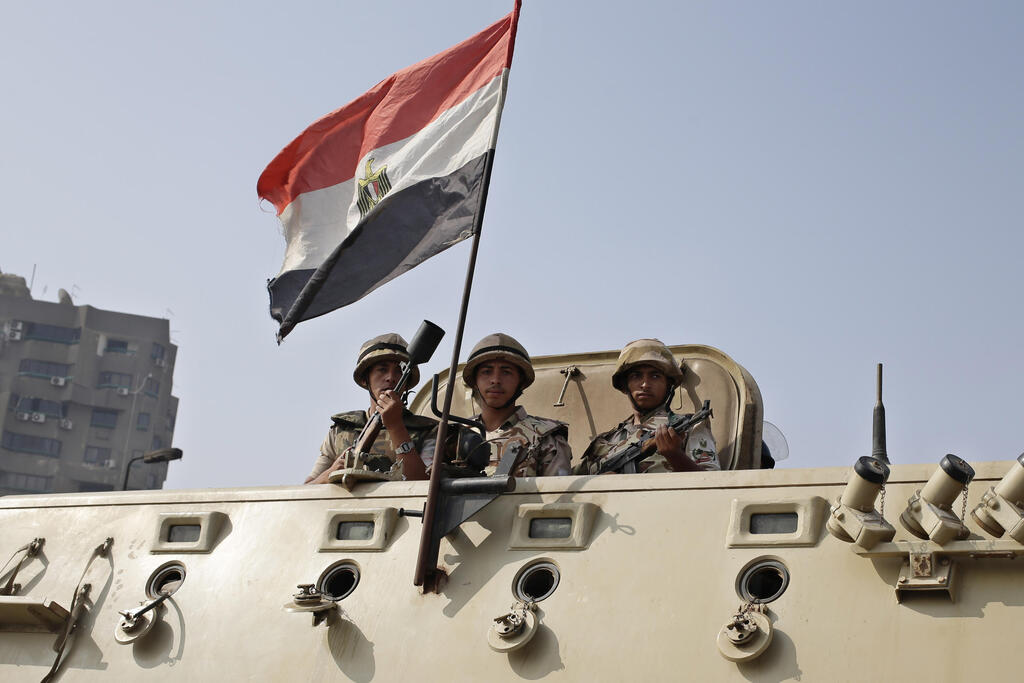
Egyptian soldiers
(Photo: AP/Hassan Ammar)
Fahmy explains that "the logic was that the army could respond more quickly in times of crisis, but that of course means no supervision, no auditing."
Nasser’s successor, Anwar Sadat, reinforced the military’s economic role: In 1979, alongside the signing of the peace treaty with Israel, the National Service Projects Organization (NSPO) was established to oversee military production of both military and civilian goods.
Fahmy notes that after the peace treaty, a key question arose: how to ensure the loyalty of the senior officer? The answer was to give them control over profitable businesses.
According to Yezid Sayigh, author of Owners of the Republic, the 2011 revolution accelerated the trend. Quoted by Euronews, Sayigh says that “The military's share of any market sector was small before 2011, but grew dramatically in 'strategic' sectors such as cement and steel, building on strong presidential support and the military's political dominance."
He adds that "The major changes since 2011 are twofold: in sheer volume, but also in acquiring a direct role in economic policy-making and state investment strategy."
Sayigh highlights another concern: even if the military’s direct market share in certain sectors, like bottled water or pasta, is relatively small, its dominance in investment and credit may distort the broader market.