

At the heart of Israel’s changing security landscape, Rafael stands not merely as a defense company but as a vibrant national laboratory. Its essence, CEO Yoav Tourgeman explains, is to provide a qualitative edge on the battlefield through scientific depth. Accordingly, the company invests sums in independent research and development equal to its entire annual profit, and sometimes even more.
“This agenda reflects Rafael’s history. It was founded as the Science Corps, or HEMED, as a national laboratory. Our ties with academia, particularly the Technion, are close. We have hundreds of students working here, and the proportion of employees with doctorates is the highest in the industry. We believe science must be based on pure research, not only applied technology. That is what allows us to keep surprising our enemies time and again.”
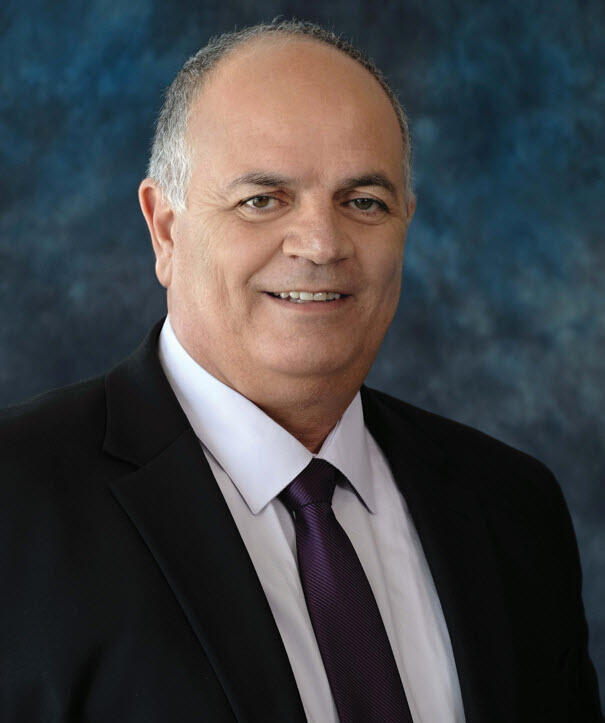
Tourgeman, 64, has headed Rafael for about two and a half years, bringing to the position not only extensive management experience but also a deeply patriotic worldview.
“Rafael is a vertically integrated company. We operate across every layer of the technological spectrum, from energetic raw materials to systems in space. The knowledge base here is broader than anywhere else. Rafael is not just a high-tech and defense company. It is a kind of research institute with a free-thinking spirit that is far more pronounced than in conventional defense industries.”
One of your most talked-about systems is Iron Beam, the high-power laser system. The public hears a great deal about it, but it is still not perceived as a dominant force on the battlefield. When will that happen?
“You have to distinguish between the technology and the battlefield. From a technological standpoint, this is a global breakthrough. We managed, so to speak, not to bow to the laws of nature. We all know the sight of utility poles appearing to dance on a hot day. The hot, less dense air near the ground causes light rays to refract upward. Air movement constantly alters the path of the light, and that is what prevented other companies around the world from effectively using lasers for interception beyond distances of a few hundred meters.
“At Rafael, however, we succeeded in developing adaptive optics that keep the beam concentrated and stable on the target even when it is moving at tremendous speed. Within seconds, we can cause the target to explode or fall.”
Tourgeman cautiously reveals that the system has already proven itself in combat.
“We intercepted dozens of UAVs during the Swords of Iron war using Iron Beam prototype systems. The results were cleared for publication a year and a half after they occurred, and I cannot say more than that. Patience is required with such a complex and groundbreaking process. The first system was delivered to the Air Force only at the end of last year, after a series of tests under extreme conditions.”
He stresses that the system represents a new dimension of warfare, one that creates unprecedented safety challenges.
“A laser beam does not stop when it hits a target the way a missile does. It continues traveling and could strike other objects. That is why extremely strict procedures and a completely accurate picture of the airspace are required. And, of course, with this system as well, we are constantly adding new capabilities.”
An impressive career
Tourgeman, who is married and has five children, lives in the Jezreel Valley and is a proud grandfather of three. A graduate of the Israeli Navy’s naval officers course, he served in the Navy for 25 years in operational and technological positions.
After his lengthy military service, he moved into senior positions at Israel Aerospace Industries, serving first as head of the Arrow missile defense program, then as head of the MLM Division and, in his final position before joining Rafael, as CEO of ELTA Systems.
Alongside his practical experience, Tourgeman has an extensive academic background that includes five degrees in electrical engineering, management, law and political science. He is also a graduate of Israel’s National Security College.
“I grew up in a large traditional family. My parents came from Morocco, and among Sephardim there aren’t really ‘secular’ people in the conventional sense. Even those who are not religious maintain tradition. Of all my siblings, I chose the religious path and attended a religious high school yeshiva in Jerusalem, where I studied electronics. I then continued with practical engineering studies through the military’s academic reserve program.
“Today, I maintain only a traditional lifestyle. I have to say that against the backdrop of the political and social dispute over legislation exempting the ultra-Orthodox from military service, I am deeply disappointed with the Haredi community, which I expected to demonstrate a higher moral standard than it has. It troubles me greatly and does not reflect the Judaism as I wanted to know it. I raised my children to contribute to the country out of love for this land, and three of them are currently serving in the IDF.”
You came to Rafael after many years at Israel Aerospace Industries. Did you experience ‘culture shock’ moving between the two defense giants?
“I wouldn’t call it culture shock, but there are certainly significant differences. At Israel Aerospace Industries, I headed some of its most technologically advanced operations, including MLM and ELTA, but at Rafael I found a unique level of professional depth.
“What stands out here more than anything is the connection to national security. That comes before business considerations, personal considerations and everything else. Even under fire, the people here are clearly patriotic and fully committed.”
How is Rafael dealing with the enormous demand for Tamir interceptors used by Iron Dome, particularly amid export restrictions and difficulties in foreign markets?
“The defense establishment has never had to change its defensive policy because of a shortage of interceptors,” Tourgeman says confidently. “We are capable of maintaining production rates an order of magnitude greater than other organizations around the world. We built ourselves to be able to supply large quantities in real time, and we maintain significant inventories.”
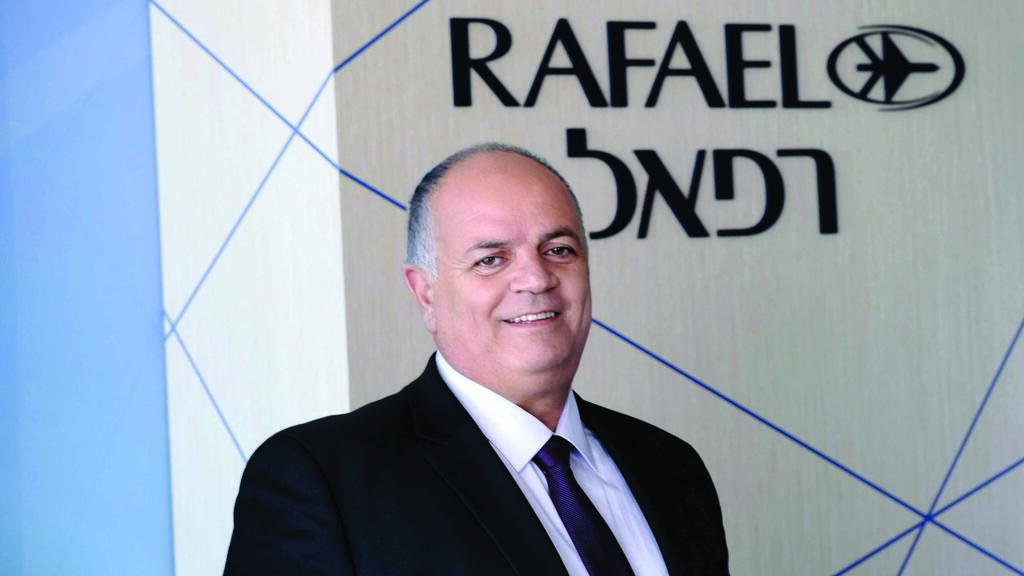
Rafael CEO Yoav Tourgeman
(Photo: Sivan Farag)
The advantage of independence
He acknowledges that global pressure on supply chains has increased but says Rafael’s advantage lies in its independence.
“Because we are vertically integrated, we know how to manufacture many things ourselves. We are less exposed to external supply problems or export restrictions imposed by certain countries. So far, we have been able to meet demand successfully.”
As at Israel Aerospace Industries, one of the major issues facing Rafael is a possible stock market offering, a plan that has encountered bureaucratic obstacles. Tourgeman believes an IPO is essential to the company’s continued success.
“The world is changing rapidly, and the current regulation weighs us down and makes us less agile,” he says. “Countries around the world today demand that we work in-house, and that requires business flexibility that a government-owned company has difficulty providing. An IPO or privatization is critical to Rafael’s continued success.”
Unlike at Israel Aerospace Industries, however, no formal decision has yet been made to take Rafael public.
“But I hope that will happen,” Tourgeman says. “Rafael is growing by 30% or more every year in dollar terms. To continue at that pace, we need flexibility, including in our ability to compensate employees.
“Moreover, Rafael represents the pinnacle of Israeli capability and innovation. If the state does not push forward with the IPO process, it will be difficult for us to sustain this trajectory of success over the years.”
Amid fierce competition for talent, how do you prevent a ‘brain drain’ to giants such as Nvidia?
“We recruit about 2,000 new employees every year. Every expert who leaves hurts, but many come back after realizing that money is not the only thing that matters. The patriotism and sense of purpose in the work here are decisive factors.
“At the same time, we are concerned about Nvidia and other companies coming in and leveraging international capital to attract employees by offering the best possible salaries. The state needs to formulate a policy and decide whether our interest is to enrich the coffers of others or to preserve these capabilities and this wealth within Israel.”
How do you divide your managerial attention between the IDF’s urgent needs and international customers?
“Our vision starts with Rafael as a key pillar of Israel's security. My work, and that of every Rafael employee, with the IDF is our highest priority.
“At the same time, over the past two years we have doubled the volume of our deliveries, and over the next two years we will double it again. We are meeting all of our international commitments, and customers around the world have great confidence in us.”