

Electronic waste is becoming a strategic resource as governments and companies increasingly view discarded smartphones, computers and other consumer electronics as a critical domestic source of the rare earth elements and minerals needed for everything from artificial intelligence servers to advanced weapons systems.
For decades, old electronics were largely treated as an environmental nuisance, with wealthy nations exporting millions of tons of discarded equipment to developing countries for disposal. Today, governments are increasingly rethinking that approach as geopolitical tensions and supply chain disruptions expose the strategic importance of the metals embedded inside electronic devices.
Gallery
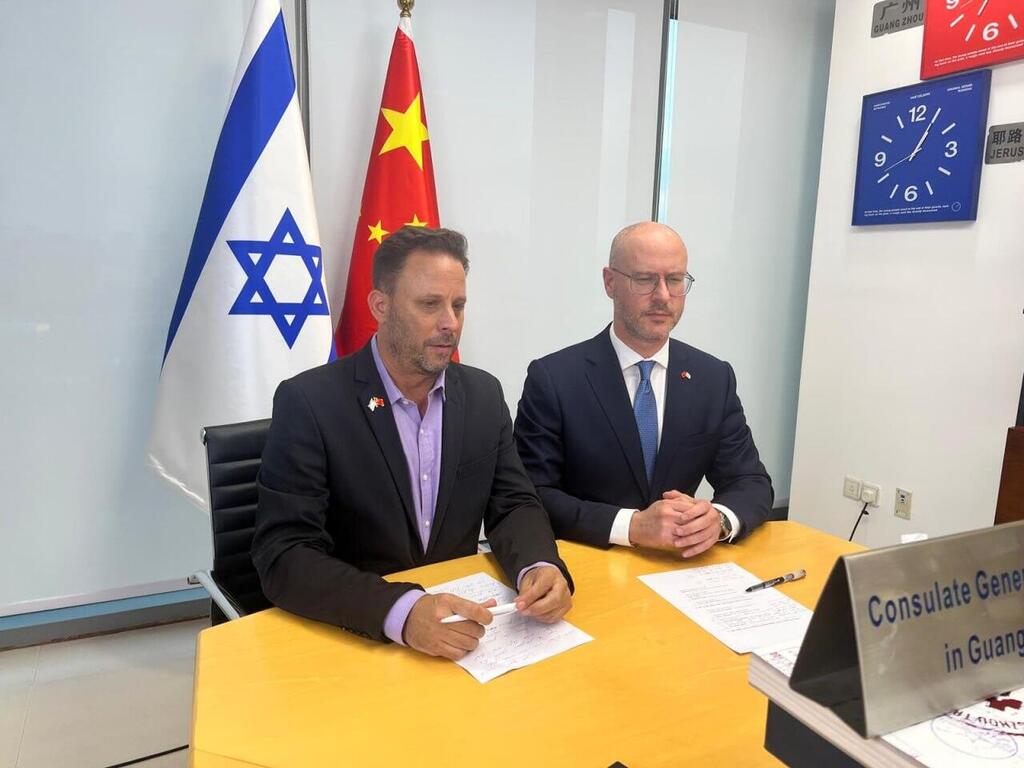
Israeli officials participate in a virtual meeting from Israel's Consulate General in Guangzhou, China, as part of discussions on electronic waste recycling, critical minerals and strengthening international cooperation on resource recovery
(Photo: Courtesy)
Rare earth elements and other critical minerals — including lithium, cobalt, neodymium and palladium — have become indispensable to modern economies. They are essential components in smartphones, electric vehicles, data centers and renewable energy systems, while also playing a crucial role in advanced military technologies such as fighter aircraft, precision-guided missiles, radar systems and satellites.
An F-35 fighter jet, for example, contains hundreds of kilograms of rare earth materials used in magnets, sensors and electronic warfare systems.
The shift comes as countries seek to reduce dependence on increasingly fragile global supply chains dominated by China.
China currently controls much of the world's rare earth processing industry and plays a dominant role in refining critical minerals, including cobalt used in batteries and advanced defense technologies.
As a result, discarded electronics are increasingly being viewed as "urban mines" — above-ground sources of valuable raw materials that can be recovered through recycling rather than extracted through traditional mining.
The concentration of precious metals inside electronic waste can significantly exceed that found in conventional ore. Industry experts estimate that one metric ton of printed circuit boards may contain hundreds of grams of precious metals, compared with only a few grams typically recovered from a metric ton of gold ore.
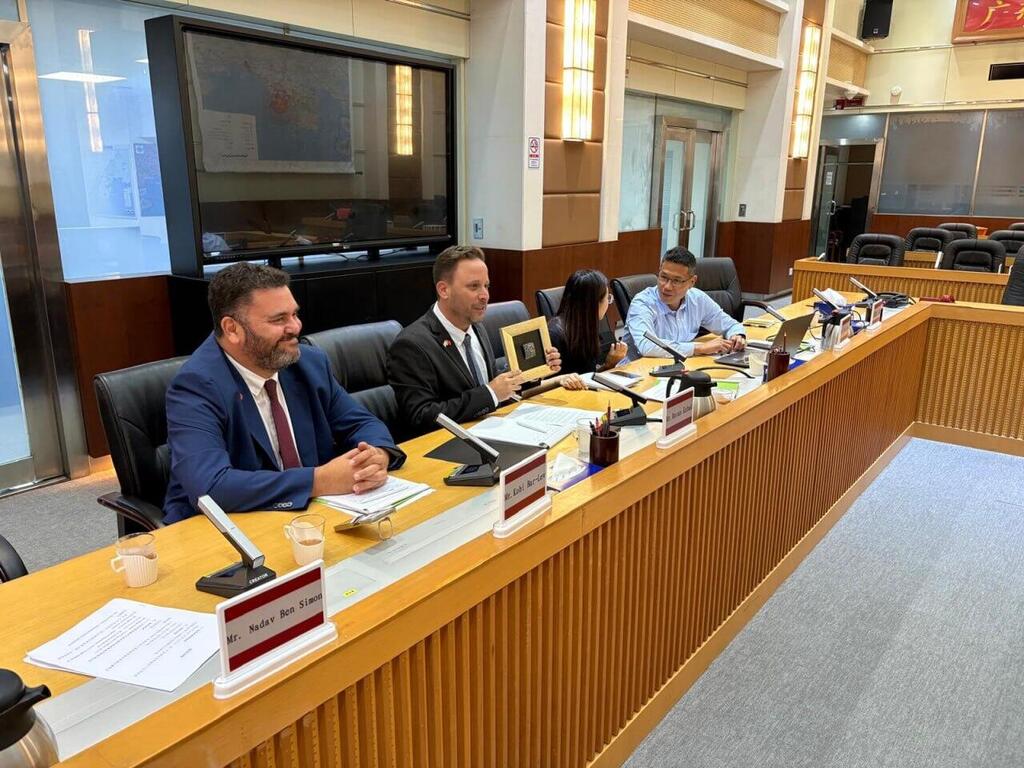
Executives from MAI Israel Electronics Recycling Corportion meet with senior officials from China's Ministry of Ecology and Environment to discuss electronic waste recycling, critical mineral recovery and international regulatory cooperation
(Photo: Courtesy)
That economic reality has prompted many governments to tighten regulations governing electronic waste exports, arguing that discarded electronics should remain within national borders to preserve access to valuable strategic materials.
Israel, which lacks significant natural mineral resources but maintains one of the world's largest technology and defense sectors relative to its size, has also begun emphasizing electronic waste recycling as part of its broader economic resilience strategy.
Dotan Kabak, chief executive of Israeli electronic waste recycling organization MAI Recycling of Electronic Waste and Batteries, said growing geopolitical uncertainty has highlighted the need for countries without domestic mines to secure alternative sources of critical materials.
"In a reality of trade wars and disruptions to global supply chains, Israel cannot afford to depend entirely on imports of critical metals," Kabak said.
According to the company, the organization processed approximately 64,400 metric tons of electronic waste across Israel during 2025 through nearly 4,800 collection points serving more than 6 million residents.
Collected electronics are transferred to certified recycling facilities operating under European CENELEC standards, where equipment is dismantled and valuable metals are separated and returned to industrial supply chains as secondary raw materials.
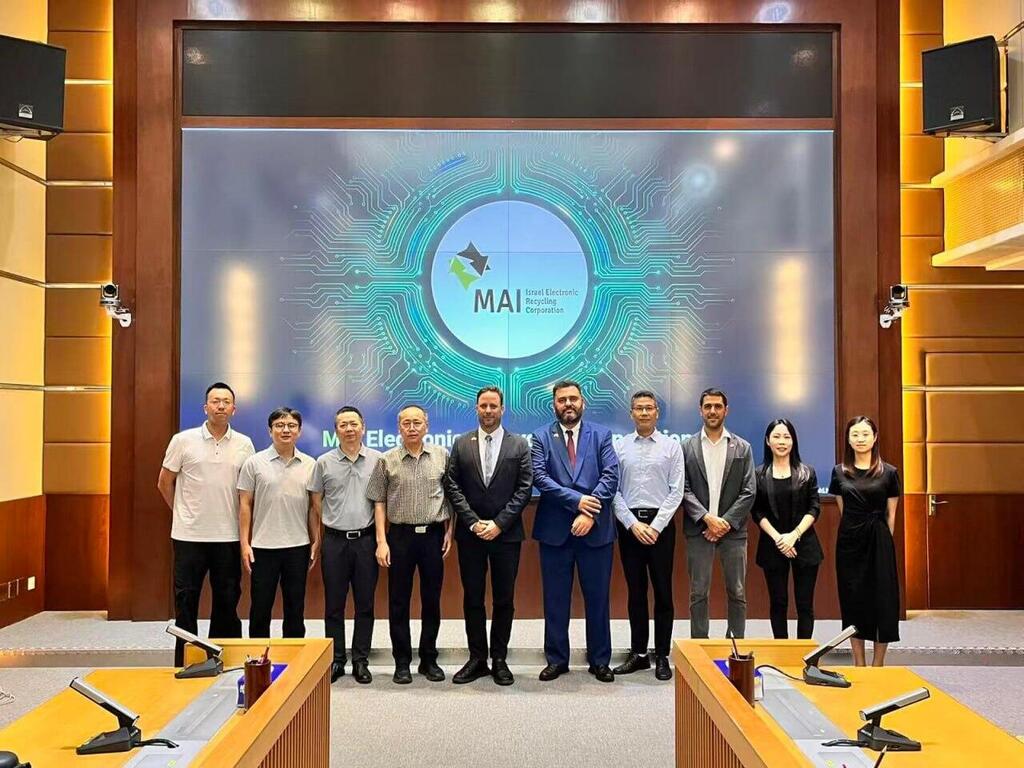
Officials from MAI Israel Electronics Recycling Corportion pose with representatives of China's Ministry of Ecology and Environment during a meeting in southern China focused on electronic waste recycling, critical minerals and potential regulatory cooperation
(Photo: Courtesy)
Kabak said the goal is to create a circular economy that reduces dependence on imported materials while supporting domestic manufacturing and advanced technology industries.
He recently participated in meetings with officials from China's Ministry of Ecology and Environment to discuss regulatory and operational cooperation in electronic waste management. The discussions also included Israeli environmental law specialist attorney Kobi Bar-Lev.
According to Kabak, several European countries are also evaluating Israeli-developed data management systems used to track electronic waste collection and recycling, reflecting growing international interest in advanced recycling technologies.
Environmental advocates note that electronic waste accounts for only a small share of overall municipal waste but contains a disproportionately large share of hazardous materials, making proper recycling important for both resource recovery and pollution prevention.
Supporters of expanded electronic recycling argue that recovering strategic minerals domestically offers governments a dual benefit: reducing environmental harm while strengthening economic and national security at a time when access to critical minerals has become an increasingly important geopolitical issue.
They encourage consumers to recycle unwanted smartphones, computers and other electronics through designated collection programs rather than storing them indefinitely or disposing of them in household trash, where valuable materials cannot be recovered.
First published: 13:56, 07.22.26