

While Iranian missiles and drones dominate headlines, an invisible war has been raging beneath the surface — and so far, Israel’s digital defenses are holding. The country’s power grid is functioning, water flows uninterrupted, hospitals remain open, and the financial system hums with remarkable normalcy. Behind this continuity stands Brig. Gen. (res.) Yossi Karadi, Israel’s newly appointed chief of the National Cyber Directorate.
Just six weeks into the job, Karadi is already leading a nonstop wartime effort. “The enemy doesn’t rest,” he warns. “And failure is frustrating. So I assume they’ll keep knocking on our doors and trying new methods until they manage to break through.”
Gallery
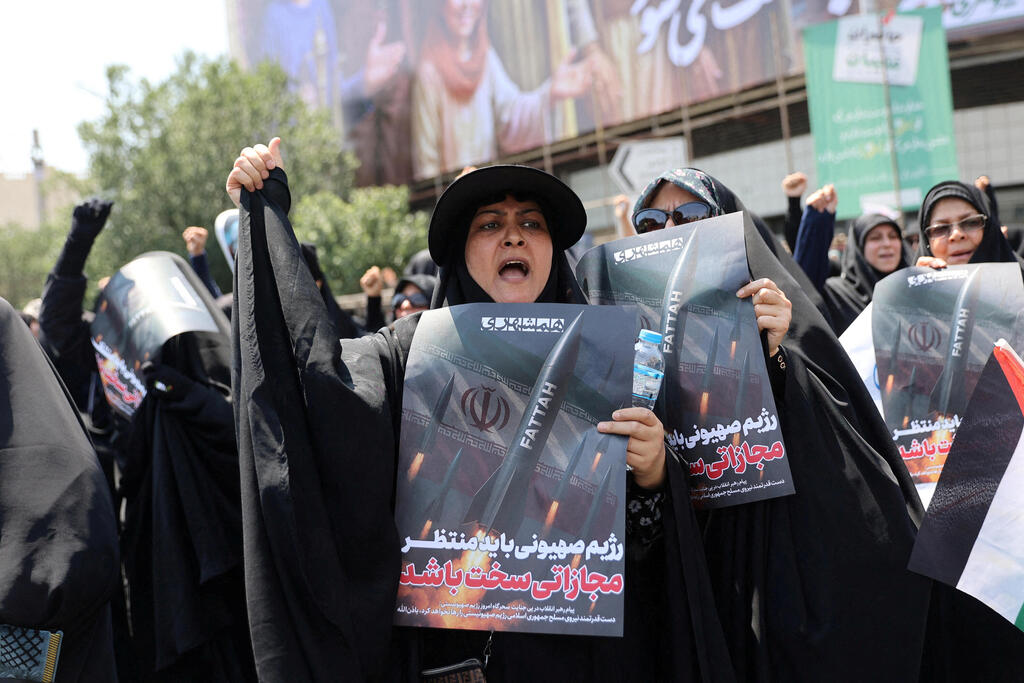
Anti-Israeli demonstration in Iran
(Photo: Reuters/Majid Asgaripour/WANA (West Asia News Agency) via REUTERS)
Though Iran’s coordinated cyber units have yet to cause substantial damage, a parallel front has intensified: psychological warfare. Sophisticated fake news campaigns, threatening calls, deepfakes, and mass messaging are being used to undermine public trust and sow chaos. Karadi calls it “cyber-based consciousness warfare” — the manipulation of perception through digital means.
“These campaigns are already underway,” he says. “We’re seeing a fusion of kinetic and cyber operations — and that combination will occupy us even more in the near future.”
Karadi, a 30-year IDF veteran with expertise in electronic warfare and cyber, is calm but clearly focused. He explains that Iran’s digital attacks range from hijacking call centers and phone networks to pushing disinformation via text messages, voice calls, and social media impersonations. “They exploit every available communication platform,” he notes. “From emotional manipulation to misdirection — it's classic social engineering, just scaled up for war.”
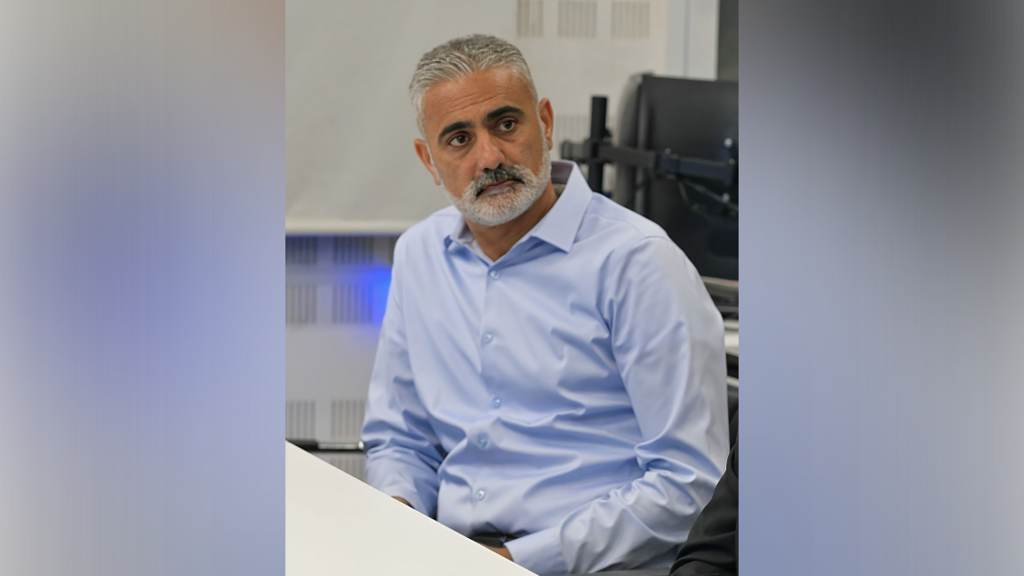
Brig. Gen. (res.) Yossi Karadi, Israel’s newly appointed chief of the National Cyber Directorate
(Photo: National Cyber Directorate)
Tracking down attackers is a meticulous process. The directorate works backward — starting with the malicious message, tracing it to a call server, and then to an IP address. Once verified, the incident is handed to a specialized “hunter” team. “It’s like Iron Dome for cyberspace,” Karadi says. “And we work fast. If we catch it before it escalates — perfect. If not, the clock is ticking.”
Once located, the options range from mass IP blocking to domain takedowns. Karadi is careful to point out that every operation follows Israeli law: “We operate fully within our legal framework. It’s good that not everything is permitted — but we do have robust legal tools.”
The flood of disinformation, however, is harder to contain. Social media’s viral nature complicates efforts to remove fake content. “We treat some of these videos as open-source intelligence,” he says. “We analyze the origin and share our assessments with the security ecosystem. But 100% prevention? Not realistic. That’s why public awareness is so critical.”
Karadi is familiar with the adversary. Iran’s cyber apparatus consists of multiple state-affiliated groups, each with dozens — sometimes hundreds — of professionals. Added to that are volunteer hackers who offer their services to the regime. “We know them well,” he says with deliberate brevity.
He downplays any sense of Israeli overreaction, warning instead that the digital front will only grow in importance. “If Iran loses its kinetic capabilities or is restrained by international pressure, it will lean even more heavily on cyber,” he predicts. “What we’re seeing now might just be the beginning.”
And Israel is preparing accordingly. Hospitals, banks, and utilities have all fortified their defenses, guided by national readiness exercises following real-world cyberattacks, like the one that previously hit Hillel Yaffe Medical Center. “Resilience has to be built over time,” Karadi says. “We’ve made progress — but prevention remains the hardest task.”
One major hurdle is legal. A proposed Cyber Law has been stalled for nearly a decade. Karadi is actively pushing to pass it, saying it would provide the directorate with genuine regulatory authority. “Right now, we offer guidance and recommendations — not enforcement. That needs to change.”

A medical emergency button hacked by Iran
(Photo: Social media)
Amid war, Karadi’s teams are operating around the clock. Their tools include newly deployed AI systems capable of detecting patterns, flagging anomalies, and filtering threats autonomously. With thousands of potential incidents to analyze daily, such automation has become essential.
Get the Ynetnews app on your smartphone: Google Play: https://bit.ly/4eJ37pE | Apple App Store: https://bit.ly/3ZL7iNv
But technology alone isn’t enough. The directorate collaborates extensively with private Israeli cyber firms — a relationship Karadi calls “pure Zionism.” He describes back-to-back meetings with tech leaders, many volunteering time and expertise. “If I call and say we need help, they come,” he says. “No hesitation.”
Looking ahead, Karadi envisions a dangerous evolution. With global dependence on digital systems and AI growing rapidly, he warns of the eventual emergence of a “pure cyber war” — one fought entirely online, with no physical bombs, only digital sieges.
“Imagine the Roman siege of Jerusalem,” he says, “but in cyberspace. One nation cripples another’s energy, water, transport — and waits. It’s not science fiction. Not anymore.”