

Imports of dates from Egypt are threatening Israeli date growers and causing farmers millions of shekels in losses. The date harvest is now beginning in Israel, and growers expect a larger crop this year than last. But alongside the optimism, they are also absorbing losses. The reason: imports of frozen dates from Egypt, even though Egypt does not allow Israeli dates into its market.
The imports are possible because the Egyptian dates arrive pitted and frozen, giving them the classification of an industrial product. As a result, they do not fall under the Agriculture Ministry’s authority, leaving the ministry unable to intervene.
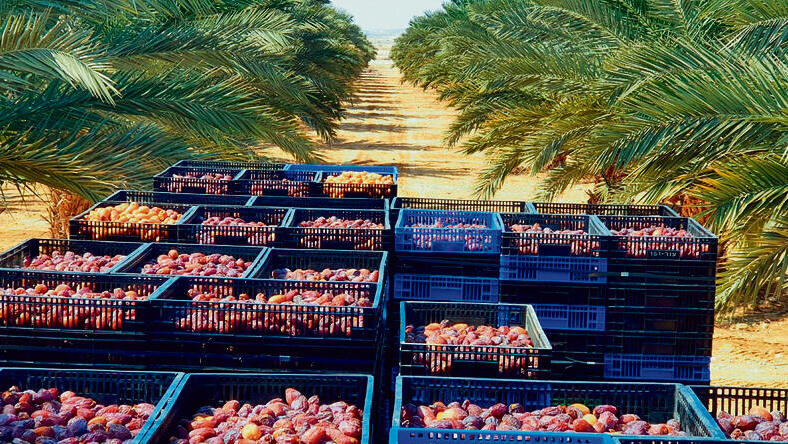
Dates; imported from Egypt pitted and frozen
(Photo: Meshek Avni)
The Egyptian dates are of the Hayani variety rather than Medjool, with most demand coming from the smoothie market — juice bars and fruit-based beverage chains, which have emerged as a sizable category in Israel.
Boycotts in Spain and the Netherlands
The “Egyptian blow” comes on top of a recent decision by several European countries not to import produce from what they define as occupied territories. The Jordan Valley, a major date-growing region, is considered such an area, and Israeli growers were unable this season to market their produce in Spain and the Netherlands, which banned its entry. Belgium and Ireland are also believed to be joining the move.
Gal Twig of the Dates Division at the Plants Production and Marketing Board said: “Hayani dates are not a major part of the Israeli market in percentage terms, but there are growers whose livelihoods depend on them. Israeli consumers should know that they are consuming Egyptian dates in smoothies and in supermarkets in the frozen-fruit category.
“During COVID, we faced a crisis when overseas markets shut down, and it took us three years to recover. Now, on top of the Egyptian imports, retail chains in Europe are blocking our access.”
Twig added: “We are starting a new season with great concern. Our crop is stable, prices abroad are reasonable, but the decision not to allow imports from occupied territories — and we understand that Belgium and Ireland are also likely to adopt the ban — is a threat. I don’t know what we will do.”
Twig said that in 2025, Israel exported 29,000 metric tons of dates to Europe out of a total of 52,000 tons exported to 60 countries.
“When we look ahead, political pressure is beginning to mount,” he said. “Without real assistance from the Israeli government to invest in opening alternative markets, we will not be able to overcome this alone.
“We have now begun exporting to China. I was there with marketers in June for an event marking the opening of the market. The Chinese were enthusiastic about Medjool dates. Our Medjool has a better flavor than competing varieties, with a more caramel-like taste. But opening a new country is a two- to three-year process and requires financial investment and time.”
Amnon Greenberg, chairman of the Dates Division at the Plants Production and Marketing Board, said: “We are standing helpless in the face of unfair competition. Our growing costs are significantly higher because of water prices, labor and other inputs.
“Israeli date growers see Egypt blocking our high-quality dates, while the State of Israel responds by opening its market to them and abandoning us. Most growers are located in border regions and outlying areas, in the Arava and the Jordan Valley, and these imports are an economic death blow for them.”
Ezra Bachar, acting director general of the Plants Production and Marketing Board, said: “Unfortunately, instead of the government recognizing their contribution and providing them with an economic safety net, it approves imports even though local growers fully meet domestic demand.
“Importing dates does not lower the price for consumers. It only enriches importers and retailers while destroying local agriculture.”
The Plants Production and Marketing Board estimates that there are currently about 600 growers in Israel, while tens of thousands of families earn a living from the industry indirectly. Production is on an upward trend. In 2025, about 65,000 tons were harvested, with exports valued at about 900 million shekels. Most of Israel’s date plantations are located in the Jordan Valley and the Arava.
The Economy Ministry said that because the imports are not conducted under special ministry quotas but under a permitted customs classification, the issue does not fall under its jurisdiction.