

Israel Post expects parcel deliveries to rise by 30% to 40% in November, now that AliExpress officially launched its loyalty program in Israel on Sunday, known as AliExpress Elite. According to market estimates, more than 20 million packages are expected to arrive in Israel during November, most from China and Europe and a smaller share from the United States, although the figure will depend on the security situation and global shipping costs.
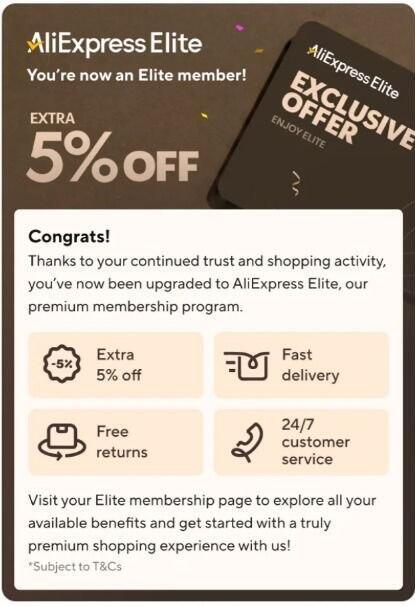
AliExpress is stepping up its efforts to attract Israeli shoppers ahead of November. Customers who spend more than 800 shekels (about $259) a year on the platform began receiving automatic membership in the Elite loyalty program about five months ago. Sunday's announcement marks its official launch.

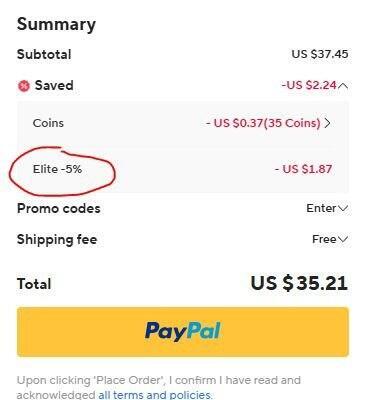
Members receive a 5% discount on millions of products marked with the Elite label, including items in the Choice category, which features sellers designated by AliExpress as particularly reliable and offering fast shipping, and the Brand+ category for brands sold through the platform.
In addition, the first day of every month will be designated Elite Day, when members will receive an 8% discount on eligible products. AliExpress also recently announced that this year's Singles' Day shopping promotions will run from November 1 through November 18.
"Elite members will enjoy additional benefits, including free returns on eligible products without the need to provide additional documentation, provided the return request is submitted within 15 days of receiving the products. They will also have access to dedicated online customer service, available 24 hours a day. The benefits offered through the Elite loyalty program do not diminish or restrict consumers' rights under Israeli law," AliExpress said in a statement.
(Photo: Screenshot)
Eric Zhang, vice president of AliExpress, said: "Elite is our first loyalty program, and we decided to offer it for free, with no subscription fees, registration fees or hidden costs. If you're one of our most loyal customers, you're a member. This is our way of thanking the loyal customers who have accompanied the platform's growth and providing them with additional discounts and improved service. We will continue investing in their shopping experience, and this is just the beginning."
European Union moves to restrict AliExpress
Why is AliExpress investing so heavily in Israeli consumers? One reason is that Israelis are highly loyal customers who have been shopping on the website and app for 15 years, placing orders with increasing frequency and preparing for another shopping spree during November's sales events.
Another reason is competition from Shein and Temu, which have grown into retail giants, overtaking British competitors Next and ASOS, and consolidating Chinese dominance of Israelis' online orders. Israelis still shop on American retailer Amazon, South Korea's Olive Young and Zara Greece, but China remains the preferred source.
A more immediate factor is a decision by the European Union in July to approve a 3-euro customs duty on low-value parcels worth up to 150 euros arriving from outside the bloc, primarily China, through online shopping platforms. The move has put pressure on AliExpress and other Chinese e-commerce companies.
(Photo: Screenshot)
Until now, such packages had been exempt from customs duties, giving Chinese direct-to-consumer retailers a price advantage over European retailers and stores that pay full taxes and duties. The exemption contributed to an enormous increase in shipments from China, placing a heavy burden on European customs and postal authorities.
The fee is intended as a temporary measure until the EU completes its broader customs reform, planned for 2027-2028. Under the reform, the exemption for packages worth up to 150 euros will be eliminated entirely, and online platforms will be subject to full, tiered customs duties.
If a single package from China contains products from entirely different categories, such as toys, clothing and electronics, the charge could increase by 3 euros for each customs category. The fee also does not replace value-added tax (VAT) in the European Union and is collected in addition to it.
Israel Post: Many uncertainties surrounding November
Israel Post, which has become a privately owned company, has divided its operations into two divisions: the Postal Bank and logistics.
The company plans to focus heavily on improving service and operational efficiency in its work with international partners while expanding business with companies operating within Israel.

Sorting packages at Israel Post
(Photo: Guy Yehieli)
"There are a great many uncertainties about what will happen this November," Udi Sharon, the new CEO of Israel Post's logistics division, told ynet.
"That's partly because last year was relatively weak, and partly because of worrying trends in shipping, such as Zara Israel introducing delivery fees, an unusual move in an industry accustomed to free shipping."
Last November was weak because of the security situation. What are the cautious estimates for this year?
"There are many variables involved, but we're expecting growth on the order of 30% to 40%. The Chinese are encouraging customers to start ordering earlier, and now they have a new loyalty program, which means they're directing marketing efforts toward Israel and see it as an attractive market.
"The new European Union fees on packages from China have reduced cargo traffic from China to Europe by 40%. When a Chinese shopping platform is hurt in certain countries, it redirects marketing resources to Israel, and vice versa.
"For us, this is the real test. We're actually preparing for forecasts much higher than 30% to 40% growth so that we can provide the best possible level of service."
Has the Flydubai incident affected shipments to Israel?
"Almost 50% of the cargo arriving in Israel comes on passenger flights. When Flydubai, which operates 10 daily flights, suddenly stops flying to Israel, there are consequences, and it creates significant challenges for the coming period. We're doing a great deal of work on our main bottlenecks to increase their capacity."

Packages at Israel Post
(Photo: Guy Yehieli)
There are many complaints about delays and poor customer service among some of the last-mile delivery companies, the ones that deal directly with consumers.
"I definitely think service levels in this market need to improve dramatically. That's why we're investing heavily in digital tracking, technology, automation and our workforce, so that we can be among the first to achieve that improvement."
Delivery times from China have improved dramatically
Following a disappointing November last year, Maman Group, one of Israel Post's competitors at Ben Gurion Airport, also IS preparing for a record month, expecting to handle 1 million packages from overseas during November, compared with just 650,000 in the same month last year.
The group operates one of the airport's cargo terminals, handling 15% of parcel traffic entering Israel. Other major operators include Swissport and Israel Post, the largest customs brokerage company in the sector.
Other customs brokerage companies operating at Ben Gurion Airport include Ga'ash, Cheetah and HFD, alongside international courier companies DHL, FedEx and UPS. Maman works with Shein, Temu, AliExpress, ASOS, iHerb and Amazon, among others.
Shipments from Chinese shopping platforms now arrive within a week, while ASOS has also improved its delivery times. Orders from Amazon and iHerb generally arrive within two weeks, although Amazon deliveries sometimes take three to four weeks.
According to Iris Zeira, Maman's vice president of sales, "The cargo terminal and automated sorting system at Ben Gurion Airport are preparing for a peak day of approximately 200,000 packages, with around 500,000 packages expected to pass through the terminal during the final week of November.
"Staffing will be increased during November and December to 35 employees per shift, with the aim of maintaining an average handling time of approximately four hours from unloading the aircraft to distribution to delivery points."
Why do you expect the number of shipments to increase?
"Among other reasons, the low dollar exchange rate, shopping events being brought forward by the leading websites, and the continuing change in Israeli consumer habits, including an increase in orders for large household products. All of this assumes that another war does not break out."
Overall, Maman expects to handle 2 million packages during November and December, compared with 1.3 million during the same period in 2025. Its forecast for the whole of 2026 stands at approximately 9 million packages, compared with 8.2 million in 2025.
Still, not all airlines have resumed operations in Israel.
"That's true, but alternatives have been found for transporting cargo on almost all routes. On routes from the United States, for example, American Airlines has still not resumed flights to Israel. Cargo is divided among El Al, which carries most Amazon shipments on its cargo aircraft, and United and Delta, which transport freight in the cargo holds of passenger planes. On routes from the East, with Emirates absent, Etihad and Challenge have increased their cargo flights from Hong Kong."