

Senior Finance Ministry officials have begun drafting a broad multi-year plan for 2027–2032, the first such effort in years, that is expected to include reforms across nearly every sector of the economy.
The plan is expected to combine major investments in education, health care, welfare, infrastructure and artificial intelligence with a series of fiscal measures aimed at reducing the state budget deficit. Among the steps under consideration are canceling tax exemptions, reducing pension contributions and making limited cuts to benefits.
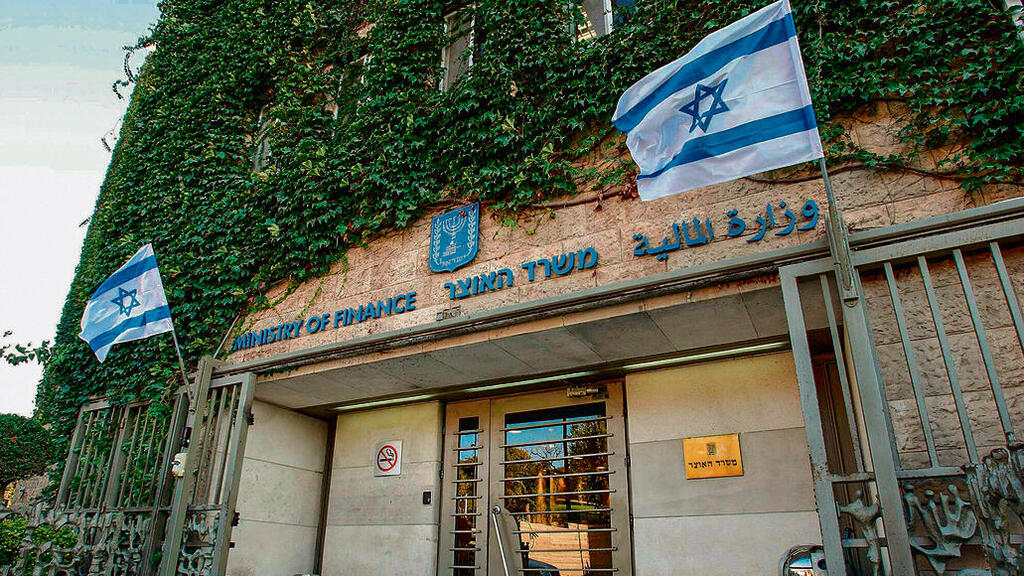
The Finance Ministry
(Photo: Amit Shabi)
At the same time, the ministry has decided not to draft a state budget for 2027 at this stage, because elections are expected in September or October this year. A new government is likely to be formed afterward, and Treasury officials say they cannot dictate its economic policy in advance.
As a result, 2027 could become the fourth consecutive year in which Israel begins the year under a temporary continuation budget — an unprecedented situation that could again last until the end of March, as happened this year.
Finance Minister Bezalel Smotrich recently instructed senior ministry officials to advance long-term plans that could serve the next government, regardless of who heads the Finance Ministry.
These are the main measures under consideration, according to details obtained by ynet:
Reducing pension contributions: Senior Treasury officials argue that the current level of mandatory contributions weighs on workers’ day-to-day finances, especially families, while most retirees have sufficient savings to support themselves during retirement.
Today, employee and employer pension contributions, along with taxes and other deductions, can approach 30% of a worker’s salary. Employees contribute at least 6% to pensions, 2.5% to advanced study funds and additional sums to workplace committees. Together with employer contributions, total pension-related deductions reach 18.5% to 20.8%. Including study funds and workplace committee payments, the total can reach 28.5% to 31% — a level Treasury officials describe as excessive.
Cutting tax exemptions: The Finance Ministry has previously tried to slash such benefits all at once. This time, officials are expected to propose a gradual reduction. One major proposal is to cancel the 18% VAT exemption on fruits and vegetables. Treasury officials argue that the exemption, introduced about 50 years ago in 1976, no longer makes sense when basic goods such as bread, milk, eggs and medicine are not exempt from VAT.
The ministry is also considering canceling the VAT exemption on goods and services in Eilat. The move could be carried out in two stages, beginning with a 9% VAT rate. Officials also plan to finally cancel the VAT exemption on tourism services, a measure that was removed at the last minute from this year’s Arrangements Law. Other proposals under review include cutting tax credit points in several areas, reducing tax benefits for new immigrants and scaling back tax breaks that have expanded in recent years to more than 400 communities in the periphery.
Raising the retirement age: The plan includes a gradual increase in Israel’s retirement age to 70, or even eliminating the mandatory retirement age altogether, as is the case in Finland. Treasury officials say the move is justified by Israel’s high life expectancy, which ranks among the highest in the world. Raising the retirement age would save the National Insurance Institute billions of shekels at a time when it faces a growing actuarial deficit.
Defense budget: The Finance Ministry wants to return the defense budget to what officials describe as a “reasonable and logical” level. The proposal would bring the budget, excluding the NIS 350 billion decade-long addition set by the prime minister, back toward its prewar baseline of about NIS 85 billion. That compares with defense budgets of 150 billion shekels to 160 billion shekels ($51.7 billion to $55.1 billion) in each of the past several years, amounting to roughly a quarter of the entire state budget. “There is no country in the world with such a share,” one senior Treasury official said.
Infrastructure investment: The plan calls for tens of billions of shekels in investments in education, health care, welfare and infrastructure, especially transportation. Projects under discussion include dozens of new interchanges, tunnels and bridges, new rail lines between cities — including routes to Eilat and the northern border — and a new airport.
Coalition funds: Treasury officials want to abolish coalition funds entirely, while transferring only those deemed justified into the regular state budget base. Examples include salaries for teachers in the ultra-Orthodox sector and support for youth movements.
Reducing the number of ministries: The plan calls for closing or merging at least 10 ministries deemed unnecessary, such as the Heritage Ministry, the Regional Cooperation Ministry and the Intelligence Ministry. Officials estimate the move would save 10 billion shekels over a government term.
Mileage tax: The Finance Ministry is also preparing for the rapid implementation of a mileage tax, likely within two years. Officials have begun drafting an immediate response to the rise of electric and plug-in hybrid vehicles, as well as worsening traffic congestion, which is increasingly weighing on economic activity.
“Work on the multi-year plan began in recent days and is now in its early stages,” a senior Finance Ministry official said Tuesday night. “Among other things, we are conducting an in-depth review of pension and provident fund contributions, along with important wage-related initiatives. The goal in these areas is not to enrich the state treasury, but to increase citizens’ disposable income and improve their welfare, while distributing the tax burden in a more balanced and appropriate way.”