

After a roughly six-month tender process, German shipping company Hapag-Lloyd has been selected to acquire Israeli shipping firm ZIM, partnering with Israel’s FIMI private equity fund, Calcalist learned on Sunday. The sides have finalized terms and are expected to sign the deal soon.
Under the agreement, the partners will acquire 100% of ZIM’s shares, and the company will be delisted from the New York Stock Exchange (NYSE), where it has traded since early 2021, when it went public at a valuation of $1.5 billion. The agreed valuation with Hapag-Lloyd and FIMI has not been disclosed, but it exceeds $3.5 billion, compared with ZIM’s current market value of $2.7 billion.
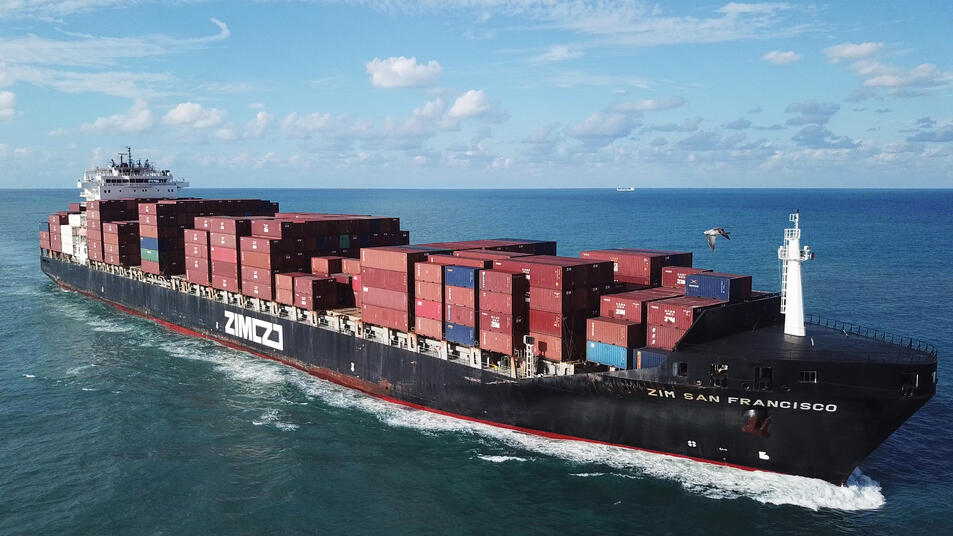
Hapag-Lloyd, the world’s fifth-largest shipping company by container volume, beat Danish giant Maersk, the world’s second-largest shipping company, in the tender process. During the bidding, Hapag-Lloyd decided to bring in an Israeli partner, primarily to resolve complications stemming from the “golden share” held by the State of Israel in ZIM. It partnered with FIMI for that purpose.
A key figure behind the deal is Samer Haj-Yehia, former chairman of Bank Leumi. He initiated contact with Hapag-Lloyd on behalf of ZIM, later connected the German company with FIMI, and advised on the structure of the transaction to ensure it would meet regulatory requirements.
The agreement between Hapag-Lloyd and FIMI, and the framework under which they will acquire ZIM, is not based on a standard equity partnership in which each party holds a defined share of the company. Instead, ZIM’s operations will be split: international activities not subject to Israeli regulation will be held by Hapag-Lloyd, while domestic operations subject to the state’s golden share provisions will be held by FIMI.
The operations acquired by Hapag-Lloyd constitute the bulk of ZIM’s business, and accordingly the German company will invest most of the funds in the transaction. This structure is intended to address the restrictions imposed by the state’s golden share, which does not allow exclusive ownership by a foreign entity of a company deemed strategic or essential to Israel. The issue is further complicated by the fact that Hapag-Lloyd has shareholders from Saudi Arabia (10.2% through a sovereign investment arm) and Qatar (12.3% through a sovereign investment arm).
Under this arrangement, FIMI will acquire the strategic and essential operations and assume the rights and obligations derived from the golden share. It will therefore be responsible for safeguarding Israeli interests in times of emergency.
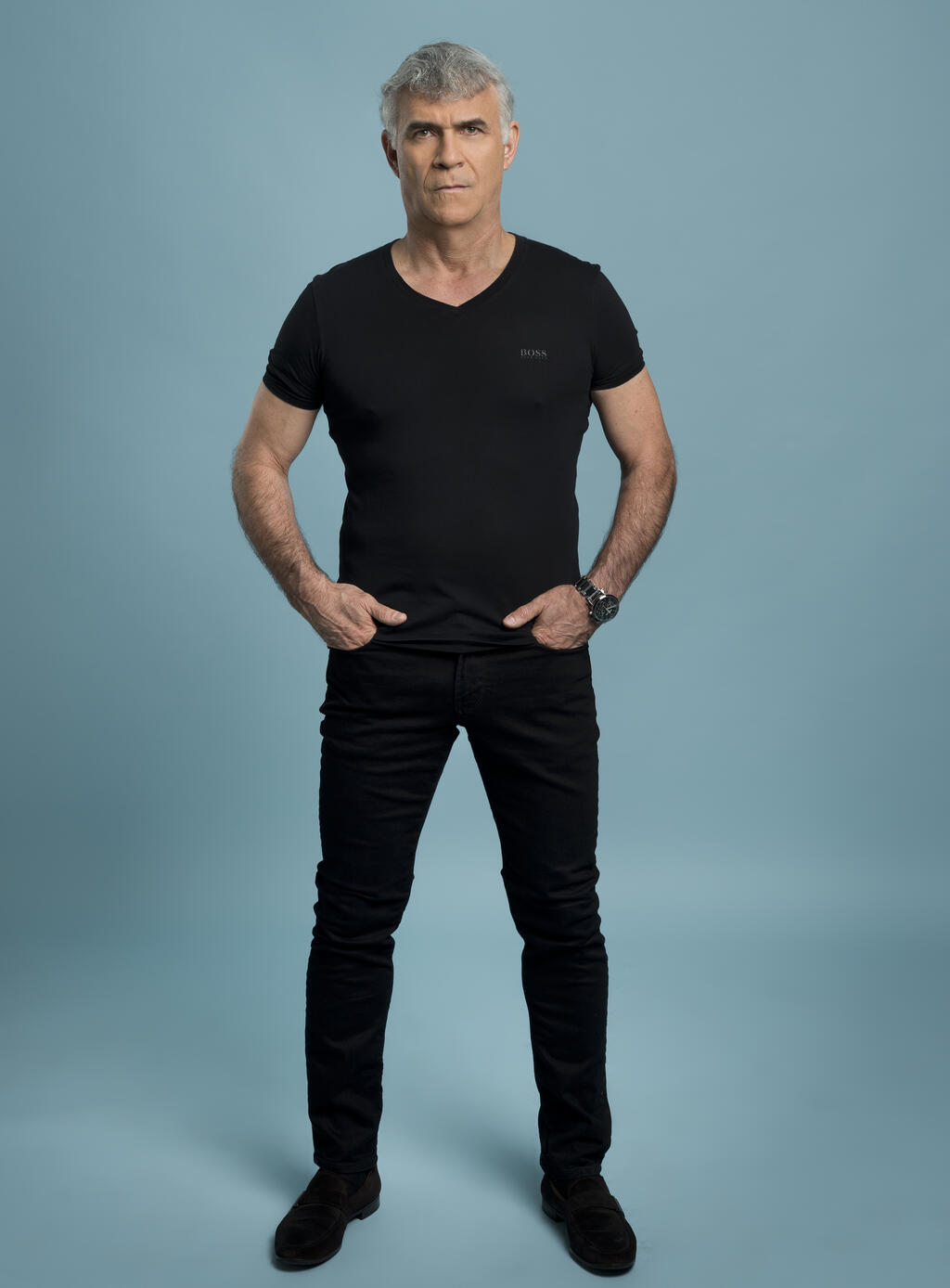
Ishay Davidi
(Photo: Yonatan Bloom)
According to the agreed division, FIMI will purchase the portion of ZIM defined as a strategic asset for the State of Israel, ensuring maritime independence in emergencies. This includes a fleet of 16 fully owned vessels — some flying the Israeli flag and others that the state is authorized to requisition or nationalize under emergency orders. These ships have been described by the company’s workers’ union, led by Oren Caspi, as vessels that transport ammunition, military equipment and essential goods when foreign companies stop calling at Israeli ports.
FIMI will also acquire the national shipping lines — direct routes to and from Israel — as well as the company’s headquarters in Haifa, its IT systems and the management of Israeli personnel, including Israeli naval officers, a key requirement under the golden share. It will also assume responsibility for compliance with regulatory requirements vis-à-vis the Transportation and Defense ministries.
The golden share mandates maintaining a minimum number of owned vessels so that in wartime, when foreign ships do not arrive, the state can deploy and requisition ZIM’s fleet to transport ammunition, wheat and fuel to Israel. It also requires that the company’s management headquarters remain in Israel. In effect, through the acquisition of ZIM’s Israeli operations, FIMI will establish a new maritime transport company — the “new ZIM” — which will gain access to Hapag-Lloyd’s global network.
For its part, Hapag-Lloyd will acquire the 99 vessels currently operating under charter, with their contracts effectively transferred to it, as well as ZIM’s global trade routes — meaning shipping lanes that do not involve Israel, such as routes between China and the United States and within Asia. Hapag-Lloyd will also acquire ZIM’s international marketing and sales network, including its global agency network, international customer agreements and the ZIM brand abroad. ZIM’s technology operations, focused on developing digital solutions for the shipping industry, will also be acquired by the German company.
Hapag-Lloyd, which is traded on the Frankfurt Stock Exchange with a market capitalization of about €20 billion, is the world’s fifth-largest shipping company. The acquisition of most of ZIM’s operations — ZIM ranks 10th globally in container shipping — aligns with its strategy to increase its global market share, particularly on maritime routes from the Far East to the U.S. East Coast.
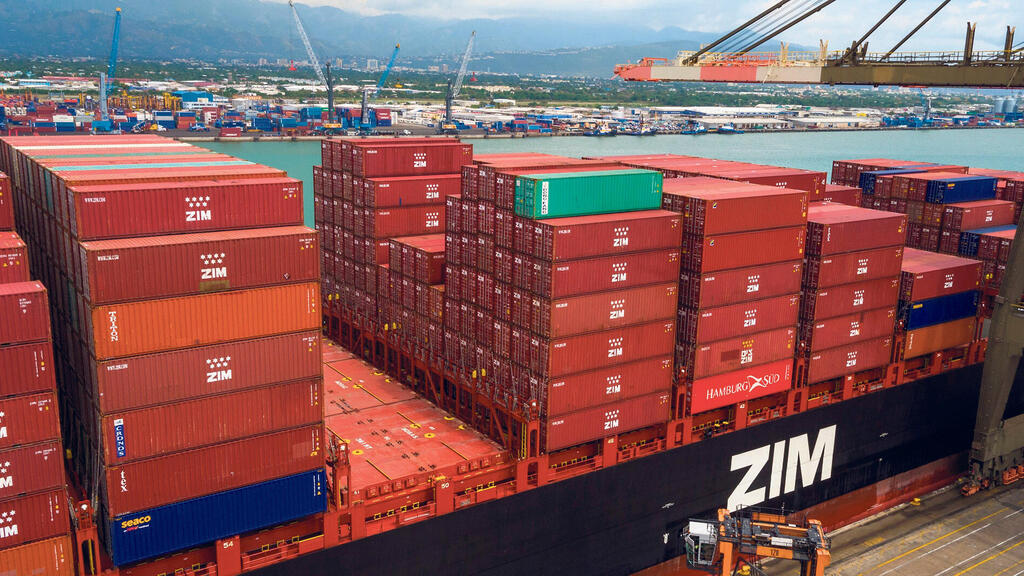
(Photo: ZIM)
ZIM’s workers’ union is aware of the deal agreed with Hapag-Lloyd and FIMI and is conducting intensive negotiations with company management, led by CEO Eli Glickman and Chairman Yair Seroussi, seeking a sale bonus. Glickman, who had sought to acquire ZIM himself together with Rami Ungar, Israel’s Kia importer and owner of Ray Shipping, was rejected by the board about six months ago. However, he is now reportedly cooperating with the buyers and the board to advance the transaction.
In fact, Glickman initiated the sale process when he and the management team, who together hold about 5% of the company’s shares, sought to promote a management buyout together with financial investors. The board rejected the proposal, valued at around $2.4 billion, and decided to launch a formal tender to explore additional options.
A structured bidding process was subsequently conducted by investment bank Evercore. Several international companies participated in the non-binding stage, some of which — including Swiss-based MSC, the world’s largest shipping company — chose not to proceed to the binding stage.
The state has not yet expressed an official position on the transaction. Despite attempts by the workers’ union to spark opposition within relevant government ministries, ambiguity has been maintained in recent months. Transportation Minister Miri Regev, Defense Minister Israel Katz, Finance Minister Bezalel Smotrich, and Regional Cooperation Minister Dudi Amsalem, who oversees the Government Companies Authority, have not publicly opposed the sale. The absence of opposition thus far appears, at least in part, to stem from FIMI’s presence as the Israeli partner in the deal.