


“One of the most basic things I look for in entrepreneurs is good values and humility,” says Ron Rofe, co-founder and general partner at Rainfall Ventures. “In the world we live in, there are not-so-good people who have succeeded. But there are also many very humble, kind people, and those are the people I want to do business with. I’ve passed on deals because a founder was disrespectful to a waitress during a business meeting. If he treats a waitress rudely, how will he treat his employees and his environment? Those are not people I want to invest in.”
Rofe is not the stereotypical hard-nosed venture capitalist chasing the hottest startup. He is also a social media personality with more than half a million Instagram followers, where he posts restaurant-level cooking videos.
Gallery
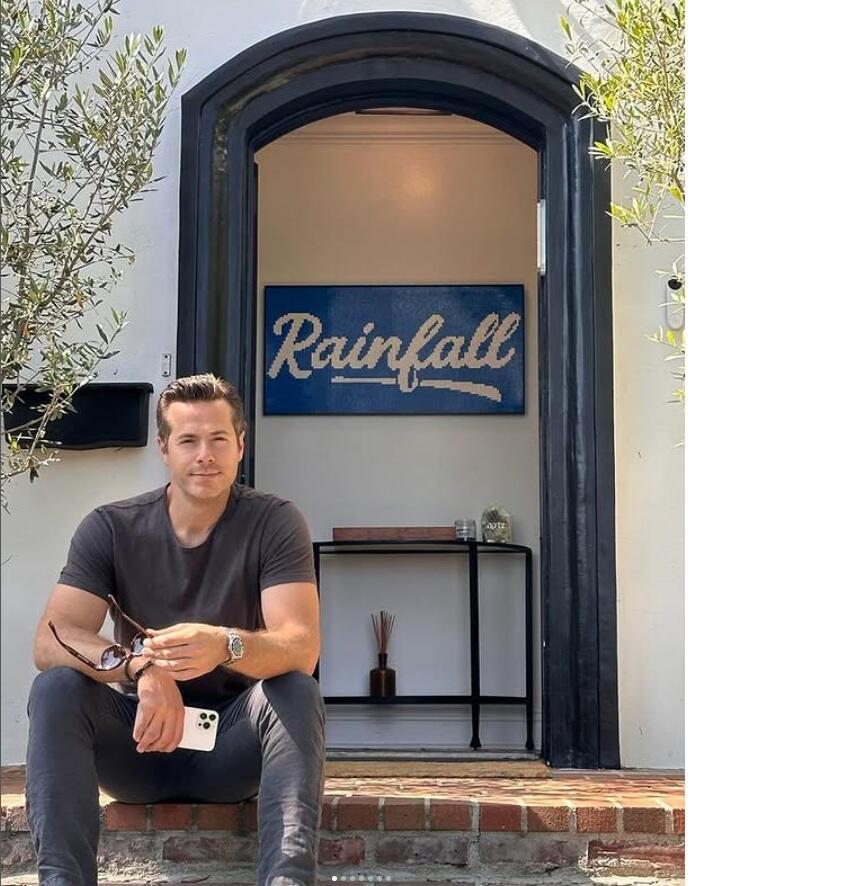
Rofe: 'When there’s food on the table, you can truly discover who people are'
(Photo: Rainfall team)
In business, however, he is far more focused on people than on ideas. “Before any investment, before I make a final decision, I ask founders to meet for dinner,” he says. “To talk, to get to know them better. Once there’s food on the table, people relax and you really see who they are.”
“The idea can be excellent and the company can look good, but if the founder is not an amazing person, I won’t invest, because everything can change. They may be benefiting from a moment of luck, but real business is built for the long haul. I don’t start by looking at the numbers, whether they’re strong or not, because that approach prevents you from getting to know the entrepreneur behind the company, and that’s always the most important thing to me.”
Rofe has been with Rainfall for more than a decade. Before that, he was a partner in several ventures, most notably the Israeli gaming company Plarium, which was sold in 2017 to an Australian giant for $500 million.
In recent years, he has split his time between Los Angeles and New York, with visits to Israel, focusing on early-stage investments.
Plarium was your entry point into high-tech, right?
“Yes. After I finished my military service in the IDF’s Mamram IT unit, the other founders, Avi and Gabi Shalel, asked me to join. Over time, it gained momentum and grew into a major company. Personally, I’m more connected to the early stages of companies, so once it became too big, I started getting bored. I also felt less connected to the gaming sector itself, so after Plarium I naturally leaned toward new ventures, meeting new people and investors, and starting a career in venture capital. I always loved hearing about entrepreneurs building new companies. It felt like the right place for me.”
The early days in New York were not easy, and a medical venture he pursued failed to take off. Rofe recalls that he once listed his apartment on Airbnb to finance a flight back to Israel to visit his family.
“I found a woman who wanted to rent the apartment for two weeks at a good price, and I was thrilled. When I arrived in Israel, I suddenly got an email from her saying there was too much noise and she couldn’t stay there. It’s an apartment in New York, of course there’s city noise. We started arguing because she wanted to cancel and leave, and I was very disappointed because I was counting on that money.
“Then I remembered I had a mezuzah on the door and a menorah on the shelf, and that she wasn’t Jewish. The last thing I wanted was for her to leave and say, ‘Those Jews ripped me off.’”
“I decided to cancel the booking and absorb the loss. I refunded her money and she left. I went to sleep, and the next morning I woke up to an email through Airbnb from a father who wrote that his daughter was stuck in New York and urgently needed an apartment in my area. He said he was willing to pay even double the price I had asked.
“From that I learned that when you do the right thing and live according to what Judaism teaches us, good things happen.”
‘I’m not trying to be an expert in any one field’
Rofe places heavy emphasis on the quality of the entrepreneurs he backs. But what happens when the founder is impressive and principled, yet the startup idea itself appears weak?
“Most of my investments are like that,” he says. “I’m not trying to be an expert in any one field. Not in gaming, where I started my career, not in fintech, where we’ve had successes, and not now in AI, because the market is constantly changing. What doesn’t change is the ability to identify strong entrepreneurs.
“Very often you meet a strong founder who has failed a few times. I’ve invested in people where I didn’t fully understand what they were doing, but I knew they wouldn’t give up, that they understood the problem, that they were humble and had ambition and vision. Those are the opportunities I like.”
Isn’t that approach a bit naive in a world of Exits and a race to the next hot company?
“The fact that they’re kind, good people doesn’t mean they’re not strong businesspeople,” he says. “One of our best investments was in Robinhood (a trading platform company currently valued at $77 billion), which we identified very early.”
"The founder is a family man who, despite running a massive company, takes his children to school and is home at 6 p.m. for dinner and spending time with them. On weekends, he dedicates his time exclusively to his family. I think people like that have more meaning in their lives. It makes them more humble and better long-term decision-makers.”

Robinhood IPO, one of Rainfall’s most successful investments
(Photo: Mark Lennihan / AP)
But there are also periods when you have to move fast, when there’s a real race to execute a specific idea, right?
“Yes, but you have to work smart,” he says. “Just because someone is constantly doing and doing and doing doesn’t mean they’re doing the right things. Indeed, sometimes things move very fast, but that’s exactly why I try to find people who are humble and who listen, who don’t just run without thinking. In business, when people move too fast, they miss the points that are critical in the long term.”
In Israel, quite a few entrepreneurs say: We’ll spend one, two or three years on the startup, put everything into it, set aside family and friends, and aim for a sale. After that, we can relax.
“Life doesn’t work that way,” Rofe says. “Maybe for some it does. But when you build something, you need to build it correctly and make good decisions. You can’t schedule when the exit will happen. It’s not in our control. There’s a saying: 'companies are bought, not sold'. If you build a very good company, someone will come and want to buy it. You don’t build it for sale from the start. That’s not the goal. The buyer is not your customer. Your customers are the people who use the product.”
Do you specifically look for startups advancing ideas that align with your values?
“No. I never look for ideas, because I’m not enough of an expert in any field to truly assess an idea and its chances of success. In the case of Alma, for example, a company that specializes in providing mental health services, I thought it was a very important and necessary idea, but I also really liked the founder.
“I happened to meet him once and told him that if he ever started a company, I wanted to invest. I didn’t know which direction he would take. One day he told me about this direction, and it clicked for me, both because of the founder and because of the idea. It was very successful, and they were recently sold at a very strong valuation.”
You choose people, not ideas?
“Always, always, always.”
‘The Jews are here to do good in the world’
How central is faith in your life?
“In everything,” he says. “I truly believe I have many blessings. It’s a privilege to be Jewish, and with that privilege comes responsibility to do good in the world.”
“It gives me a great deal of guidance in life and teaches us that alongside success, we also have to do good. I don’t wear a kippah and I’m not religious, but in our offices we have mezuzahs and tefillin available for anyone who wants, and of course a charity box. I always give away 10% of what I earn, and I tell entrepreneurs, Jewish and non-Jewish alike, how important it is to give back.
"Jewish values guide me strongly. The principles they teach us, if we apply them in our daily lives and truly listen to them, will benefit our surroundings and the people we work with. They will understand that we, as Jews, are here to do good in the world.”
It’s easier to give when you’ve already achieved financial success. That advice is much harder to follow at the outset.
“That’s the test. Some people have a lot and still find it difficult to give and part with their money. When I first learned about tithing from a rabbi in New York, I told him I barely had enough to get through the month. He told me that was exactly the challenge, and that even if I gave small amounts, I would feel the meaning, as well as the blessing and success it brings. And it worked. It still works for me today.”
I wish it worked that way for everyone all the time.
“Yes, it’s not always like that, but the feeling is that it’s the right thing to do, and Judaism shows us the direction. For me, it’s completely relevant to the business world as well.”
How involved are you in the Israeli high-tech market?
“We have several excellent investments in Israel. One is Papaya Gaming, and another, which is more under the radar but doing very well, is Rounds.com, an AI-focused company. I really enjoy working with Israeli entrepreneurs. They have a great deal of confidence and initiative, which I deeply appreciate.
“Right now, my focus is on strengthening our Los Angeles office, but my vision is for Rainfall to become a global firm with offices around the world, and of course one of them in Israel.”
One of Rofer’s partners at Rainfall is businessman Yitzchak Mirilashvili, who has extensive business interests in Israel and abroad and is, among other holdings, the owner of TV Channel 14.
“Yitzchak and I have been close friends since childhood,” Rofe says. “Beyond our deep personal friendship, it has also translated into business over the years. When I founded Rainfall Ventures in the U.S., Yitzchak was among the first to believe in me and invest at an early stage.”
Rofe links Israeli high-tech to Israel’s global image. “My approach is that Jewish and Israeli entrepreneurs need to succeed as much as possible and do good. With that success, we can show the world what we’re doing and that we’re not afraid. We have to succeed and contribute to the world. I’m very proud of Israeli and Jewish achievements.”
Pro-Palestinian activists would say that’s an attempt to shift attention away from Gaza.
“I personally haven’t encountered that, but I’m sure it’s there,” he says. “The fact that they claim it doesn’t make it true. That’s exactly why we need to keep succeeding and showing it. We have to show that we are strong and not listen to those voices. If we listen to them, we won’t do anything, and nothing will come of that. October 7 was a terrible tragedy, and from here we need to see how we come out stronger.”
Is it harder today to be a Jewish or Israeli businessperson in the U.S.?
“Not really. It saddens me to see waves of antisemitism. But personally, it motivates me to work harder and be more successful. Israeli entrepreneurs must continue coming to New York and Silicon Valley and not be afraid.”
The cooking videos that drew half a million followers
With all due respect to investments and exits, Rofe’s true passion is high-end cooking. He posts a “perfect recipe” video nearly every week, featuring top-tier ingredients, striking cookware and a great deal of passion and love for cooking.
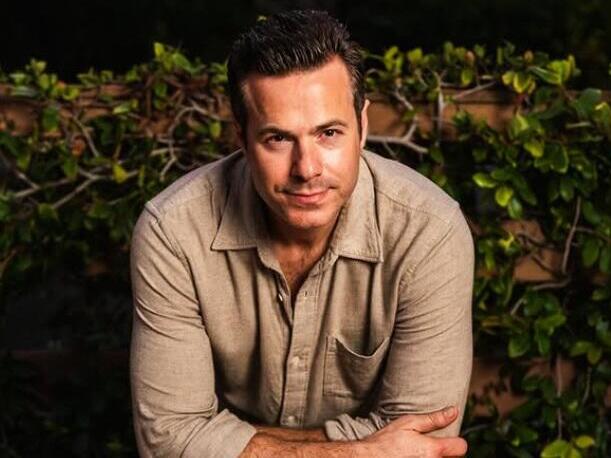
It all began with Friday night dinners alone
(Photo: Rainfall team)
“No matter how hard my father worked, Friday night dinners were always a tradition,” he says. “When I moved to New York and started Rainfall, I missed that. I would sit alone on Friday nights. After a while, I decided that was enough and asked my parents for recipes and started hosting friends. People loved the food, and slowly I built a community around Friday dinners. One day I filmed a recipe for Instagram and the response was immediate.
Your videos are highly meticulous, down to the smallest detail.
“When we moved into our new offices, which were actually a house converted into an office, there was a big yard. I decided to cook lunch for the team once a week and film it. It went viral. It all grew organically, without promotions or collaborations.”
How do you reach half a million followers?
“I think people see that I truly enjoy it,” he says. “I didn’t start this to gain followers or make money, and to this day I’ve refused all collaboration offers. It’s something I love and enjoy sharing. You can’t plan everything in life and chase a specific outcome. I gave it meaning, and it caught on.”
“I’m some kind of a perfectionist. I really love style and high-quality ingredients, and many people appreciate that. I also respond to comments, because if people take the time to write to me and compliment the food, I don’t want to ignore them.”
Would you ever leave high-tech to cook full-time?
“I could, but I love Rainfall. We’ve built something amazing and I'm not bored. I’ve worked with more than 200 entrepreneurs and invested in nearly 120 companies. I see real potential to become a global fund. Cooking is a great hobby. It gives me balance. I’ve been offered opportunities to open restaurants or write a cookbook, but for now it stays a hobby. I’m not someone who plans too far ahead, so we’ll see where it goes.”
Will you move back to Israel?
“You never know. Right now, with Rainfall’s success and the exposure from my cooking, I feel I can do more for Israel and the Jewish people from here. During the campaign to bring the Israeli hostages home, I hosted a major event with 50 influential business leaders and the hostages' families. That’s something I could only have done here. For me, that’s part of the mission.”