

Israel’s diamond exports have continued their dramatic decline, falling to an unprecedented low as the head of the Israel Diamond Exchange announced his resignation.
According to figures from the Diamond Controller’s Office, cumulative exports from the beginning of 2026 through the end of June totaled just $2.4 billion, the lowest figure in the industry’s history.
Gallery
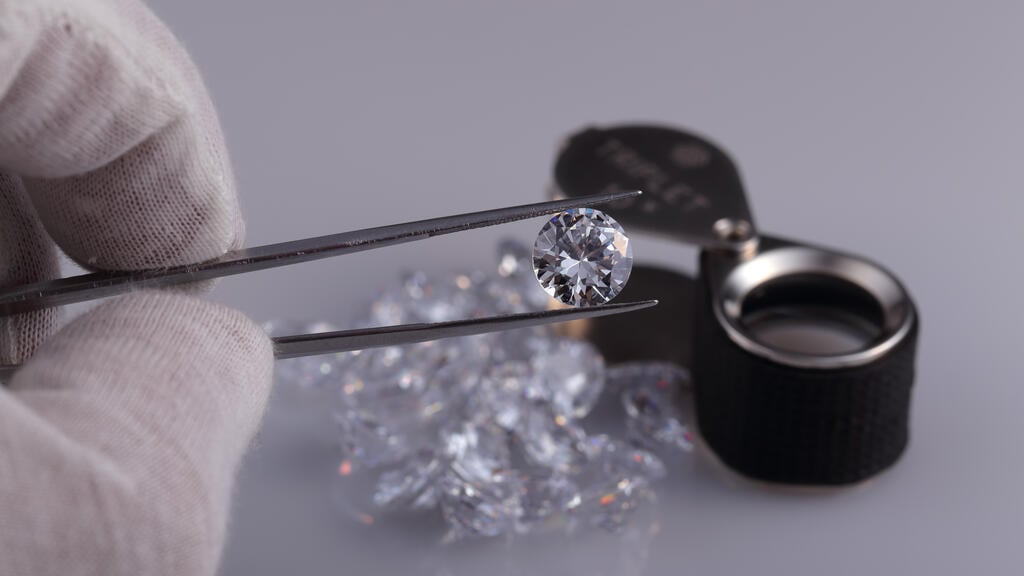
Diamond exports fell to a record-low $2.4 billion in the first half of 2026
(Photo: Shutterstock)
By comparison, polished diamond exports from Israel reached approximately $7 billion in 2015, the sector’s peak year, more than three times the current volume.
Total trade in the industry, including rough diamond imports and diamond exports, also fell to a low of approximately $4 billion, compared with about $12 billion during its strongest years.
“The industry’s condition is unprecedented,” Diamond Controller Natalie Gutman said. “Today, the volume of diamond trade is only one-third of what it was a decade ago. Since 2022, there has been a consistent decline, and we are now at an all-time low.”
Gutman said Israel still retains advantages in several areas, including long-standing relationships with clients, expertise in polishing large so-called “fancy” stones and knowledge of colored diamonds.
Israel was once one of the world’s leading diamond trading centers, but the local industry has been hurt by both the global downturn and Dubai’s emergence as an international trading hub, aided by significant tax advantages that have also attracted Israeli dealers.
The rapid expansion of the lab-grown diamond market has further weakened demand for natural diamonds because synthetic stones are sold at significantly lower prices.

Israel Diamond Exchange President Nissim Zuaretz
(Photo: Tal Givony)
The industry is also facing a new 10% tariff imposed by U.S. President Donald Trump on diamond imports to the United States, which took effect Sunday morning. The United States previously accounted for about 20% of Israel’s diamond exports.
Israel is holding talks with the U.S. administration in an effort to reduce the tariff and is also negotiating with the Finance Ministry over possible tax relief for the sector. Gutman said the industry’s condition could improve if those efforts succeed.
The decline in global diamond demand is also reflected in the troubles facing De Beers, the diamond giant that has been put up for sale for the first time in its history.
Demand has weakened partly because of changing consumer habits, especially among younger buyers who increasingly prefer spending on experiences rather than diamond jewelry. Falling demand in China, driven in part by government policy, and the spread of cheaper lab-grown diamonds have also weighed heavily on the market.
De Beers reported a 13% decline in sales in 2025, alongside lower diamond prices offered to dealers.
Against this backdrop, Israel Diamond Exchange President Nissim Zuaretz announced that he was stepping down after two years in the role. His resignation is expected to bring forward the election for the exchange presidency, most likely to November.
“Israel has been hurt more than anyone,” Zuaretz said. “The Israeli government’s tax policy toward the industry is a serious problem, while Belgium and Dubai offer significant benefits to investors and foreign companies.”
“Companies that operated in Israel and brought goods and workers here have moved to Dubai. If the situation does not change, we will be able to say goodbye to the Israel Diamond Exchange.”
Zuaretz said the new U.S. tariff had placed Israeli exporters at an additional disadvantage because Belgium can export diamonds to the United States without paying the same levy.
“No one supports us. We are in a catastrophic decline,” he said. “My own private company also exports to the United States, and if there is no alternative, I will move my operations to Belgium and export to the United States from there.”