

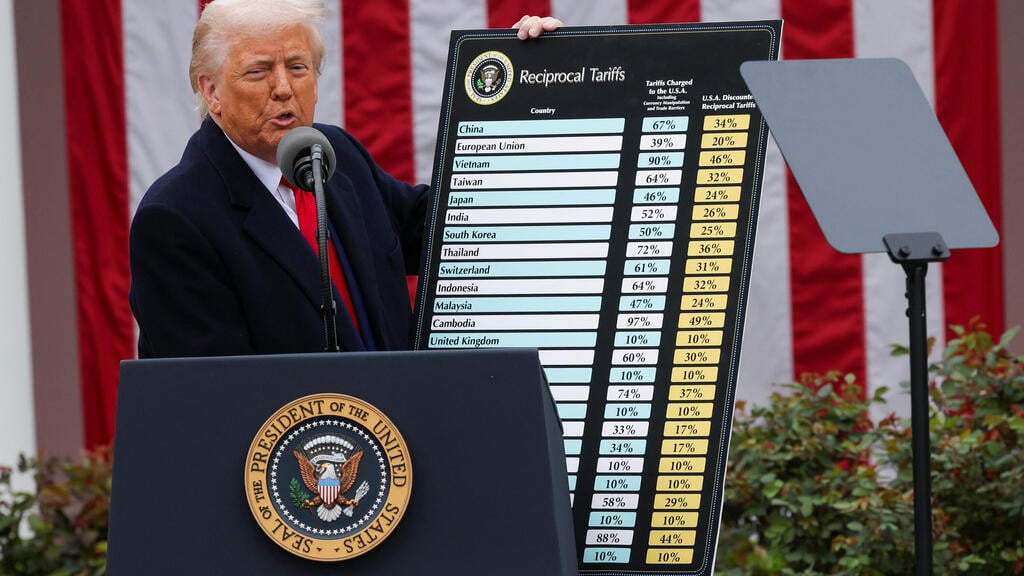
The United States will impose a 15% tariff on Israeli exports, the White House said just hours before the deadline set by President Donald Trump for his sweeping new tariff policy. The rate represents only a modest reduction from the originally proposed 17% tariff announced in April.
Israeli officials believed that the final rate would be tied to Israel’s willingness to wind down its nearly two-year war in Gaza. Senior officials, including Finance Minister Bezalel Smotrich, Economy and Industry Minister Nir Barkat, and National Economic Council head Prof. Avi Simhon, held talks with top U.S. administration officials in recent weeks. Simhon also serves as an economic adviser to Israeli Prime Minister Benjamin Netanyahu.
Netanyahu himself discussed the matter with Trump in recent conversations, highlighting the fact that he was the first foreign leader to meet with the president following the initial announcement of the tariff plan. In those talks, Netanyahu appealed for a significantly reduced tariff, citing Israel’s ongoing state of war. However, Thursday night’s decision indicates those efforts had a limited impact.
While Israeli officials were confident the final tariff would fall below the 17% initially proposed, estimates ranged between 10% and 15% — the latter ultimately adopted by the White House.
Get the Ynetnews app on your smartphone: Google Play: https://bit.ly/4eJ37pE | Apple App Store: https://bit.ly/3ZL7iNv
The U.S. currently runs a trade deficit of approximately $34 billion with Israel. In goods trade specifically, Israel exports $20 billion annually to the U.S., while importing $13 billion. American officials calculated a $7 billion deficit, translating into a 35% imbalance when compared to the volume of Israeli exports. The 17% tariff figure was initially derived as roughly half that deficit percentage. By comparison, nations with larger trade gaps faced steeper tariff rates under Trump’s plan.
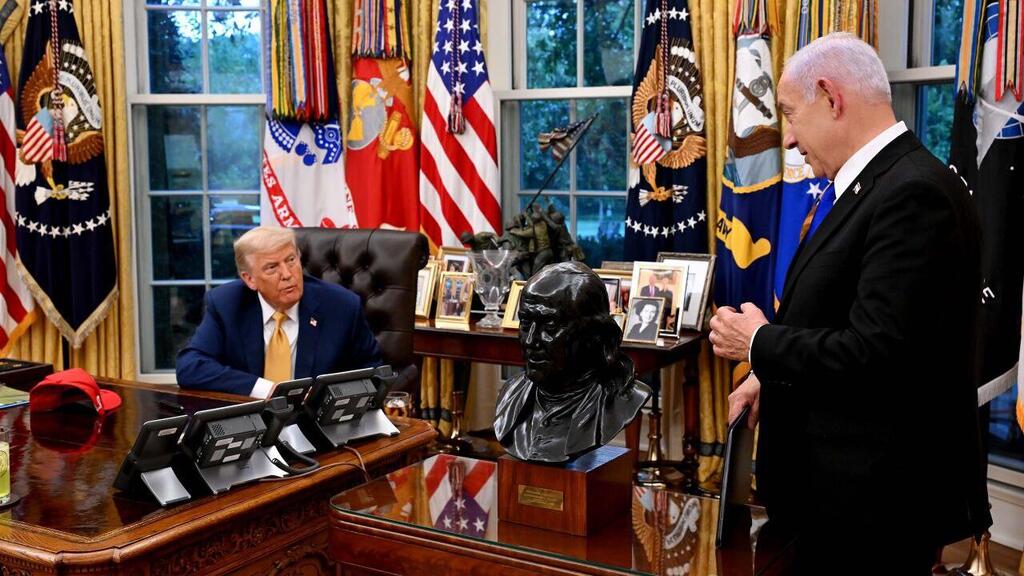
U.S. President Donald Trump and Prime Minister Benjamin Netanyahu
(Photo: GPO)
Israel and the U.S. have maintained a free trade agreement since 1985, aimed at eliminating trade barriers and exempting nearly all industrial goods from tariffs since 1995. However, some agricultural products remained subject to tariffs on both sides. Amid fears of higher U.S. tariffs earlier this year, Israel’s Finance Ministry announced on April 1 that it would cancel all agricultural import duties on American goods — a move met with little response in Washington. One day later, on April 2, the U.S. announced its initial 17% tariff on Israeli exports.
U.S. tariffs would not apply to services, which make up the bulk of Israel’s high-tech exports, including software development, cloud computing, R&D, cybersecurity, and tech consulting, all sectors where Israeli firms are global leaders. In goods trade, the U.S. has also excluded Israeli medical products and semiconductor components from the new tariff, both of which are major export categories in Israel’s tech-driven economy.